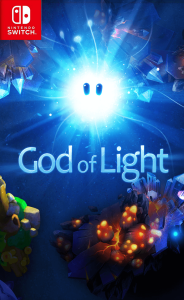
God of Light: Remastered Switch NSP
Report Link Error
Select the broken download file, then submit the report.
Screenshots
About Game
God of Light: Remastered Switch NSP follows a small, determined hero through a world dimmed by an ancient darkness. Its central idea is simple but evocative: light has vanished, life has suffered, and Shiny must guide its radiance back through forests, caverns, temples, and other forgotten places. The result is a puzzle adventure built around observation, experimentation, and the satisfying sight of a carefully aimed beam finally reaching its destination.
Shiny’s Mission to Restore the World’s Light
The world of God of Light: Remastered has lost the celestial illumination that once sustained it. Players take control of Shiny, a small being charged with traveling across distinct realms and restoring the Light Sources found within them. Each restored source helps push back the darkness and moves the larger mission forward.
The journey is tied to the ancient Guardians of Light, whose radiance must be awakened to bring balance and hope back to the universe. Rather than relying on a fast-moving combat structure, the game frames progress through problem-solving. A completed puzzle does more than open the next challenge: it represents another piece of the world being returned to life.
The settings support that sense of a damaged but still magical world. Shiny’s route includes the Forest of Eden, icy caverns, forgotten temples, and the Glowing Volcano. These environments give the puzzles a changing visual backdrop while keeping the player’s attention on the route of the beam and the devices placed along its path.
How Light-Beam Puzzles Work
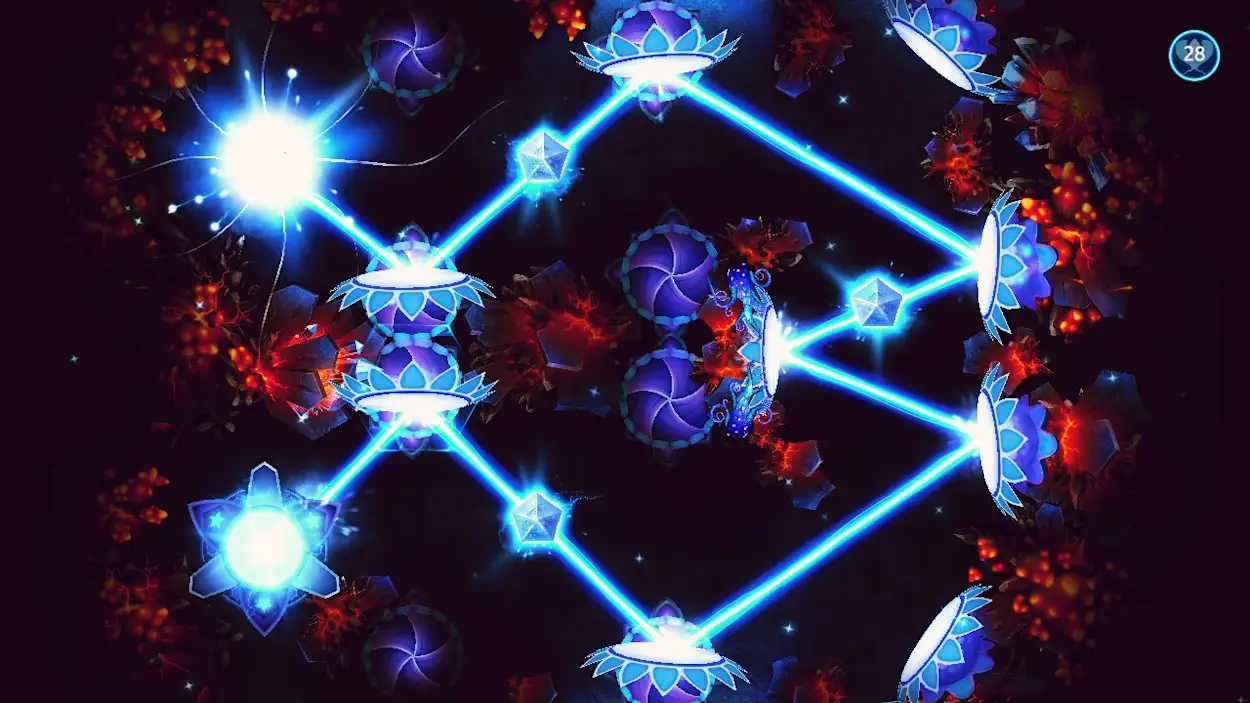
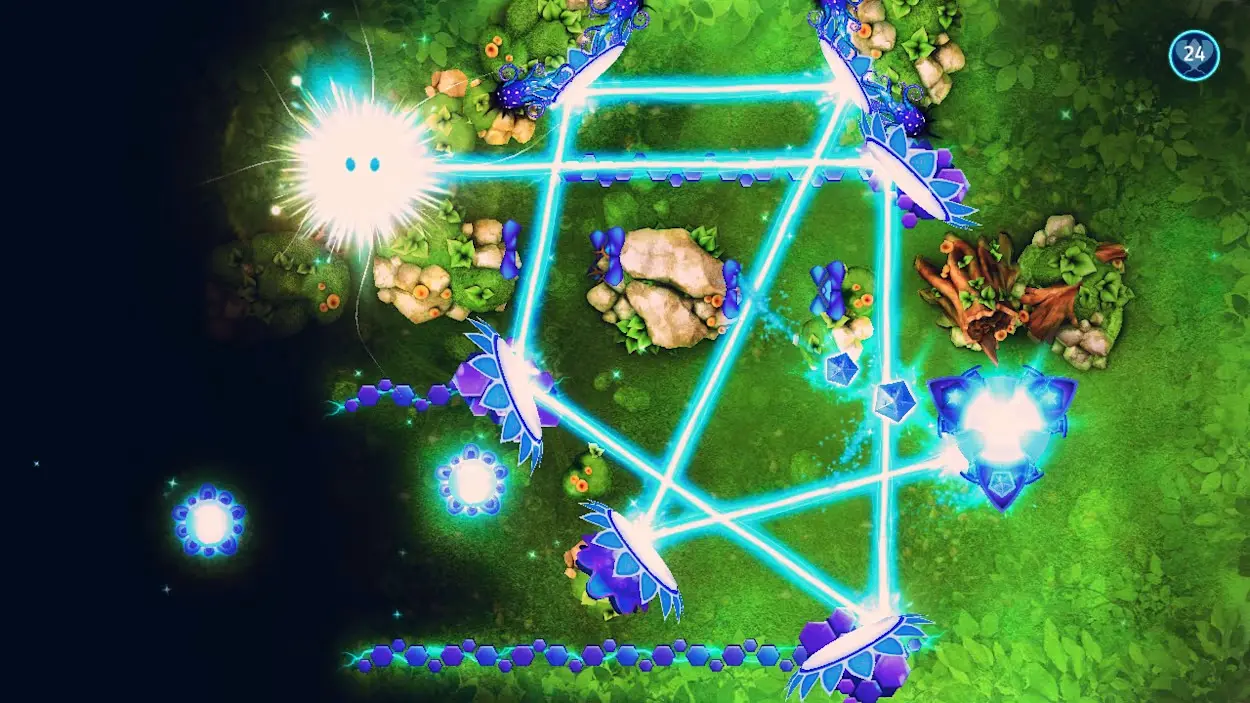
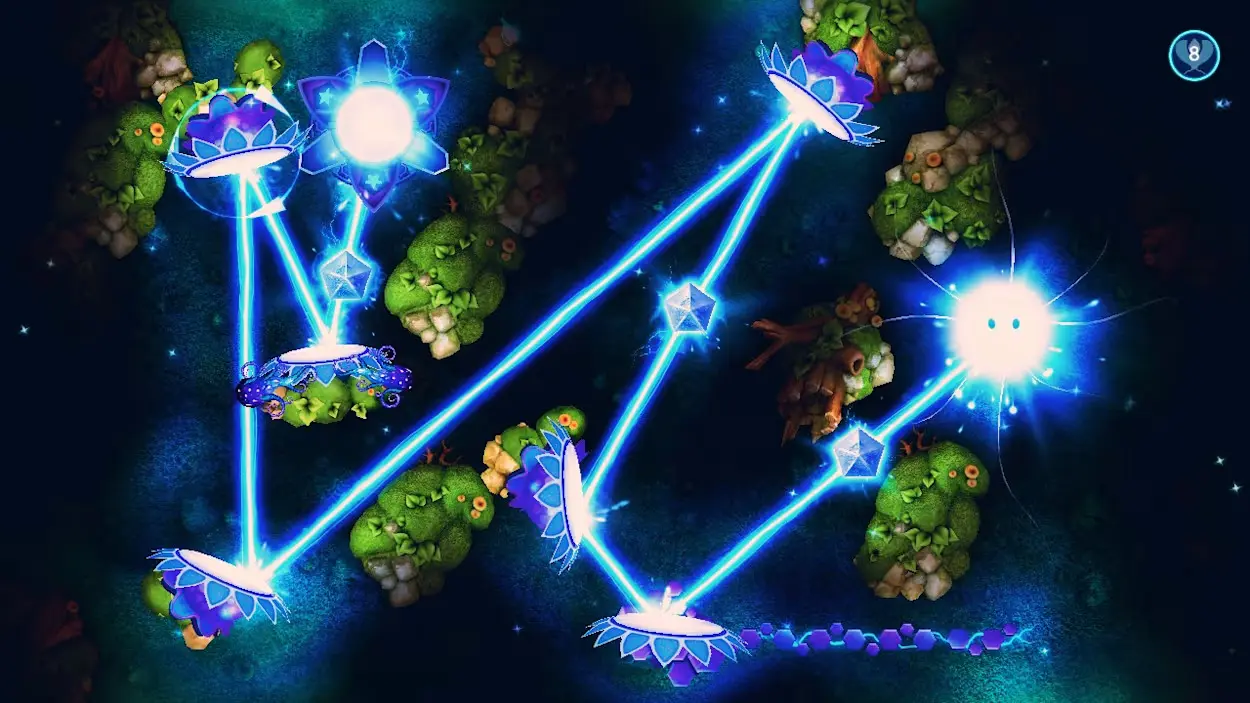
The main activity revolves around light beam puzzles. Each stage presents a Light Source that must be reached by Shiny’s beam. The direct route is often blocked, incomplete, or deliberately misleading, so the player must use the available objects to redirect the light across the environment.
These are physics-based puzzles in the sense that the beam reacts to the angle and position of reflective devices. A slight adjustment can change the entire route, sending the light toward a new surface, through another mechanism, or away from the intended target. The interface uses tap-and-drag controls to move and manipulate the necessary objects.
The loop is clear: inspect the stage, decide how the beam might travel, place or adjust a device, then watch the result. That immediate feedback is important. A failed attempt is still useful because it reveals where the beam goes, what it reaches, and which part of the route needs to change. New mechanics are introduced over time, allowing the puzzle design to build gradually instead of presenting every tool at once.
There is also a pleasantly measured rhythm to this format. The beam may curve, bounce, or pass through a chain of objects before it reaches its destination. Solving a stage can feel less like forcing an answer and more like finding the correct route through a small illuminated machine.
Mirrors, Prisms, and Portals: Tools for Redirecting Light
The available devices give the puzzles their variety. Mirrors are central to redirecting a beam, requiring careful positioning and angle adjustments. A mirror that appears almost correct may still send the light just wide of the next target, encouraging precision rather than rushed placement.
Prisms and portals expand the possible routes further. Instead of treating every stage as a single straight-line puzzle, these tools allow the beam to travel through more elaborate patterns. Other contraptions can also be used to reshape the path toward the Light Sources.
The game’s challenge comes from understanding what each device can do in the current layout. A portal may make a distant route possible; a prism may create a new way to connect separate parts of the stage; a mirror may need to serve as the final adjustment rather than the opening move. The strongest solutions tend to come from reading the whole arrangement before moving anything.
As progress continues, new abilities and power-ups become available to support tougher puzzles. These additions help the game maintain momentum as the routes become more involved and the required adjustments more exacting.
Creatures and Ancient Mechanisms in Each Stage
Not every meaningful object is a reflective device. The stages also include puzzle creatures and ancient elements that respond to light in different ways. Some creatures absorb the beam, creating an obstacle that must be considered before the route can be completed. Others can activate a mechanism when illuminated, turning them into part of the solution.
These light-activated mechanisms create environmental interactions beyond simply bouncing a beam from one mirror to another. A player may need to determine which creature should receive light first, which obstruction must be avoided, or which mechanism changes the stage in a useful way. The beam becomes both a route and a tool for affecting the world.
Hidden Luminescent creatures, known as fireflies, add another reason to inspect every corner of a level. They are placed throughout the stages and encourage more thorough exploration than a direct trip to the Light Source alone would require. Collecting them can unlock special content and provide extra insight into the game’s world, giving attentive players an additional objective.
This mix of environmental puzzle elements, hidden fireflies, and increasingly demanding device combinations gives individual stages room for replay. A completed level may still contain a missed collectible or a cleaner solution worth pursuing.
Ordered Guide: 5 Ways to Approach a Difficult Light Puzzle
- Survey first. Look across the entire layout before placing a mirror or moving another device. Identify the Light Source, major obstacles, and every object that could affect the beam.
- Read the clues. Pay attention to environmental details, creatures, and ancient mechanisms. Their position may suggest where the light path is intended to go.
- Picture the route. Visualize the light path from Shiny to the target, including possible reflections, portal connections, and points where a device may need to redirect the beam.
- Test mirror placement. Experiment with mirrors, prisms, portals, and other devices instead of assuming there is only one immediate answer. A small repositioning can reveal a more useful angle.
- Reset with purpose. If a route becomes confusing, start again and apply what the failed attempt showed you. Patience and observation are more valuable than repeatedly forcing the same light path.
God of Light: Remastered on Nintendo Switch: Key Release Details
God of Light: Remastered Switch NSP released on Nintendo Switch on February 8, 2024. It is published and developed by Saygames, with genre classifications including Arcade, Puzzle, and Simulation.
- Title ID: 01007E601DAD8000
- Regions: Europe, USA, and Japan
- Languages: English, French, German, Italian, Japanese, Korean, Portuguese, Russian, Simplified Chinese, and Spanish
- Base firmware requirement: v17.0.0
- File size: 446MB
The game is well suited to players who enjoy calm, visual puzzle-solving with room for trial and error. Its ambient music supports the reflective pace, while the steadily introduced mechanics, collectible fireflies, and changing environments provide reasons to keep exploring after the first successful beam route has been found.
Recommended Similar Games
 Captain Velvet Meteor: The Jump+ Dimensions Switch NSPView Game
 Car Mechanic Simulator Pocket Edition 2 Switch NSPView Game
 inKONBINI: One Store. Many Stories Switch NSPView Game
 Let’s Sing 2024 with International Hits Platinum Edition Switch NSP XCIView Game
 Mini Madness Switch NSPView Game
 Football Cup 2023 Switch NSPView Game
