Slave Zero X Switch NSP XCI

Report Link Error
Select the broken download file, then submit the report.


Screenshots
About Game
Slave Zero X Switch NSP XCI brings a sharp, aggressive action experience to Nintendo Switch, pairing a grim future with fast 2.5D combat. Released in the USA on April 11, 2024, the game is published by Ziggurat and carries both Action and Arcade classifications. Its Switch release supports English, Japanese, Spanish, Portuguese, French, German, Russian, Korean, Chinese, and Traditional Chinese, with firmware version 17.0.1 required.
Slave Zero X on Nintendo Switch: Release and Game Details
Slave Zero X arrived on Switch as a focused action title built around close-range combat, movement, and pressure-filled enemy encounters. The April 11, 2024 Slave Zero X release date places it among Ziggurat’s modern releases while maintaining a connection to the earlier Slave Zero setting.
The game’s Action and Arcade labels suit its design. Combat is fast, direct, and built to reward players who stay engaged rather than hang back. Encounters emphasize attack timing, positioning, evasive movement, and the ability to recognize when an opponent leaves an opening. The result is a game that presents its combat with the speed and immediacy associated with arcade action while retaining the structure of a character-action game.
For Switch players, language support is broad, covering En, Ja, Es, Pt, Fr, De, Ru, Ko, Zh, and Tw. The release is listed for the USA region. These practical details matter because the game’s story, visual design, and combat cues all work together to establish its harsh futuristic identity.
A Prequel Set Before the Original Slave Zero
The Slave Zero X story takes place years before the original cult classic. Rather than continuing after that game’s events, it looks back to an earlier period in the same dystopian world, when the Megacorp holds overwhelming power over society.
This is not a hopeful or clean vision of the future. The setting is defined by oppressive corporate control, towering urban spaces, and a sense that humanity is being pushed aside by systems and weapons beyond its control. The Megacorp’s rule shapes the atmosphere as much as it shapes the conflict: its influence is presented as entrenched, severe, and difficult to challenge.
As a Slave Zero prequel, the game has room to frame its conflict around resistance and the cost of confronting a powerful institution. Its story uses the dystopian setting to support the action rather than separate from it. Battles against bio-mechanical threats are part of a broader struggle against the force that created and deploys them.
Shou and the Fight Against Megacorp Control
The central figure is Shou, a rogue Sikaru prototype. He is a bio-mechanical weapon, but his defining trait is a human mind. That combination gives the character a different role from the machines around him: Shou is not simply another instrument of the Megacorp’s power, but a weapon capable of resisting it.
The idea behind Shou in Slave Zero X is rooted in contradiction. He is built from machinery and biological elements, yet his humanity makes him a potential force for rebellion. His mission is tied to fighting the Megacorp’s oppressive rule from within a world it dominates.
This premise also gives the action a personal edge. The enemies Shou confronts are not abstract obstacles; they are bio-mechanical enforcers connected to the system he is trying to oppose. The game’s conflict between an individual with a human mind and a vast corporate power helps explain its tense, hostile tone without requiring the story to drift away from its combat focus.
- Human mind, engineered body: Shou’s identity places humanity and machinery in direct tension.
- Corporate oppression: The Megacorp is the controlling force behind the world’s bleak social order.
- Close-range urgency: Combat asks players to press forward, react quickly, and create openings.
- Pattern-based threats: Enemies and bosses reward attention to movement, attacks, and weaknesses.
- Combat growth: Weapon and ability upgrades can improve Shou’s effectiveness in battle.
How Slave Zero X Blends 2.5D Action and Arcade Combat
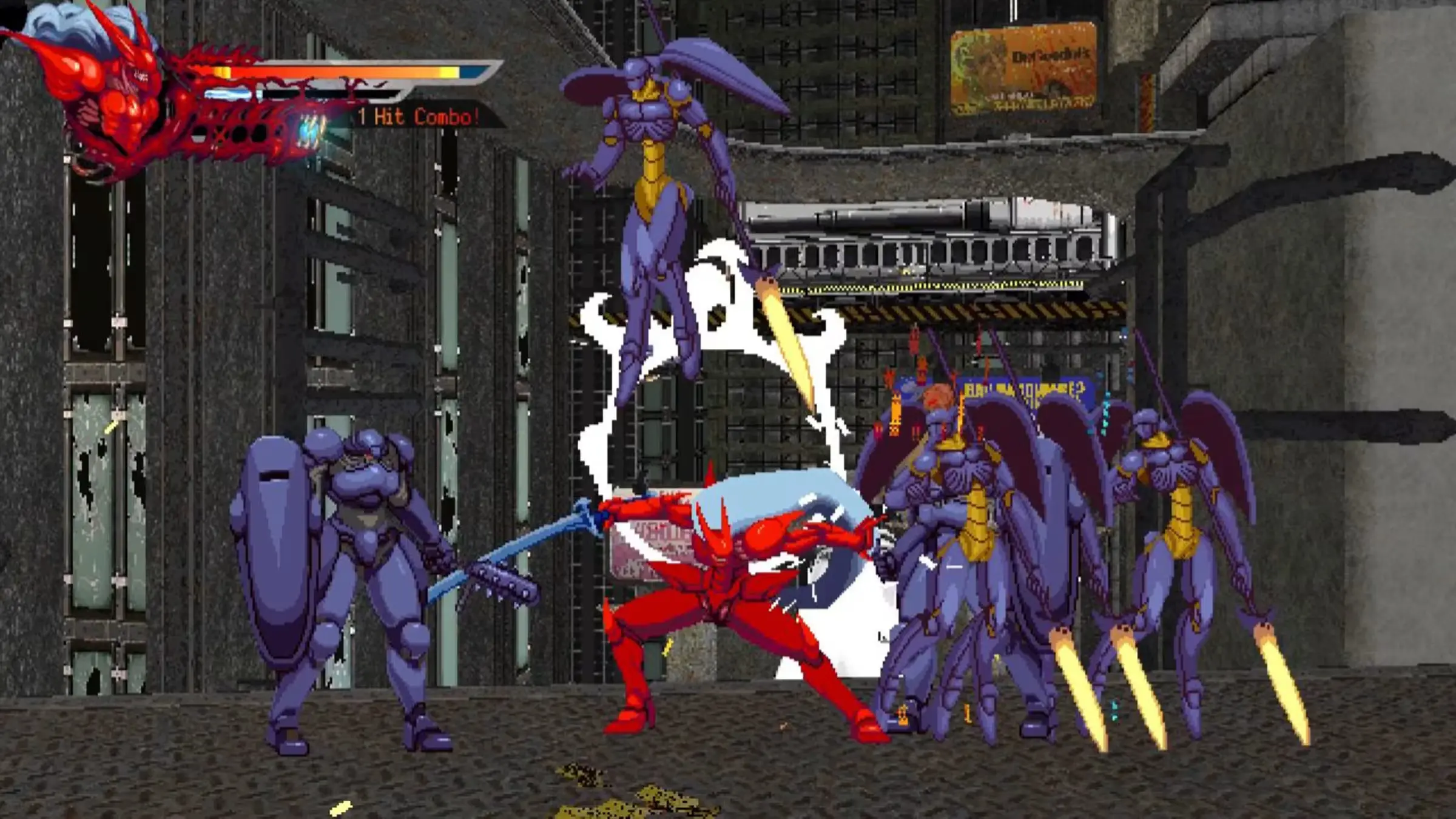
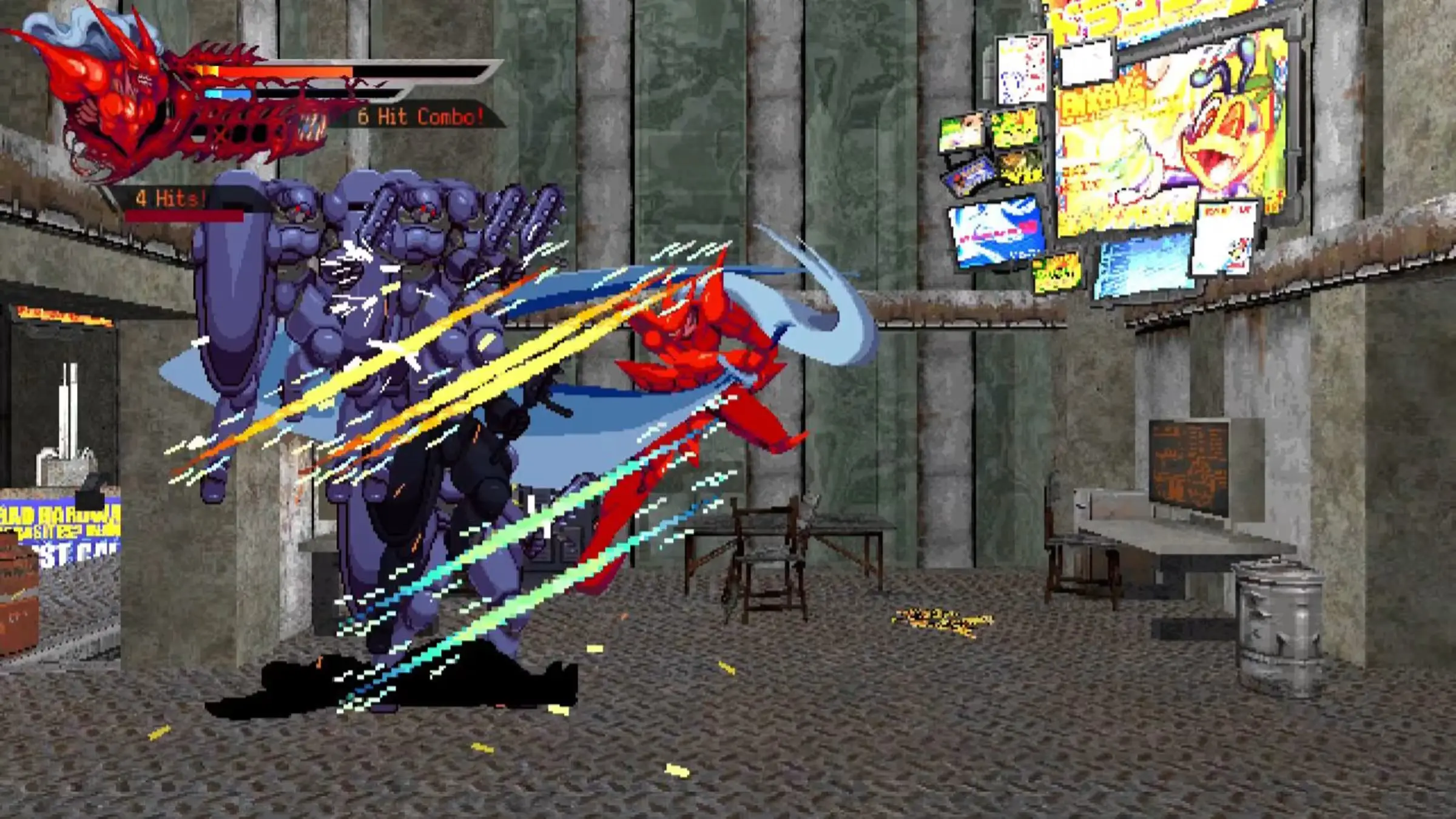
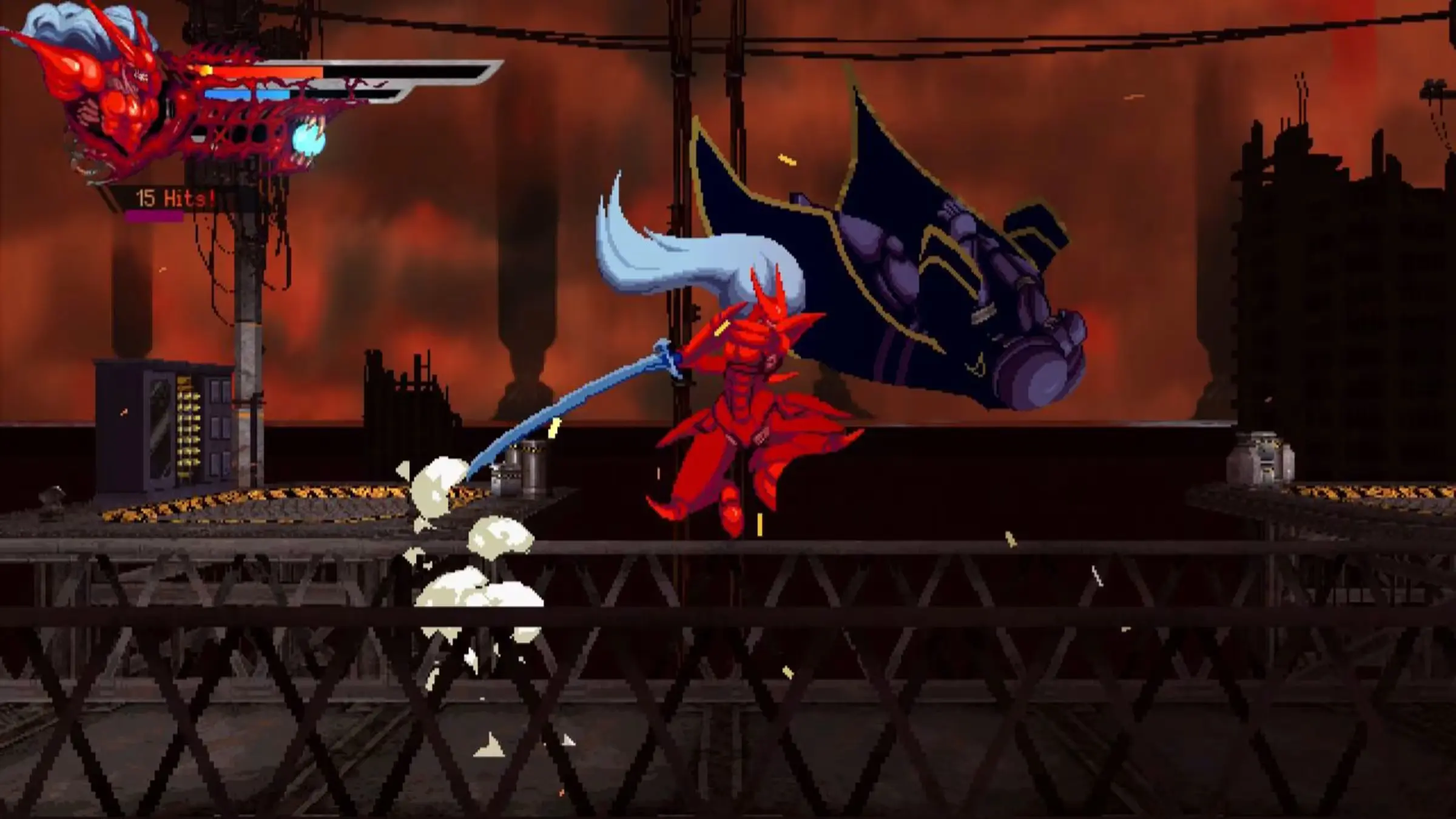
Slave Zero X gameplay centers on fast-paced 2.5D character action. The format gives fights a readable side-view structure while still supporting animated attacks, rapid movement, and large enemies that can dominate the screen. It is a presentation designed for momentum: players dash, attack, avoid pressure, and return to offense before an enemy can regain control.
Responsive movement is a major part of that rhythm. Dashes and air recoveries are useful for escaping attacks and adjusting position, while attack animations help sell the impact of Shou’s strikes. The game encourages aggression, but it does not treat aggression as careless button pressing. Careful timing matters, particularly when avoiding attacks or looking for a chance to counter.
Parrying is one of the game’s important defensive tools. Deflecting an incoming attack can prevent damage and create an opening, making it useful for players willing to learn opponent timing. Combos and special attacks support a more forceful offensive style, while weapon and ability upgrades provide a sense of progression across the action.
That combination gives Slave Zero X Switch NSP XCI a clear identity as an arcade action game with character-action mechanics. It is suited to players who enjoy active defense, precise movement, and combat systems where improvement comes from learning both their own moves and the behavior of their opponents.
Why Boss Battles Demand Pattern Recognition
Slave Zero X boss battles raise the intensity through large-scale foes with distinct challenges. These encounters are not only tests of damage output. They demand quick reflexes, strategic thinking, and enough patience to identify what a particular enemy is doing before committing to an attack.
Learning enemy patterns is crucial. Bosses have individual mechanics, attack rhythms, and weaknesses, so repeated observation can be as valuable as fast reactions. A player who recognizes an attack tell has more time to dodge, parry, reposition, or prepare a counterattack. This turns difficult confrontations into a process of adjustment rather than simple endurance.
The same principle applies to regular combat. Understanding when to dash away, when to recover in the air, and when to extend a combo helps maintain control in aggressive encounters. The game’s action is therefore built around a useful balance: bold offense can be rewarding, but it works best when supported by awareness.
Dystopian Visuals and Themes of Humanity Versus Machine
The visual atmosphere of Slave Zero X’s dystopian world is shaped by grim cityscapes, corporate dominance, and hostile bio-mechanical enemies. Its world is rendered as a place where machinery is not neutral background technology, but a visible expression of control and violence.
That presentation supports the game’s central themes of freedom, sacrifice, and humanity versus machine. Shou embodies those ideas through his own nature as a human-minded bio-mechanical prototype, while the Megacorp represents the larger machinery of oppression. The contrast gives the setting emotional weight without softening its harshness.
For players drawn to demanding arcade action, animated 2.5D combat, and dystopian science-fiction imagery, Slave Zero X offers a focused combination of speed, atmosphere, and escalating confrontation. Its strongest appeal lies in the connection between its combat demands and its world: every encounter unfolds inside a future defined by control, resistance, and the uncertain boundary between person and weapon.