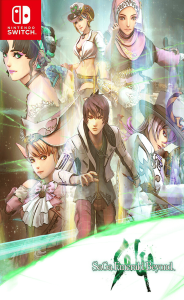
SaGa Emerald Beyond Switch NSP
Report Link Error
Select the broken download file, then submit the report.


Screenshots
About Game
SaGa Emerald Beyond Switch NSP is a role-playing game built around intersecting dimensions, player-led routes, and demanding turn-based encounters. Square Enix released the game in the USA on April 25, 2024, bringing an adventure whose direction changes according to the protagonist chosen and the decisions made across its connected worlds.
SaGa Emerald Beyond on Nintendo Switch: Release Facts at a Glance
Reference details
- Release date: April 25, 2024
- Region: USA
- Publisher: Square Enix
- Genre: RPG
- Languages: English and Japanese
- Title ID: 01008BE01E1C2000
- Firmware requirement: 17.0.1
- File size: 3.50 GB
The basic release information is concise, but it points toward a much less straightforward game structure. SaGa Emerald Beyond is an RPG that encourages experimentation in story routes, party construction, and combat decisions. Its English and Japanese language support also reflects the game’s availability for players approaching its unusual world-spanning premise from different perspectives.
Emerald Waves and the Mystery Linking Multiple Worlds
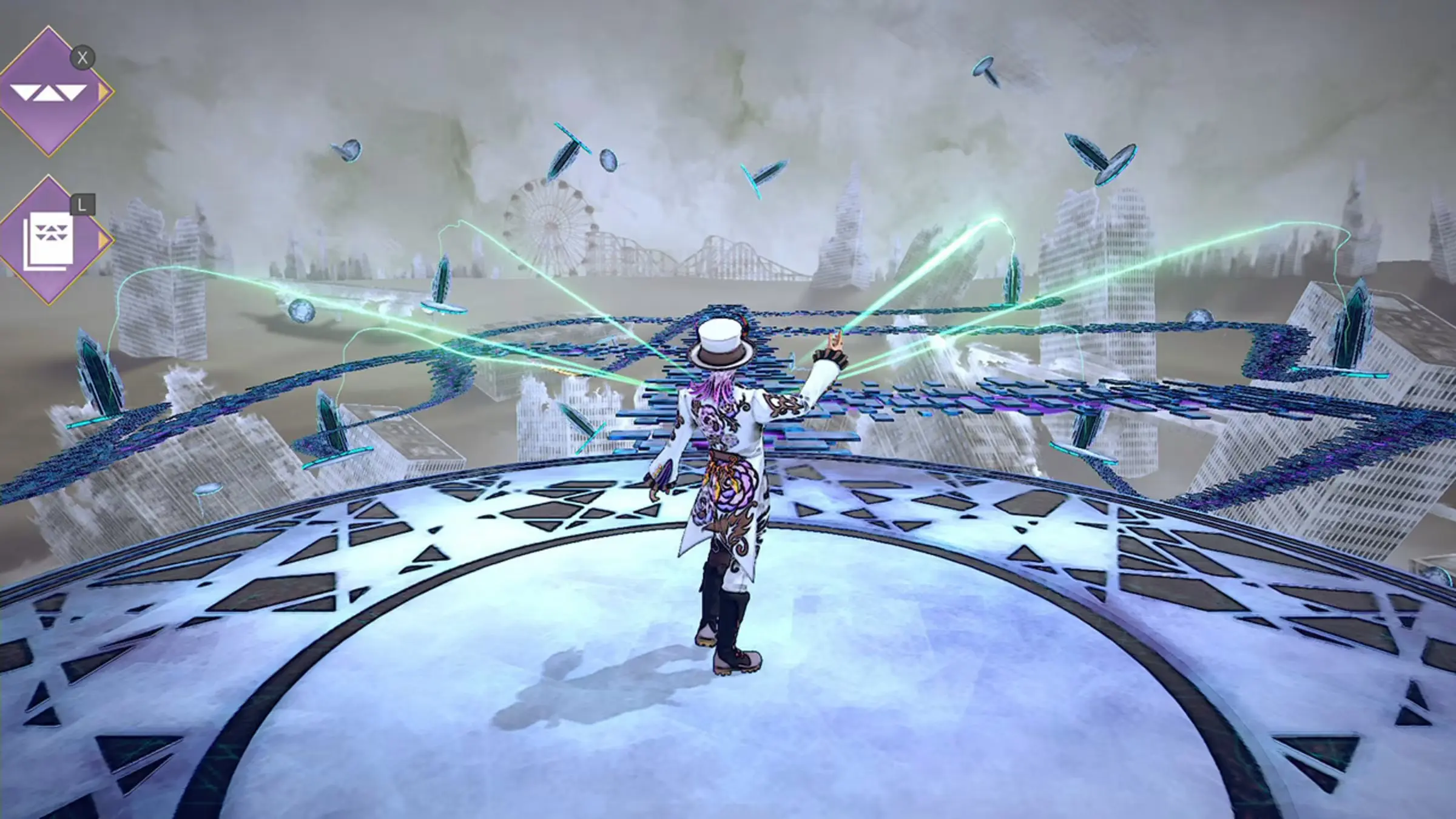
The story begins with the Emerald Waves, an unexplained phenomenon that links separate dimensions. These waves create the foundation for the journey: rather than remaining in one setting, the selected protagonist moves between distinct realms while seeking answers about the wider mystery.
Each world has its own inhabitants, challenges, and identity, giving the adventure an atmosphere of discovery rather than a single fixed road. The connected-dimension concept also makes uncertainty part of the appeal. A new realm can offer another piece of the larger puzzle, an unexpected character encounter, or a fresh complication tied to the Emerald Waves.
SaGa Emerald Beyond embraces non-linear storytelling, so choices have a meaningful role in how events develop. Paths, events, and endings can differ according to player actions. The result is a story that is less concerned with directing every player through the same sequence and more interested in letting them assemble their own understanding of the connected worlds.
That structure gives the mystery a personal quality. Players are not simply observing a predetermined search for answers; they are making decisions that influence which answers, encounters, and consequences they see along the way.
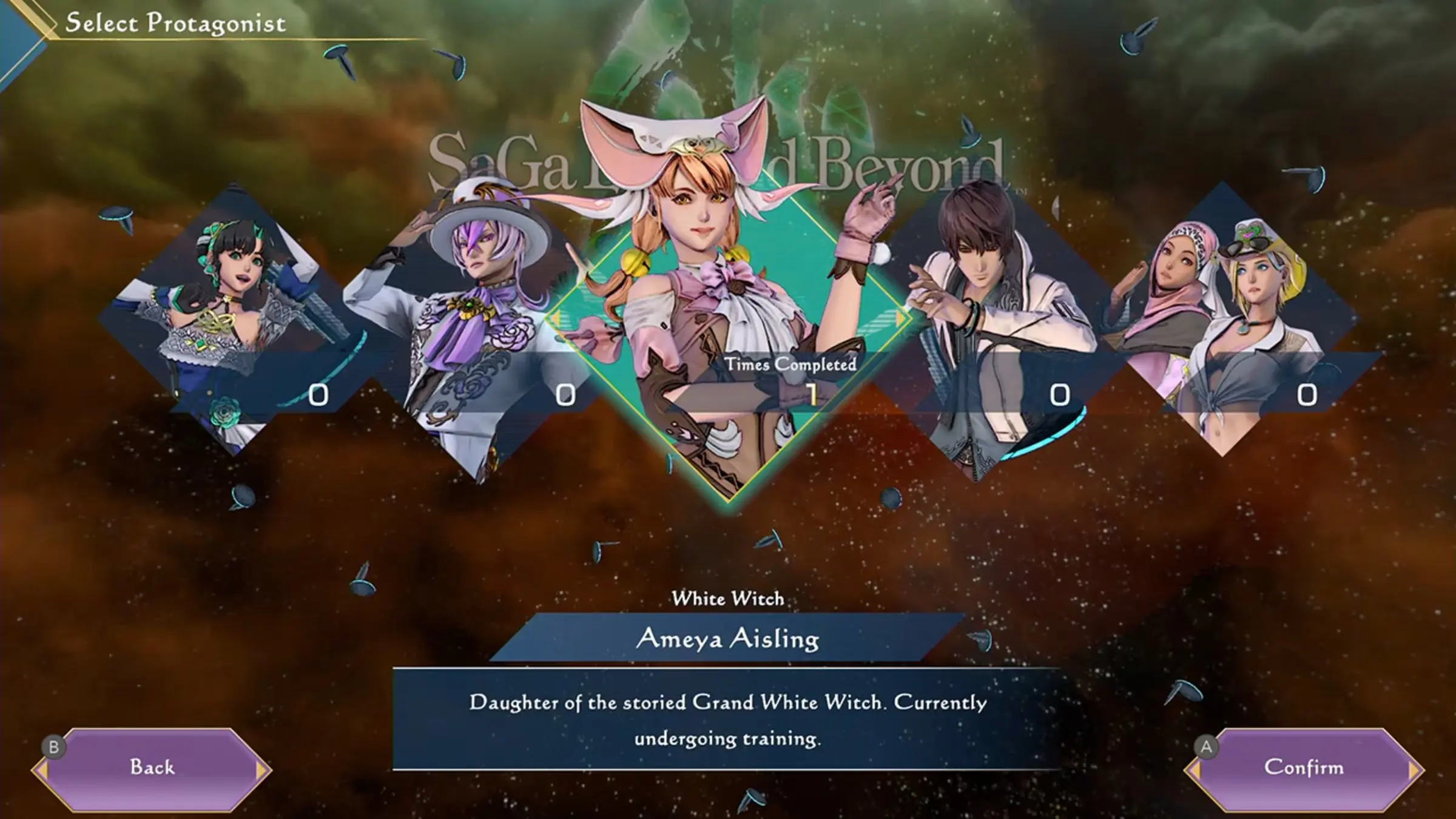
Choose a Protagonist, Shape a Different Journey
The game’s protagonists come from different origins and carry distinct motivations into the Emerald Beyond. Choosing one does more than alter the face of the party leader. It frames the journey through that character’s circumstances, goals, and relationship to the strange dimensions connected by the Emerald Waves.
This is where SaGa Emerald Beyond replayability takes shape. A route experienced through one protagonist does not promise the same emphasis, events, or perspective as another. Since the narrative can branch in response to choices, returning with a different hero can reveal alternate paths through the broader mystery.
The approach suits players who enjoy comparing outcomes and revisiting a game with a new point of view. It also gives newcomers a clear place to begin: select a protagonist, follow that journey’s particular motivations, and allow the larger interdimensional story to unfold through play.
- Pick a perspective: A chosen protagonist supplies a distinct origin and motivation for the journey.
- Cross dimensions: Travel between worlds connected by the Emerald Waves.
- Make decisions: Choices can lead the narrative toward different paths, events, and endings.
- Build a group: Recruit characters with differing skills and combat styles.
- Adapt in battle: Use turn order, attacks, and defensive options against difficult opponents.
How the Timeline Battle System Rewards Tactical Planning
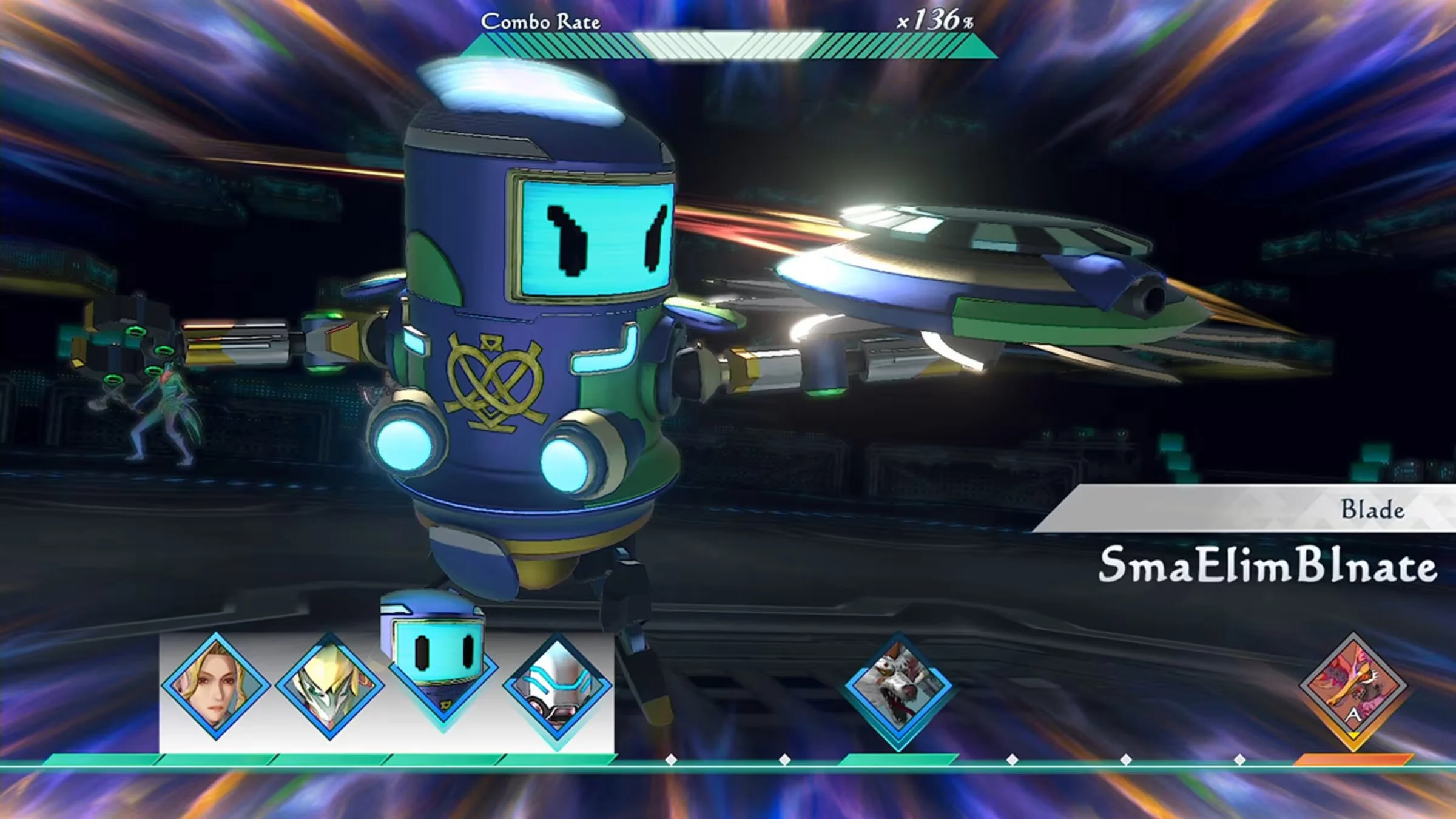
Combat is turn-based, but success depends on more than selecting an attack and waiting for the result. The Timeline Battle System places attention on turn order, creating opportunities to plan around when party members and enemies will act. Manipulating that order can open the way for stronger offensive sequences or help a party prepare for incoming pressure.
Combos are part of that tactical picture. Aligning attacks effectively can create valuable opportunities, while defensive planning matters when a difficult enemy or boss encounter threatens to disrupt the party’s momentum. The system asks players to consider timing as well as raw ability choice.
This makes encounters feel like problems to be worked through rather than obstacles solved by routine. A party may need to reconsider its approach after a hard fight, changing abilities, weapons, or timing decisions to find a better response. The strategic focus is particularly relevant for players who prefer combat that rewards observation and adjustment.
SaGa Emerald Beyond Switch NSP is therefore best approached with patience in battle. The game encourages players to study the timeline, recognize attack opportunities, and weigh defense against aggression instead of relying on a single repeated tactic.
Building a Party From a Diverse Character Roster
Party assembly is closely tied to the game’s tactical flexibility. Recruitable characters bring different personalities, skills, and combat styles, allowing the group to change as the journey moves through its many worlds. A party is not merely a collection of extra fighters; its composition affects the range of decisions available during combat.
Different skills and weapon types invite experimentation. Players can look for combinations that support their preferred approach, whether that means pursuing attack opportunities, preparing stronger defenses, or exploring techniques that work well together. Because the Timeline Battle System rewards planning, the make-up of the group can shape how comfortably a player handles challenging encounters.
The roster also supports the game’s broader sense of variety. New characters can alter the feel of a route while providing practical reasons to reconsider established strategies. For players who enjoy adjusting a team instead of locking into one arrangement early, this is a meaningful part of the experience.
The Glimmer System and Combat-Driven Character Growth
SaGa Emerald Beyond handles progression through combat-driven growth rather than relying on traditional leveling alone. Characters can learn new techniques and strengthen existing abilities through Glimmers, which can occur in battle. This gives fights an additional layer of possibility: a difficult encounter may also become the moment when a useful new skill appears.
The Glimmer system encourages flexible play. Experimenting with weapon types and abilities can lead to new techniques, making curiosity a practical part of progression. Instead of treating a character’s tools as permanently fixed, players can continue discovering and improving options as they face new enemies.
That design fits the game’s wider interest in choice and adaptation. Its branching journeys invite repeat visits, its roster invites party experimentation, and its combat asks for tactical thought. SaGa Emerald Beyond is particularly suited to RPG players interested in non-linear stories, varied protagonists, evolving abilities, and battles where careful planning can matter as much as the action selected.
Recommended Similar Games
 DRAGON QUEST VII Reimagined Switch NSPView Game
 Baten Kaitos I & II HD Remaster Switch NSP XCIView Game
 Harvest Moon: Home Sweet Home Special Edition Switch NSPView Game
 Kazuma Kaneko’s Tsukuyomi Switch NSPView Game
 Mina the Hollower Switch NSPView Game
 Mushoku Tensei Jobless Reincarnation Quest of Memories Switch NSPView Game