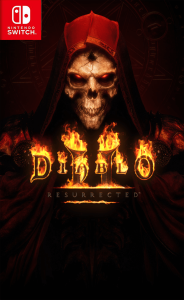
Diablo II: Resurrected Switch NSP
Report Link Error
Select the broken download file, then submit the report.
Screenshots
About Game
Diablo II: Resurrected Switch NSP brings Blizzard Entertainment’s dark fantasy action role-playing game to Nintendo Switch, offering a portable route back into Sanctuary. Released on September 23, 2021, this remastered edition preserves the grim journey, demon-filled battles, character-building choices, and loot pursuit that define Diablo II, while presenting them through an updated visual approach.
Diablo II: Resurrected on Nintendo Switch: A Portable Return to Sanctuary
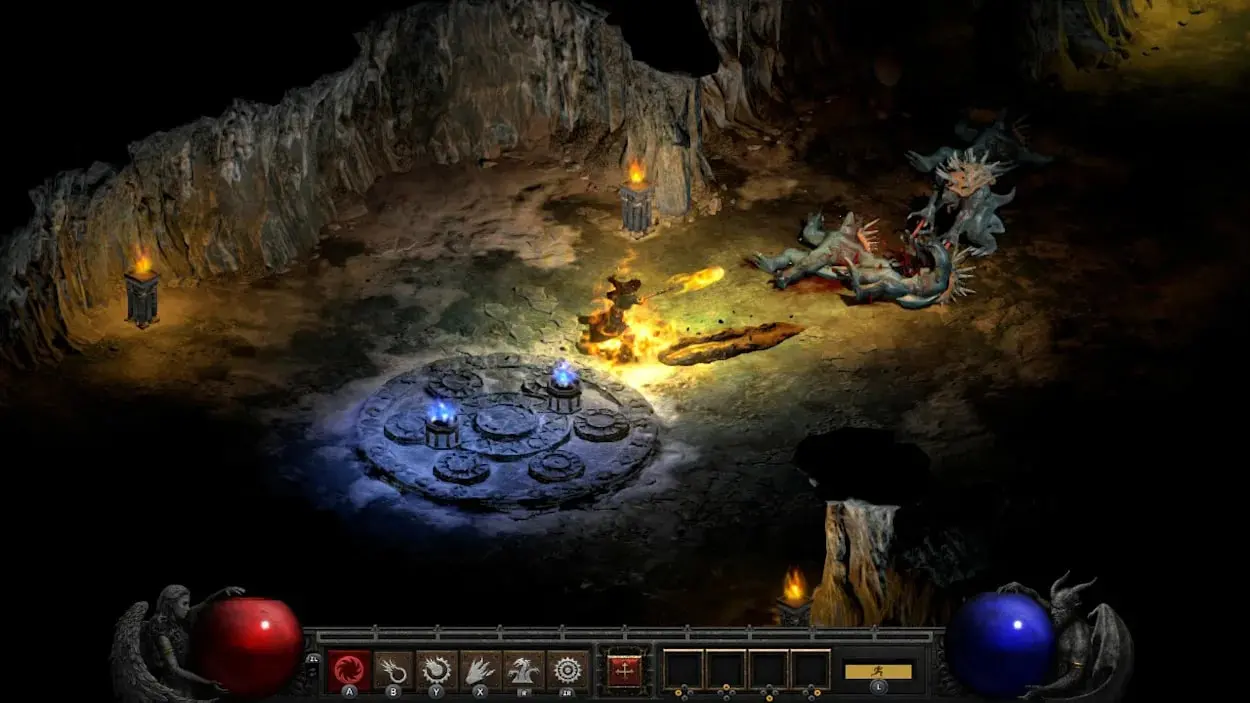
Sanctuary remains a hostile place: ancient ruins, corrupted wilderness, imposing fortresses, and demon-haunted roads set the tone for an adventure built around danger and discovery. Diablo II: Resurrected frames that familiar world with remastered visuals while retaining the series’ severe atmosphere. Its action and adventure elements are tied closely to role-playing progression, so each trip into a dungeon can affect a hero’s future.
The Switch version suits a game structured around repeated expeditions. A player can move through story areas, explore randomly generated locations, defeat enemies, return with new equipment, and then head out again with a stronger or differently configured character. That rhythm makes Sanctuary feel less like a single linear route and more like a world to revisit through new heroes and builds.
For players searching for a portable Sanctuary adventure, the appeal is not only the campaign’s dark fantasy setting. It is the ongoing process of improving a character, testing equipment, and facing increasingly dangerous opposition as the journey continues.
The Dark Wanderer’s Trail and the Threat of the Prime Evils
The Diablo II: Resurrected story begins after the events of the first Diablo. The former hero has been corrupted by Diablo and now travels as the Dark Wanderer, leaving destruction and ancient evil in his wake. The player takes up the pursuit, following a trail that leads through five acts and deeper into Sanctuary’s conflicts.
Those acts move through locations including the Rogue Encampment, Lut Gholein, Kurast Docks, the Pandemonium Fortress, and the Worldstone Keep. Each stage introduces its own enemies, allies, and challenges, while powerful bosses test the strength of a developing character. The Dark Wanderer is the immediate focus early on, but the larger danger lies with the Prime Evils: Diablo, Mephisto, and Baal.
Dark lore, prophecies, and old conflicts give the campaign its weight. The threat is not simply a series of monster encounters; it is the possibility that the Prime Evils could unite their power and bring devastation to all life in Sanctuary. That escalating stakes-driven structure gives the journey a strong sense of forward motion even as players pause to explore for gear and experience.
The Seven Classes and Their Distinct Playstyles
Character choice is one of the first major decisions. Diablo II: Resurrected offers seven classes: Amazon, Assassin, Barbarian, Druid, Necromancer, Paladin, and Sorceress. Each has distinct skills and combat approaches, encouraging players to consider how they want to meet the game’s demon hordes rather than treating every hero as interchangeable.
The Amazon, Necromancer, and Sorceress illustrate the range available, while the other classes add further options for players who prefer different methods of attack and defense. Some choices may appeal to those who enjoy direct combat, while others invite a more skill-focused approach. The important point is that class selection shapes the experience from the opening areas onward.
This variety also supports repeat play. Finishing or advancing with one class does not exhaust the game’s possibilities, because a different hero begins with a different set of skills and decisions. A new character can turn familiar locations and encounters into a fresh tactical exercise.
Combat, Skill Trees, and Character-Build Decisions
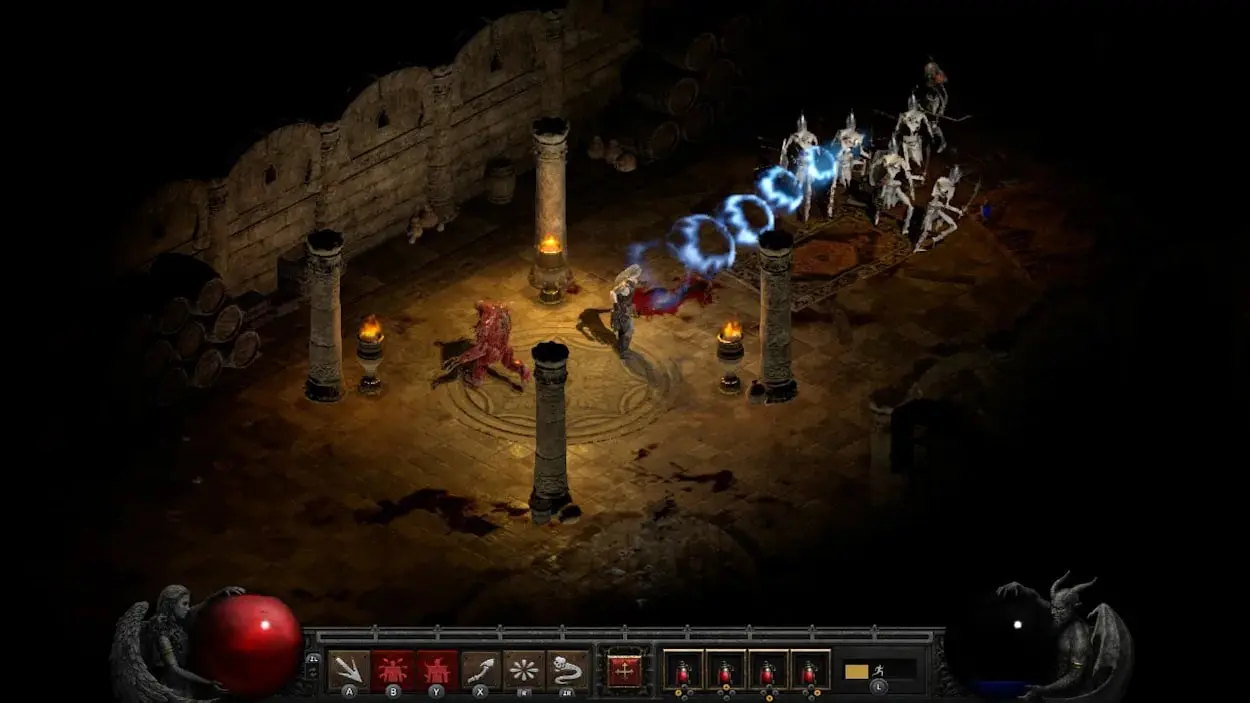
Combat follows a fast, forceful action RPG pattern: heroes battle large groups of demons and monsters, use class-specific abilities, and prepare for tougher foes ahead. Yet success depends on more than defeating the next group. Skill points and attribute points allow players to tailor their heroes over time, creating specialized Diablo II builds rather than following one fixed path.
- Choose a direction. Pick a class whose skills fit the style of combat you want to pursue.
- Spend with purpose. Skill trees reward considered point allocation as a hero develops.
- Shape the character. Attribute points provide another way to influence a build.
- Read the rewards. New gear can change what a character is equipped to do in battle.
- Meet rising danger. Act bosses and later difficulties demand stronger preparation.
Randomly generated dungeons and outdoor areas help prevent every run from unfolding in precisely the same way. The game also includes mercenaries, AI companions who can join the player in battle and add another consideration to combat strategy. Beyond the standard campaign challenge, Nightmare and Hell difficulties raise the pressure while offering the prospect of better rewards.
Why Loot Remains Central to Every Adventure
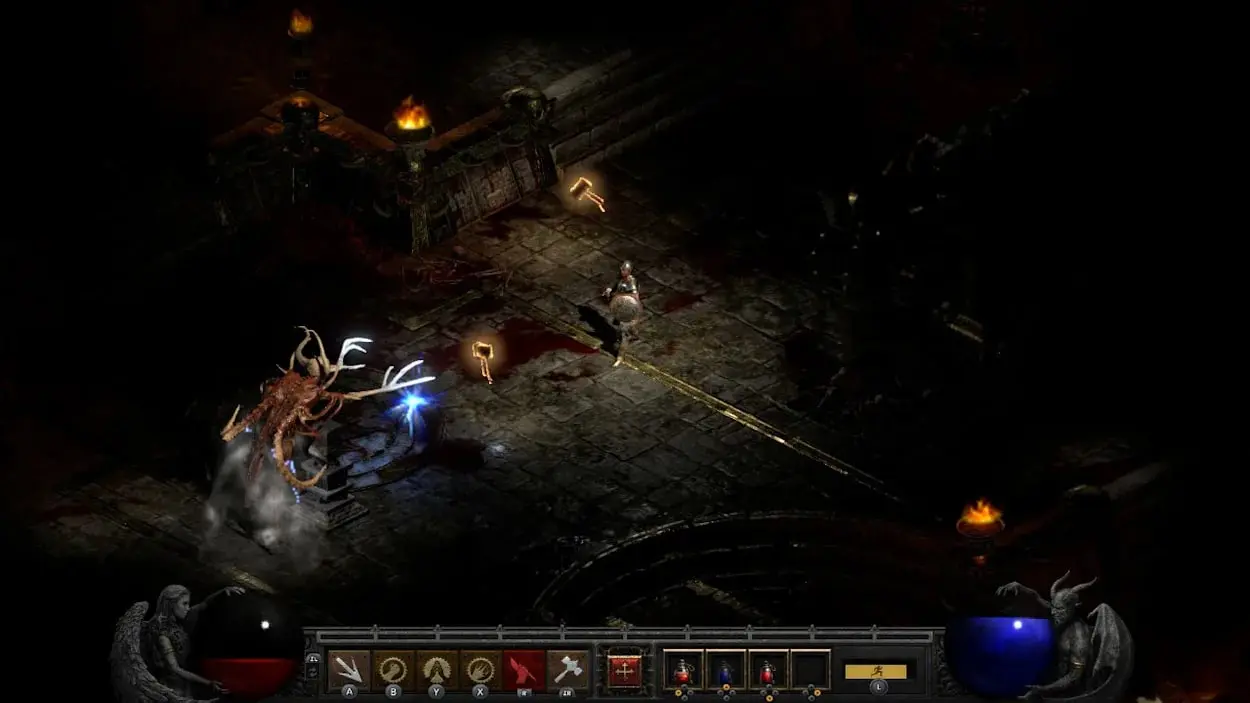
Loot is inseparable from the game’s progression. Defeated enemies and opened chests can yield randomized weapons, armor, gems, runes, and other equipment. The constant possibility of finding something useful gives even a brief detour through a dungeon a purpose, particularly when a character needs stronger tools for the next boss or difficulty level.
Among the most sought-after rewards are unique items and set pieces. These sit alongside more common finds, making the treasure hunt a continuing source of anticipation rather than a one-time reward. A newly acquired item may support an existing plan for a character, or it may suggest a different direction for future skill and attribute choices.
This is where replay value becomes especially clear. The combination of randomized loot, changing maps, multiple classes, and deeper difficulties means that repeated adventures are not solely about retelling the campaign. They are also about pursuing different builds, stronger equipment, and more demanding encounters. Diablo II: Resurrected Switch NSP is therefore well suited to players who enjoy incremental character growth and the uncertainty of each new reward.
Remastered Visuals With a Classic Graphics Option
The remastered presentation gives Diablo II: Resurrected a modern 3D visual engine, but it does not cut ties with the original game’s identity. Players can switch to classic 2D sprite graphics on the fly, making the contrast between the updated look and the older visual style part of the experience itself.
That option matters because Diablo II’s atmosphere is closely linked to its bleak environments, monstrous enemies, and oppressive sense of a world under siege. The remastered visuals offer a new way to see Sanctuary, while the classic graphics option acknowledges the game’s long history. It is a fitting arrangement for an adventure designed for both returning players and newcomers interested in a foundational dark fantasy action RPG.
With seven classes, layered progression, randomized treasure, and a campaign centered on the Dark Wanderer and the Prime Evils, the Switch edition presents a substantial journey through Sanctuary. Its strongest audience is players who value deliberate build decisions, relentless demon combat, and a dark world that rewards coming back for one more expedition.