Death’s Gambit: Afterlife Switch NSP
Report Link Error
Select the broken download file, then submit the report.
Screenshots
About Game
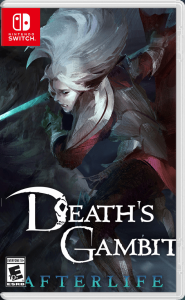
Death’s Gambit: Afterlife Switch NSP places a dark fantasy quest in the hands of Sorun, a warrior whose failed pursuit of immortality ends with a binding contract to Death. The result is a demanding 2D action RPG built around difficult battles, a connected world, and a story that treats death not as an ending, but as part of the journey forward.
A Dark Fantasy Quest Centered on Sorun and Immortality
Sorun serves Death after awakening bound by an agreement he cannot simply walk away from. His task is to confront immortal guardians and uncover the source of their power. That premise gives the Death’s Gambit: Afterlife story a clear direction while leaving room for its larger questions about sacrifice, loss, existence, and hidden forces shaping the land.
The immortality mystery is not presented as a simple search for power. Sorun’s own failed attempt to attain it gives the quest personal weight, while the people and enemies he encounters carry motives and secrets of their own. The narrative repeatedly returns to grief and the consequences of trying to escape mortality. Each discovery pushes Sorun closer to truths that are both personal and world-changing.
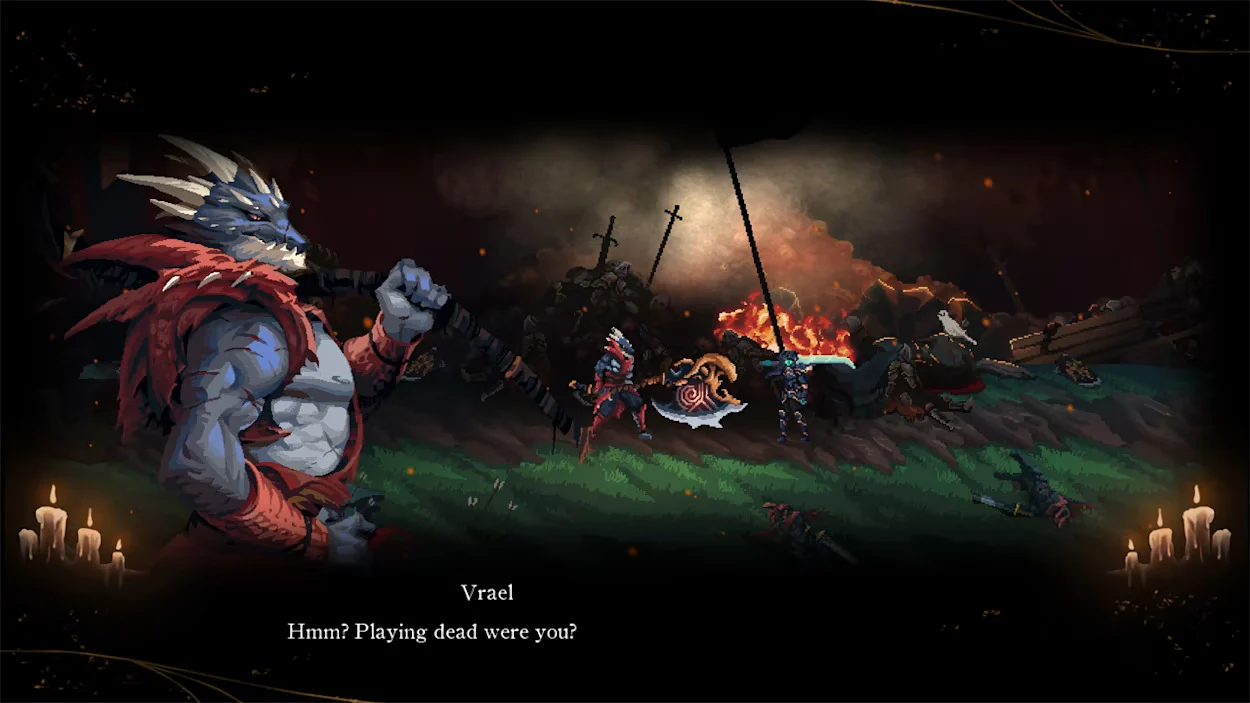
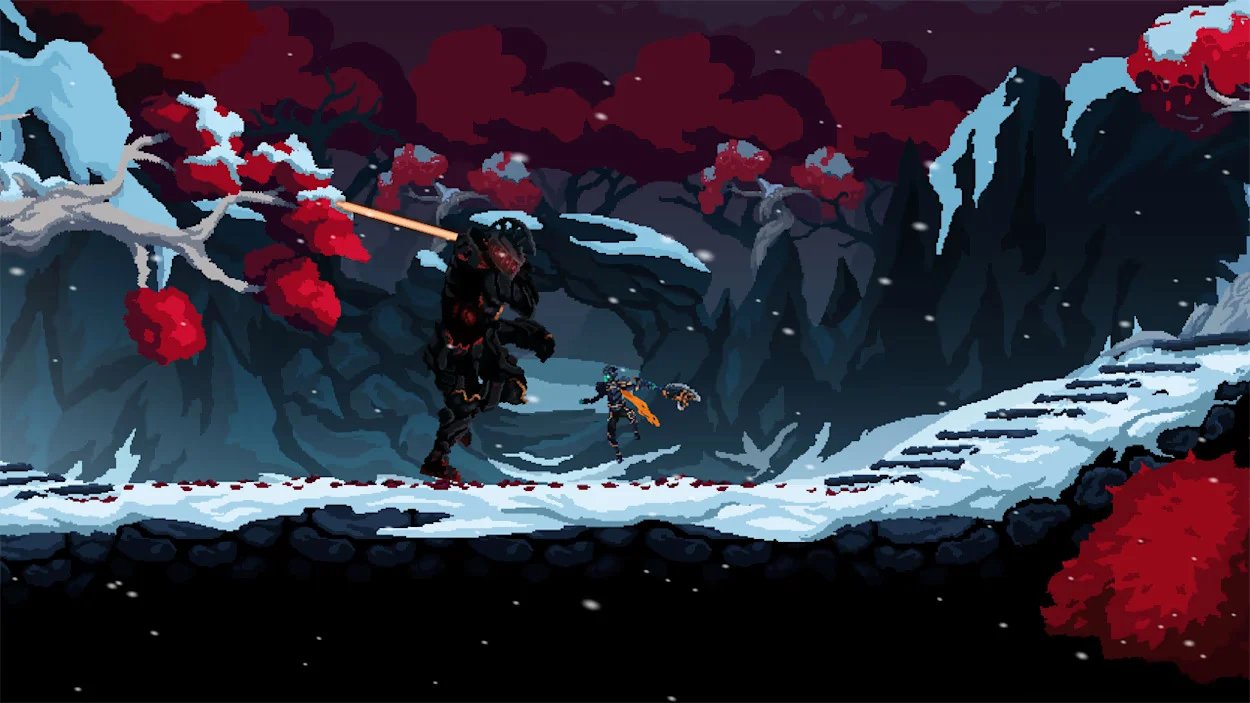
Its pixel-art presentation supports that somber tone. The setting is a perilous fantasy realm governed by Death, and the visual style helps frame its ruins, hostile paths, and imposing adversaries without needing to pull away from the game’s deliberately bleak atmosphere. Story and exploration work together: progress through the world means not only surviving, but also learning why it has become so dangerous.
How Afterlife Expands the Original Adventure
The Afterlife version expands the adventure with additional story material, areas, items, narrative elements, weapons, abilities, and bosses. These additions matter because they feed directly into the game’s core loop of exploring, fighting, and testing new approaches against increasingly demanding obstacles.
Rather than limiting its appeal to a straight sequence of encounters, the expanded content reinforces a non-linear world with secrets and branching routes. New paths can encourage further exploration, while fresh equipment and abilities create reasons to reconsider a familiar combat setup. The added narrative material also gives more context to the world Sorun is trying to understand.
This structure supports replay value in a practical sense. Different weapons, classes, talents, and routes can change how players approach difficult sections. The game does not need a single prescribed style of play; its expanded content invites experimentation within the same dark fantasy framework.
Challenging 2D Combat Built Around Precision
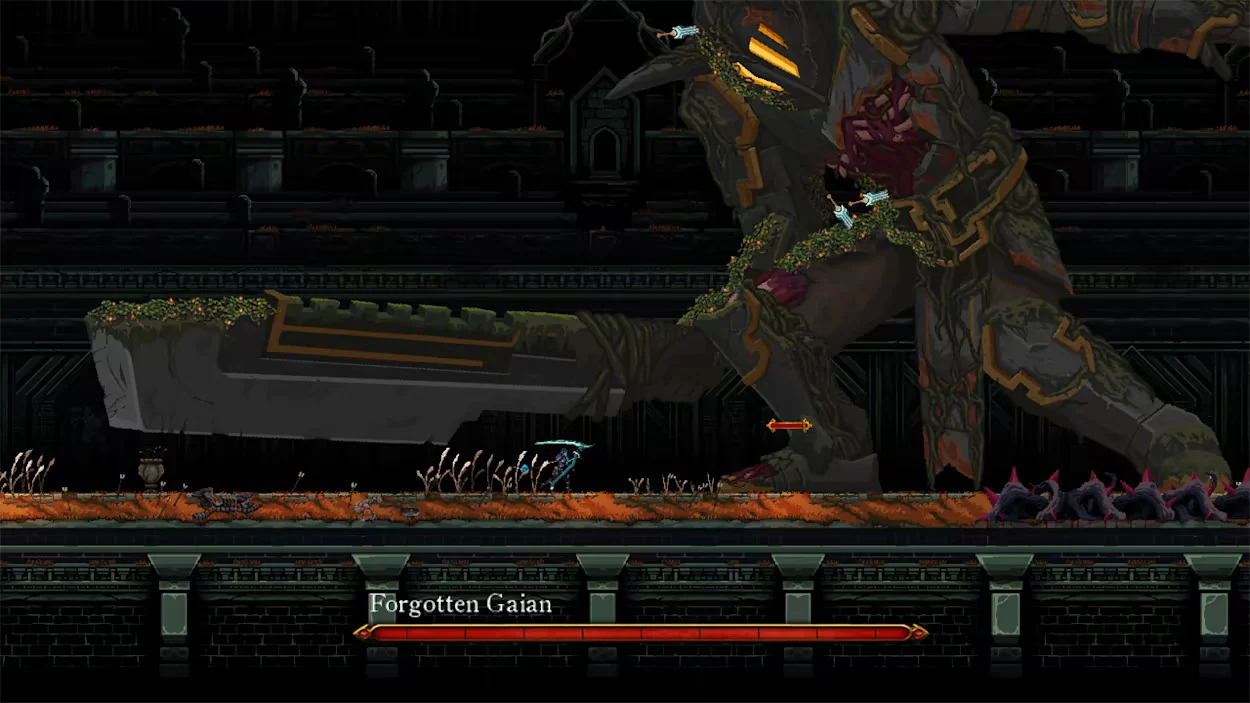
Death’s Gambit: Afterlife combat is intentionally demanding. It combines 2D action-platforming with the careful, high-stakes decision-making often associated with Souls-like games. Responsive controls are important, but reaction speed alone is not enough. Enemy patterns need to be watched, openings need to be chosen, and attacks need to be timed with care.
Ordinary foes and larger bosses are designed to require attention. Rushing forward can be costly, while patience can reveal when an enemy is vulnerable or when a retreat is the smarter option. The emphasis on strategy gives each fight a deliberate rhythm: observe, commit, adapt, and survive.
For players looking for a challenging action RPG, that difficulty is part of the reward. Victories feel earned because they come from learning an encounter rather than simply pushing through it. The game’s interconnected world extends that tension beyond combat as well, with hidden routes and formidable foes encouraging caution during exploration.
- Watch first: Study enemy behavior before committing to an attack.
- Time matters: Precise execution is vital in dangerous encounters.
- Explore thoroughly: Hidden paths may lead to useful gear and further discoveries.
- Change approach: A difficult boss may be more manageable with a different build.
- Accept the risk: Death and resurrection are woven into the pace of progression.
Weapons, Classes, Talents, and Combat Build Choices
Character customization gives the action RPG its flexibility. Sorun can use different weapon types, equipment, classes, and talents, with weapon choices offering distinct abilities and scaling. These systems allow combat styles to shift instead of locking every player into the same answer for every threat.
The value of weapons and talents becomes especially clear when the game raises the pressure. A build that works well against one enemy may be less effective against another, and a change in loadout can alter the pace of a fight. Players are encouraged to experiment with talent trees and weapon options rather than treating an early choice as permanent.
That freedom gives progression a useful sense of purpose. New gear is not merely a numerical reward; it can provide an opening to try a different strategy. Respeccing talents also supports this process, allowing players to adjust rather than abandon a challenging encounter. For an audience that enjoys testing systems as much as mastering timing, these build choices are a significant part of the experience.
Death, Resurrection, and the Stakes of Progression
The Death’s Gambit: Afterlife death mechanic allows Sorun to resurrect at designated statues. It fits naturally with a story about a servant of Death while giving the journey a structured way to recover from failure. Death is punishing in the sense that each encounter demands respect, but it is also built into the process of learning the world.
These resurrection points help define the game’s progression. A difficult route, boss, or enemy group can be revisited with better knowledge, refined timing, or a revised build. The result is an action RPG loop where setbacks are not detached from advancement; they can clarify what needs to change next.
The mechanic also reinforces the atmosphere. Sorun’s condition is inseparable from the game’s themes of immortality and mortality. His ability to return does not remove the danger from the world. Instead, it makes every return another chance to confront the same grim questions under more exacting conditions.
Nintendo Switch Release Details and Supported Languages
| Title | Death’s Gambit: Afterlife Switch NSP |
|---|---|
| Nintendo Switch release date | September 30, 2021 |
| Genre | Action, Role-Playing, Platformer, Adventure |
| Publisher | Serenity Forge |
| Developer | White Rabbit |
| Regions | Europe, USA |
| Languages | English, French, German, Italian, Spanish, Portuguese |
| Firmware | Base: v12.1.0; Update: v13.2.1 |
| File size | 935MB |
With Serenity Forge publishing and White Rabbit developing, the Switch release brings its expanded dark fantasy adventure to players in Europe and the USA. Its supported language selection covers English, French, German, Italian, Spanish, and Portuguese, while its mix of action, role-playing, platforming, and exploration makes it suited to players prepared for precise combat and a deliberately unforgiving path through an interconnected world.