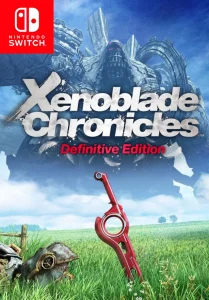
Xenoblade Chronicles: Definitive Edition Switch NSP XCI
Report Link Error
Select the broken download file, then submit the report.


Screenshots
About Game
Xenoblade Chronicles: Definitive Edition Switch NSP XCI is a role-playing adventure from Nintendo that places an intimate personal loss against an enormous, unusual world. Its central image is immediately memorable: entire civilizations live across the frozen bodies of two ancient titans, the Bionis and Mechonis. That premise gives the journey a sense of physical scale, while Shulk’s search for answers keeps the story focused on people, choices, and consequences.
A World Built on the Bionis and Mechonis
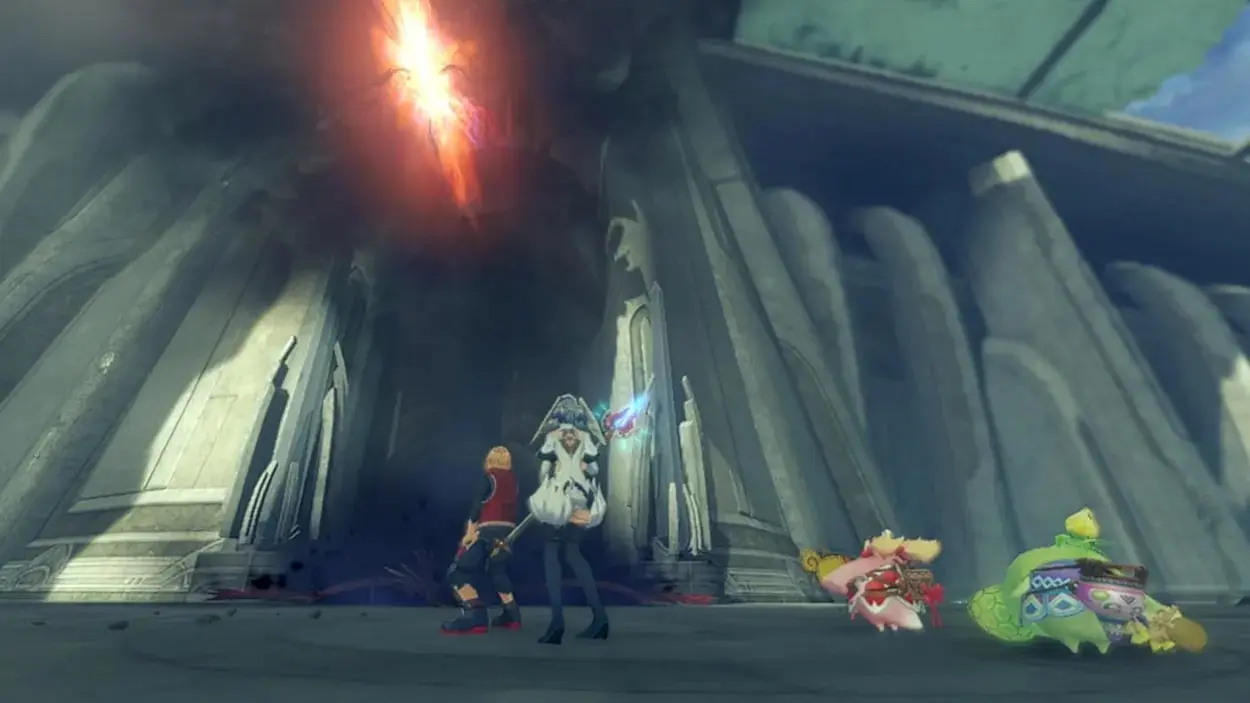
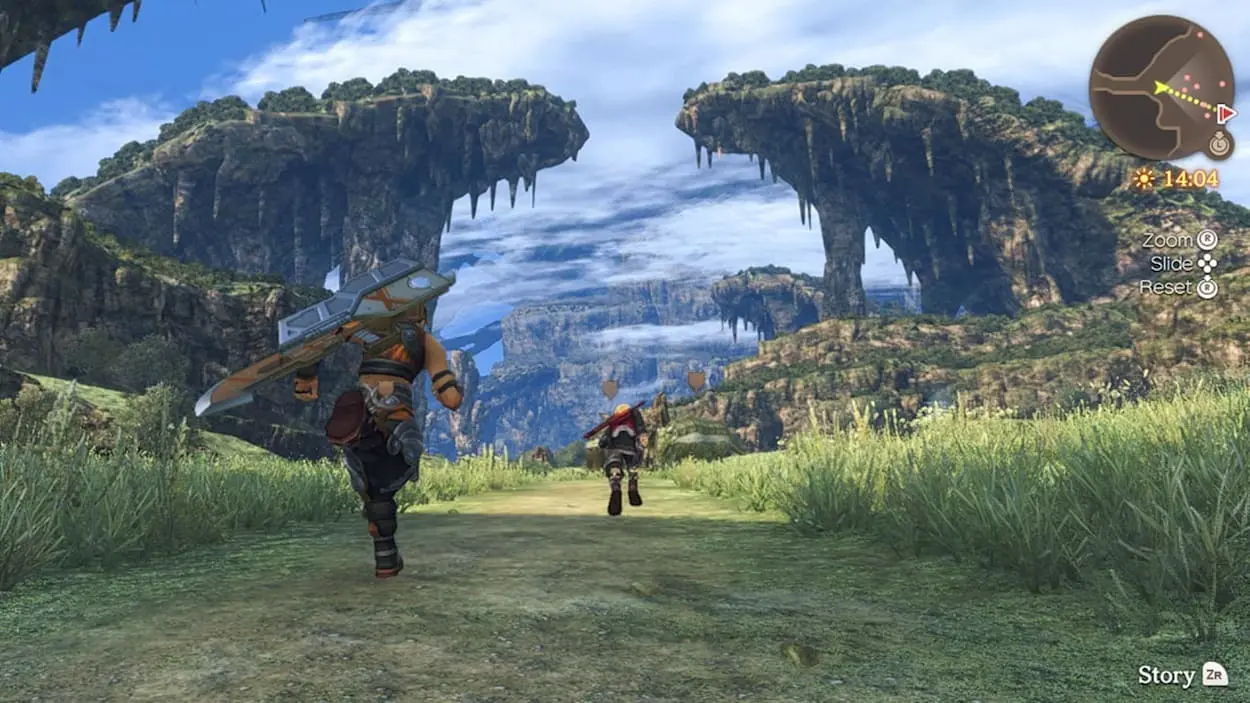
The setting begins with a conflict between two colossal beings. After their battle leaves them motionless, life takes root upon their remains. The Bionis and Mechonis are not merely distant landmarks; their bodies form the foundation for regions, settlements, and the path of the adventure. This makes the Xenoblade Chronicles Definitive Edition world feel vast in a way that is tied directly to its lore.
Shulk starts in Colony 9, a Homs settlement on the Bionis, before an attack by the mechanical Mechon breaks the area’s peace. From there, the journey crosses varied landscapes populated by wildlife, hostile creatures, allies, and powerful enemies. The changing terrain helps preserve the feeling that the party is moving through a living place rather than a series of disconnected battle zones.
Exploration benefits from this scale. Large areas invite players to look beyond the direct route, search for collectibles, and discover hidden locations. Some creatures are peaceful, while others present a serious threat, creating a useful tension between curiosity and caution. The world can be welcoming one moment and intimidating the next, particularly when a much stronger monster appears in an otherwise open area.
The Definitive Edition also brings visual upgrades and additional content to the Nintendo Switch version. Those enhancements fit a game whose appeal depends heavily on atmosphere: expansive landscapes, the contrast between organic life and machinery, and the persistent awareness that the land itself is shaped by an ancient confrontation.
Themes of Fate, Free Will, and Humanity
The Xenoblade Chronicles story follows Shulk after the Mechon attack gives him a personal reason to fight. He can wield the Monado, a legendary blade able to cut through Mechon armor. More importantly, the weapon gives him visions of future events. Those Monado visions turn combat and narrative into questions about what can be changed, what must be faced, and how much responsibility comes with knowing that danger is coming.
Revenge initially drives Shulk’s journey, but the conflict grows beyond one character’s grief. The story examines justice, the cost of violence, and the meaning of humanity in a world divided by its history and its inhabitants. Shulk’s ability to see possible outcomes creates a practical expression of fate and free will: a vision may reveal a threat, but the party still has to decide how to respond.
That approach gives the narrative room for emotional turns without reducing the characters to spectators. The larger mysteries surrounding the titans and the Monado steadily broaden the stakes. What begins as a struggle against the Mechon develops into a wider examination of origins, purpose, and the choices people make when old assumptions collapse.
Real-Time Battles Built Around Arts
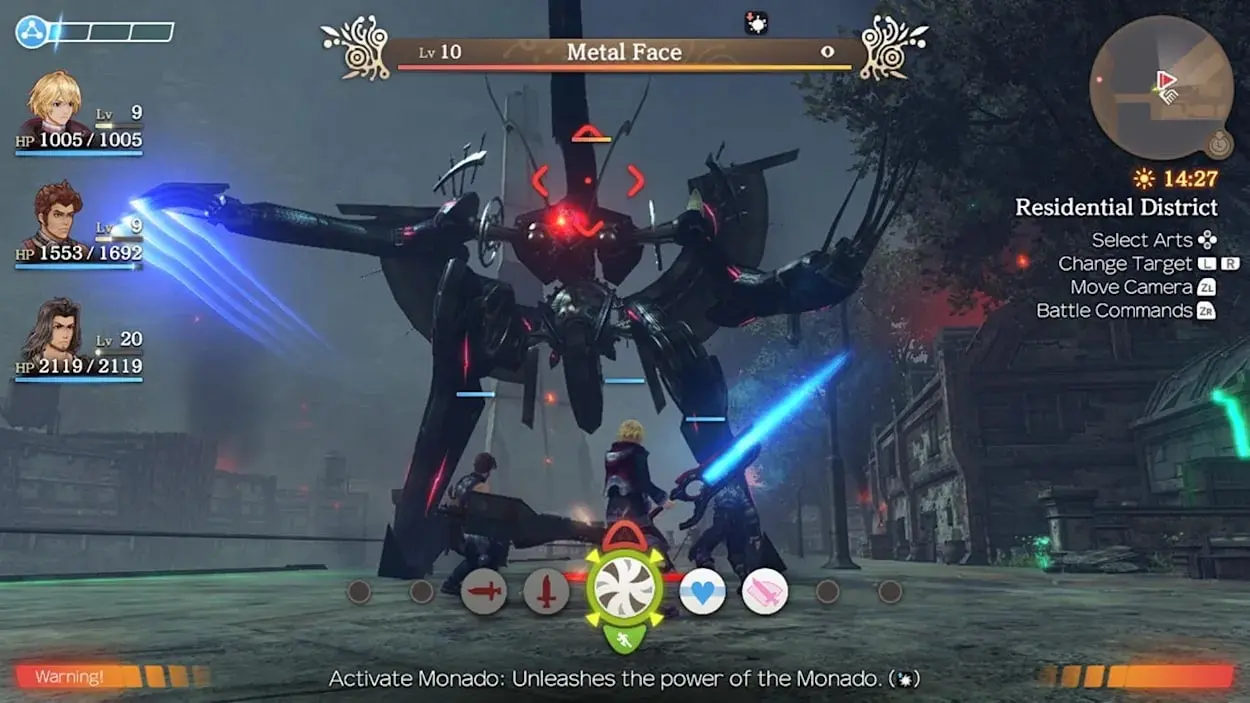
Combat runs in real time, combining movement around the battlefield with deliberate ability management. Characters attack while positioned near an enemy, but the key decisions come from using Arts at appropriate moments. These special attacks work on cooldowns, so the player cannot simply repeat the same strongest option without consideration.
Positioning matters. Moving into place can help maximize damage, while shifting away from danger can reduce pressure from an enemy attack. This creates a combat rhythm that is more active than a strictly menu-driven system, yet still depends on reading the situation and choosing the right Art. The result is a useful blend of action and strategy in Xenoblade Chronicles Definitive Edition gameplay.
Shulk’s visions add another layer. When the Monado reveals a future enemy attack, the party has an opportunity to react. Warning an ally or choosing a specific Art to prevent the predicted outcome gives battles a sense of urgency. The system reinforces the game’s themes while asking players to think ahead rather than only react after damage has been done.
Building a Three-Character Party
Party management is central to success. The active group contains three characters, and each member can contribute in a different way. A balanced team can include an attacker focused on damage, a tank built to withstand pressure, and a healer able to support the group when encounters become demanding.
These roles are not just labels. Choosing Arts and equipment lets players shape how each character performs in battle. A party can be adjusted around personal preference, enemy behavior, or the needs of a particular encounter. Stronger preparation becomes especially important when exploring areas where powerful unique monsters may be nearby.
The three-character party also supports the game’s character-driven side. Different companions bring their own strengths to fights, while their relationships influence more than dialogue. Increasing affinity can improve combat effectiveness, making party composition a matter of both mechanics and connection.
Five Exploration Priorities for New Players
- Look beyond the route. Search broad regions for hidden areas, collectibles, and places that reward a detour from the main path.
- Watch local creatures. Wildlife has different behaviors, and not every creature should be approached as an immediate fight.
- Respect the clock. The day-night cycle affects enemy types and available quests, so revisiting an area at another time can be worthwhile.
- Accept NPC requests. Side quests provide reasons to explore, help local characters, and reveal more of the world’s connections.
- Prepare for the unexpected. Powerful monsters can appear in open areas, making party setup, Arts, and equipment important before pushing deeper.
These priorities suit the game’s open approach. Exploration is not separate from progression; it feeds into it through quests, encounters, and a clearer sense of how the Bionis is inhabited. Players who enjoy taking their time with regions, rather than only moving from story objective to story objective, have plenty of reasons to pause and investigate.
Affinity, Side Quests, and Character Connections
Affinity gives the game’s relationships a mechanical purpose. Completing NPC quests and spending time with party members helps strengthen bonds, which can improve combat effectiveness. It also unlocks party conversations, allowing characters to share moments away from the main conflict.
These conversations make the group feel less like a collection of combat roles. The attacker, tank, and healer structure remains important in battle, but affinity gives players another reason to consider who travels together and how the party develops over time. The same is true of NPC quests: helping people across the world adds texture to places that might otherwise function only as stops on a larger mission.
For players drawn to expansive role-playing games with real-time combat, character progression, side activities, and a story built around difficult choices, Xenoblade Chronicles: Definitive Edition Switch NSP XCI offers a substantial journey. The USA release is listed at version 1.1.2, with Japanese, English, French, German, Italian, Spanish, Korean, and Chinese language options. Its 13GB size reflects a game built around large regions, a sizable adventure, and many opportunities to return to unexplored paths, unfinished quests, and party relationships.