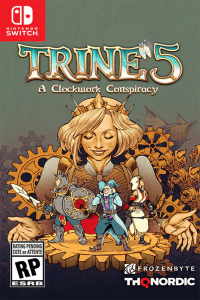
Trine 5: A Clockwork Conspiracy Switch NSP XCI
Report Link Error
Select the broken download file, then submit the report.
Screenshots
About Game
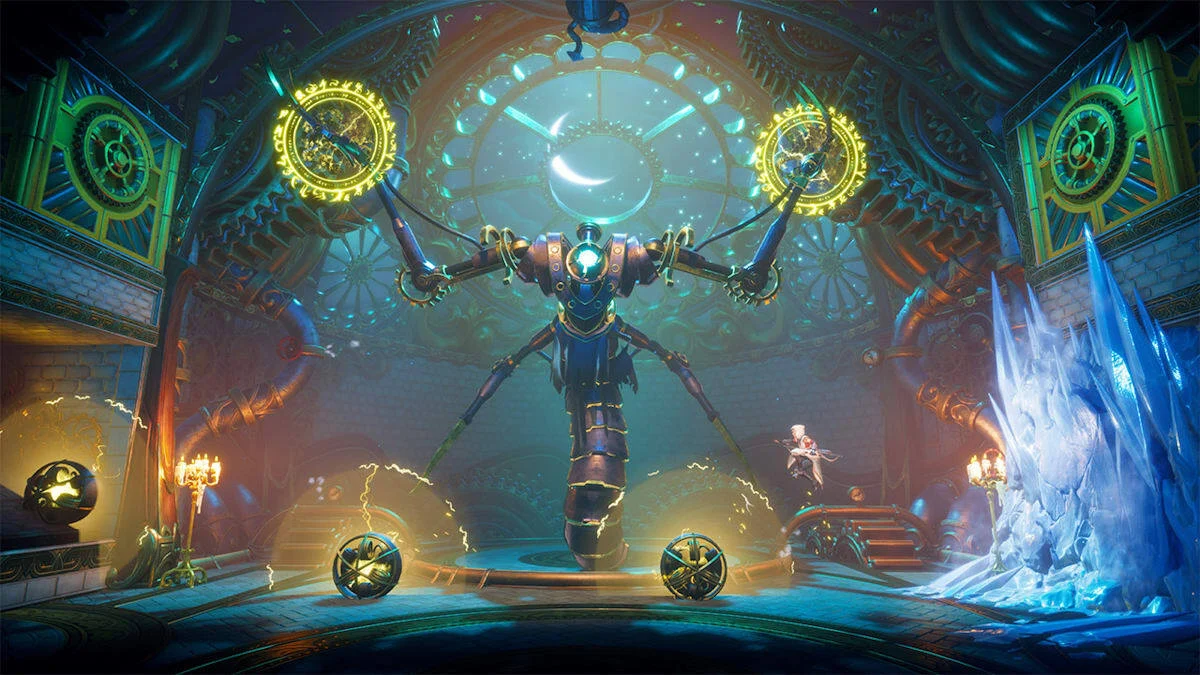
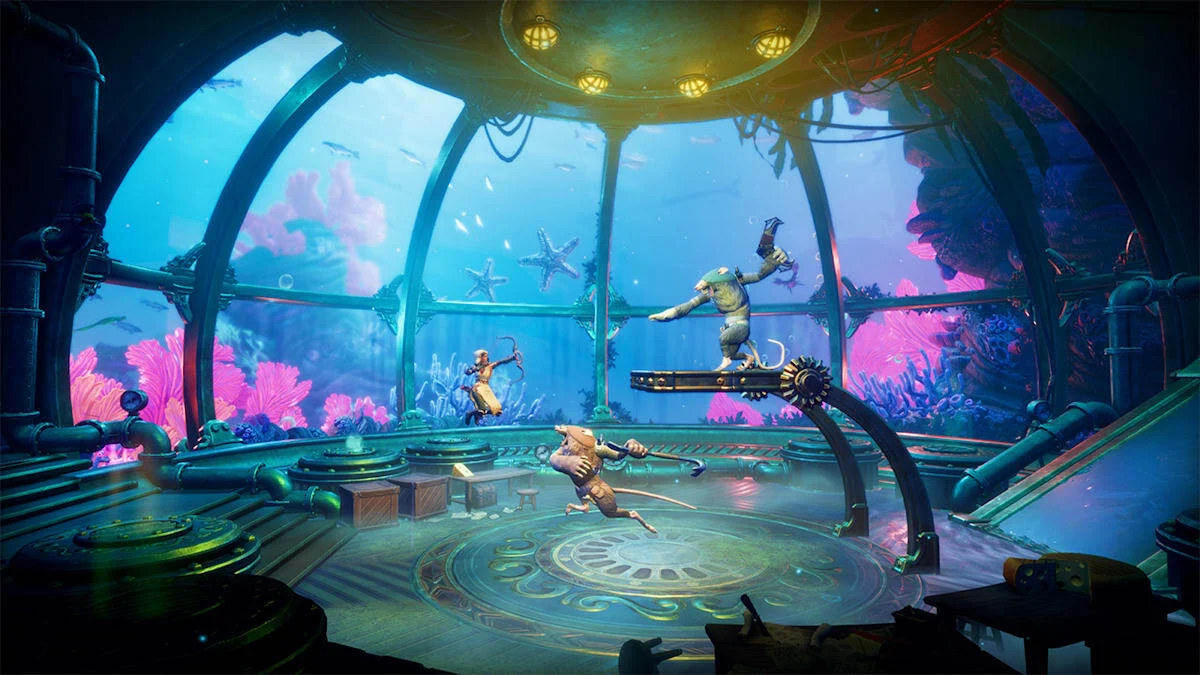
Trine 5: A Clockwork Conspiracy Switch NSP XCI brings Amadeus the Wizard, Zoya the Thief, and Pontius the Knight into a new quest against a clockwork army threatening to mechanize their kingdom. Its adventure blends physics-based puzzles, platforming, combat, and hand-crafted fantasy locations, asking players to make full use of three very different heroes.
Three Heroes, Three Essential Puzzle-Solving Roles
The strength of the Trine 5 heroes lies in their contrast. Amadeus approaches obstacles with magic and object manipulation, Zoya moves with speed and precision, and Pontius provides the direct force needed for dangerous encounters. The game allows players to switch between them as situations change, turning a blocked route, a distant ledge, or an approaching group of clockwork foes into a question of which ability fits best.
Amadeus creates useful objects and moves existing ones. Zoya combines her bow with a grappling hook, letting her attack from range and cross difficult gaps. Pontius is built for close-quarters combat, with a shield that can reflect projectiles. None of these tools feels separate from exploration: a combat skill can help manage a threat while a traversal ability can open a route to a hidden area or puzzle element.
This division gives the journey a deliberate rhythm. One moment may call for careful platforming, the next for manipulating a physical object, and the next for holding back enemies. The heroes do not simply offer three combat styles; their abilities define how the game’s spaces are read and solved.
Amadeus: Building Paths With Magic and Physics
Among the trio, Amadeus is closely tied to the game’s physics puzzles. His ability to conjure boxes can create a step where there was no foothold, while levitating objects can reposition important pieces of the environment. These powers encourage players to look at a puzzle area as a collection of movable possibilities rather than a fixed obstacle.
A box can become part of a route, a support for reaching higher ground, or a way to interact with another environmental element. Levitation adds another layer, allowing Amadeus to shift objects into more useful positions. In Trine 5 puzzles, that kind of manipulation is central to the pleasure of experimentation: a solution may emerge from changing the arrangement of a space rather than finding a single obvious switch.
Amadeus’s abilities also support the rest of the party. A path built with magic can give Zoya a better route through a gap or help Pontius reach a place where his strength is needed. The result is a role that feels practical and imaginative at once, particularly in sections where movement, height, and object placement matter.
How Character Synergy Shapes the Puzzles
Character synergy is the key idea behind much of the game’s progression. The heroes’ skills are distinct, but their value grows when players consider how one action can set up the next. Amadeus may create or move an object, Zoya may use mobility to reach a hard-to-access position, and Pontius may deal with enemies or reflect incoming projectiles when the route becomes hostile.
This makes Trine 5 gameplay more flexible than a sequence of isolated challenges. The game invites experimentation with different hero combinations and with the environmental elements placed around each puzzle. A difficult section can reward a fresh look at the room, a different order of actions, or a more inventive use of the tools already available.
That approach also connects puzzles and combat. Environmental features can be useful in both, while the need to navigate traps or confront clockwork enemies gives ability choices greater urgency. The best responses are not always the most direct ones; they come from observing the immediate situation and recognizing how the three heroes can reshape it together.
Exploring Forests, Ruins, Traps, and Hidden Secrets
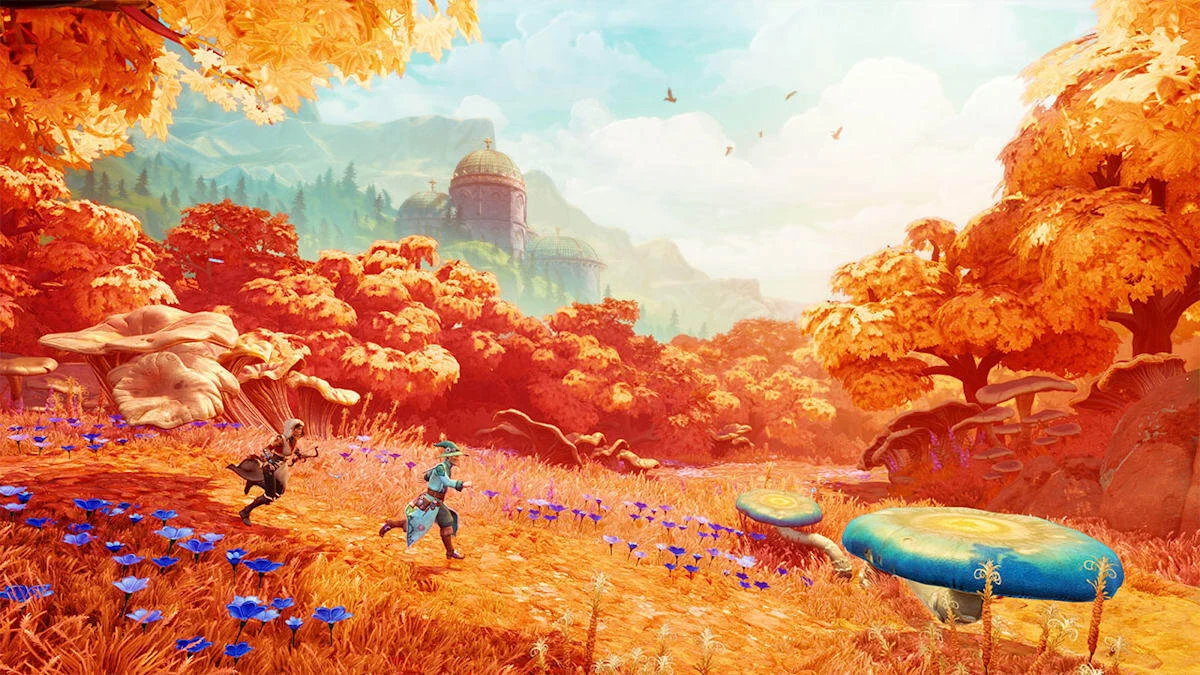
The adventure travels through varied Trine 5 environments, including lush forests and ancient ruins. These hand-crafted locations provide more than a scenic backdrop for the story’s clockwork threat. They are the setting for traversal tests, environmental puzzles, traps, enemies, and secrets to discover.
Forests suggest a more natural and magical side of the kingdom, while ancient ruins bring a sense of old structures and concealed dangers. Across these spaces, players must navigate precise platforming sections and look beyond the immediate route. The presence of secrets gives exploration an extra purpose, rewarding attention to ledges, gaps, interactive objects, and alternate paths.
The atmosphere comes from the meeting of fantasy landscapes and the menace of an advancing mechanical force. As the heroes pursue the source of the conspiracy, the settings reinforce the stakes: a kingdom under pressure, unusual forces working from the shadows, and an urgent journey through places built to test movement, timing, and problem-solving.
Co-op Play and Shared Problem Solving
Trine 5 co-op supports up to four players locally or online. That changes the feel of problem-solving in a useful way. Instead of one person switching among heroes, a group can coordinate abilities in real time, with players taking responsibility for movement, object manipulation, ranged attacks, or defense.
Cooperative play can make the game’s puzzle design especially conversational. One player may spot an environmental clue, another may reach a high position with Zoya’s grappling hook, and another may use Amadeus’s magic to create the path needed for everyone else. Combat also benefits from coordination when a party divides attention between clockwork foes, ranged pressure, and close-range defense.
Local multiplayer suits a shared, immediate puzzle session, while online multiplayer gives groups another way to tackle the adventure together. The range of heroes, secrets, and possible approaches gives repeat visits to individual challenges a reason to feel different when the group composition or strategy changes.
5 Practical Tips for Approaching Trine 5 Challenges
For players beginning Trine 5: A Clockwork Conspiracy Switch NSP XCI, the most useful habit is to treat every obstacle as a space to investigate rather than a barrier to rush through.
- Read the room. Pause to inspect the surroundings for subtle clues, interactive objects, alternate routes, and possible platforming secrets before committing to a solution.
- Rotate the heroes. Test Amadeus abilities, Zoya abilities, and Pontius abilities when progress stalls; a gap, enemy, or object may be designed around a particular strength.
- Use what the environment offers. Moveable objects and other environmental elements can matter in both puzzles and combat, so consider how they can create paths or change the encounter.
- Adjust to the threat. Zoya’s bow supports ranged attacks, while Pontius can handle close combat and reflect projectiles with his shield when clockwork foes apply pressure.
- Build on progression. Unlocking new skills and upgrades enhances the heroes’ capabilities, giving players more options for later challenges and encouraging continued experimentation.
With its mixture of magical tools, physical puzzle-solving, carefully built environments, and shared play, the game is well suited to players who enjoy platforming challenges that reward observation and collaboration. Its three-hero structure keeps the journey focused: every new obstacle is an invitation to think differently about the tools already in hand.