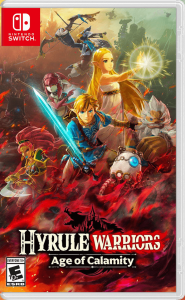
Hyrule Warriors: Age of Calamity Switch NSP XCI
Report Link Error
Select the broken download file, then submit the report.


Screenshots
About Game
Hyrule Warriors: Age of Calamity Switch NSP XCI places a familiar fantasy world under extraordinary pressure. Released for Nintendo Switch on November 20, 2020, Nintendo’s action-adventure game, developed by KOEI TECMO Games, returns to Hyrule not after disaster, but in the tense period leading toward it. Its appeal comes from the chance to see the Great Calamity through the eyes of the people trying to prevent it.
A Hyrule Story Set 100 Years Before Breath of the Wild
Hyrule Warriors: Age of Calamity is set 100 years before the events of The Legend of Zelda: Breath of the Wild. That placement gives the adventure a particular atmosphere: Hyrule is still functioning, its defenders are gathering, and its best-known heroes have not yet become distant figures from a ruined past. Yet the approaching Great Calamity hangs over every effort.
Rather than simply revisiting locations and names associated with Breath of the Wild, this prequel story frames them around a conflict for Hyrule’s survival. The stakes are clear from the outset. Calamity Ganon represents an overwhelming threat, while Hyrule’s forces must unite in the hope of resisting what is coming. The result is a story built around urgency, heroism, and the difficult choices made before a catastrophe.
For players drawn to the world and lore of Breath of the Wild, the Great Calamity setting offers a more direct look at a defining event. It shifts the perspective from exploring the consequences of defeat to taking part in the struggle against it.
How a Time-Traveling Guardian Changes Hyrule’s Fate
The Age of Calamity story begins with a small Guardian traveling back through time. Its arrival becomes the catalyst for a new version of Hyrule’s struggle, changing the conditions around a fate that once seemed fixed. This time-traveling Guardian is not merely a background detail; it provides the central premise for a story concerned with what knowledge of danger can change.
That idea gives the narrative room to revisit familiar people and events while presenting a fresh conflict over Hyrule’s future. The looming disaster remains essential, but the game’s dramatic tension comes from watching its heroes respond to a crisis that is both vast and personal. There is a sense of desperation in the campaign, tempered by the determination of characters who continue to fight despite the odds.
The premise also makes the game a useful companion to Breath of the Wild. It does not leave the earlier game’s world behind; it looks at that world from another point in its timeline, with the Great Calamity moving from history into an active battlefield.
Link, Zelda, Impa, and the Champions in Their Prime
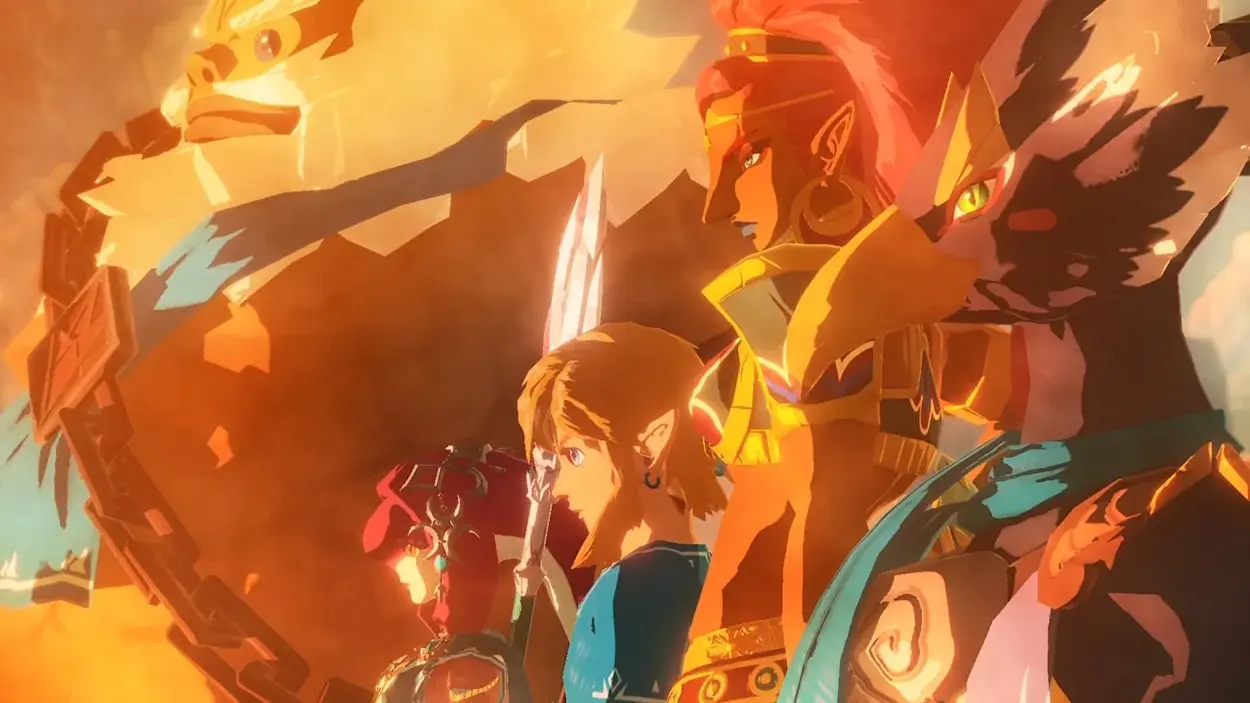
Link, Princess Zelda, and Impa lead a roster that also includes the four Champions. Their presence gives the campaign much of its emotional focus. These are not distant legends discussed after the fact, but active defenders taking part in Hyrule’s response to Calamity Ganon.
Link serves as one of the central fighters in the conflict, while Princess Zelda’s role connects the battle to Hyrule’s wider fate. Impa brings another familiar face into the action, and the four Champions make the struggle feel like a coordinated defense rather than the work of one hero alone. Their appearances add context to the people who became so important to the history surrounding Breath of the Wild.
The game’s approach is especially effective because it presents these figures in motion: preparing for battle, joining allies, and facing dangerous opposition. The story’s weight comes not just from knowing that a calamity is coming, but from seeing the people of Hyrule confront it together.
Musou Combat Meets Zelda Strategy
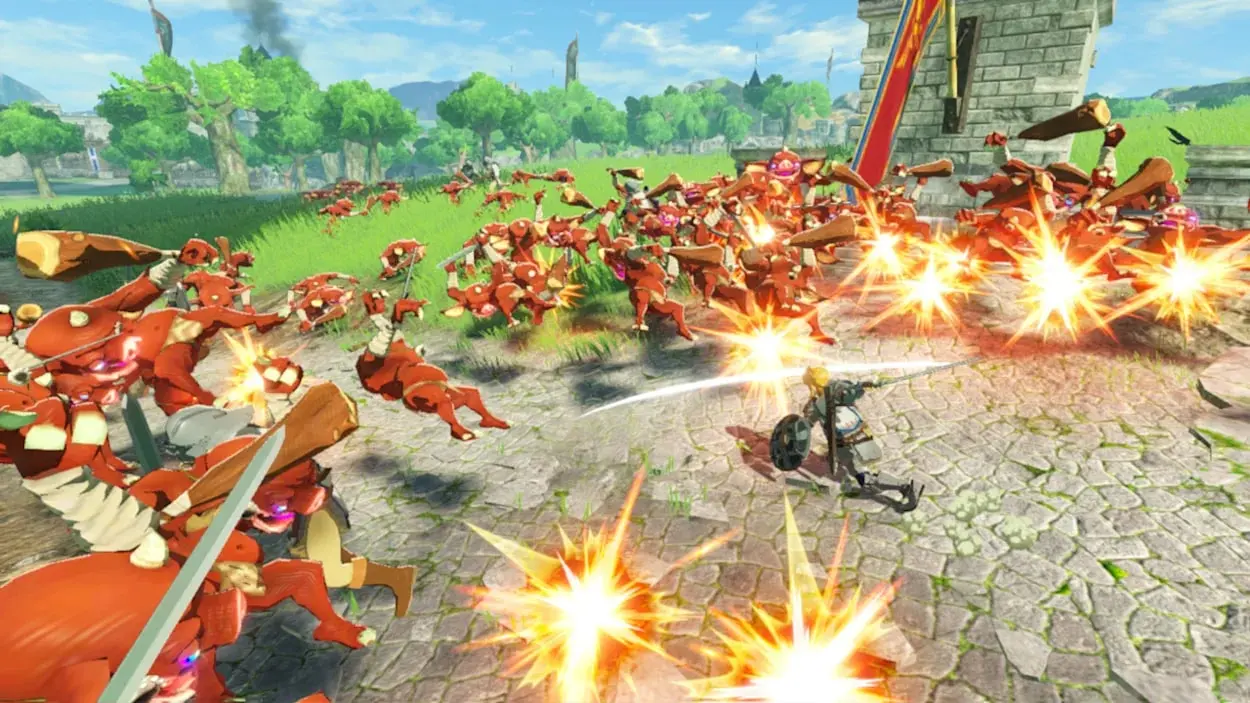
Combat combines the large-scale intensity of Warriors gameplay with familiar Zelda strategy. Battles place players against huge groups of enemies across broad combat spaces, creating the fast, crowd-clearing rhythm associated with Musou combat. Combos, forceful attacks, and special moves keep the action moving quickly, but the game also asks players to pay attention to openings and battlefield choices.
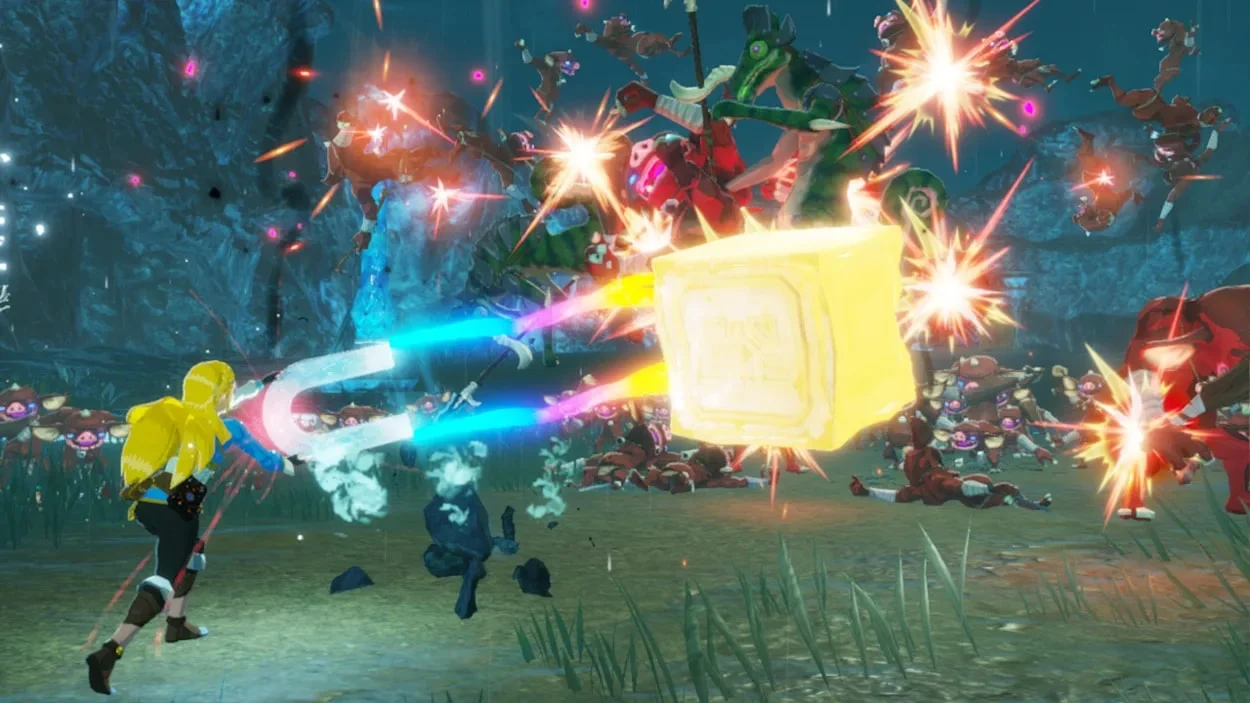
Sheikah Slate runes are part of that tactical layer. Stasis, Magnesis, Cryonis, and Remote Bombs can be used to create opportunities in battle, while elemental rods offer another way to respond to difficult situations. These tools give encounters a more deliberate feel than simple button-mashing, particularly when stronger foes demand an effective response.
There is also a larger scale to the conflict. Divine Beasts can be commanded in major encounters, offering an especially destructive perspective on Hyrule’s defense. The contrast between personal character combat and these colossal moments helps communicate the scale of the Great Calamity.
Progression extends beyond the story battles. Materials gathered from defeated enemies and explored areas can be used for weapon crafting, cooking meals, and completing quests. Those systems support the campaign’s momentum while echoing practical elements associated with the wider Zelda world.
Every Playable Hero Has a Distinct Fighting Style
The range of playable characters is one of the game’s strongest mechanical advantages. Link, Zelda, Impa, and the four Champions do not simply share the same combat template. Each has unique movesets, individual abilities, combos, and special attacks, encouraging players to adapt their approach as the roster expands.
This variety matters because the battles are designed around repeated clashes with large enemy forces. Changing characters can change the pace and feel of an encounter, from the way attacks are linked together to the tools available for creating openings. A player who prefers direct offensive pressure can experiment with one style, while another may favor tactical abilities and careful timing.
The distinct fighting styles also give the heroes more presence. Instead of functioning only as story figures, they become active expressions of Hyrule’s defense, each contributing differently to the war effort. That connection between character and play makes the roster more than a collection of familiar names.
5 Reasons Age of Calamity Appeals to Breath of the Wild Fans
- A prequel perspective: It explores Hyrule 100 years before Breath of the Wild, placing players closer to the events that shaped its history.
- The Great Calamity in motion: The looming conflict with Calamity Ganon becomes the setting for a full campaign rather than a past event described through ruins and memories.
- Familiar heroes together: Link, Princess Zelda, Impa, and the four Champions appear as active participants in Hyrule’s defense.
- Action with tactical tools: Warriors-style battles are supported by Sheikah Slate runes, elemental rods, combos, and powerful special attacks.
- Another view of Hyrule: Hyrule Warriors: Age of Calamity Switch NSP XCI adds perspective to the world, conflict, and characters associated with Breath of the Wild.
As a Nintendo Switch action game, Hyrule Warriors: Age of Calamity is best suited to players interested in Zelda characters and lore who also want large-scale, character-driven combat. Its combination of a time-altered prequel narrative, tactical abilities, varied heroes, and battlefield spectacle makes it a focused look at Hyrule during one of its most consequential eras.
Recommended Similar Games
 Special Forces Assault: Tactical Hostage Switch NSPView Game
 Radiant Tale: Fanfare! Switch NSPView Game
 Planet of Lana Switch NSPView Game
 The Expanse: A Telltale Series – Deluxe Edition Switch NSPView Game
 Star Wars Knights of the Old Republic II: The Sith Lords Switch NSPView Game
 Gothic II Complete Classic Switch NSPView Game