The Plucky Squire Switch NSP
Report Link Error
Select the broken download file, then submit the report.


Screenshots
About Game
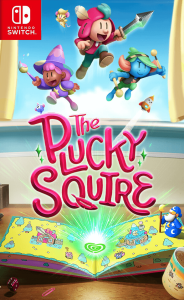
The Plucky Squire Switch NSP frames an adventure around a simple but playful disruption: a hero who belongs inside an illustrated book is forced to confront a much larger world beyond its pages. Jot’s journey moves between hand-drawn storybook scenes and a three-dimensional setting, using that contrast to shape its platforming, puzzles, action, and visual identity.
Jot’s Quest Beyond the Storybook Pages
Jot begins as the hero of an illustrated tale, living in a peaceful storybook world with his friends. That order is broken when Humgrump, an evil sorcerer, discovers the book’s magical properties. Humgrump throws Jot out of the book and into the real world, a three-dimensional place whose scale immediately changes the terms of the adventure.
The central conflict is not simply about getting home. Humgrump intends to rewrite Jot’s story and trap the characters left behind in the book. Jot must navigate the unfamiliar space outside the pages, find routes back into the storybook, help save his friends, and ultimately reclaim the narrative that Humgrump is trying to control.
That premise gives the storybook adventure a clear sense of progression. Jot is small in a world built from everyday objects, but his experience as a storybook hero remains useful. The journey connects courage and self-discovery with a practical challenge: learning how the illustrated world and the real world affect one another.
How The Plucky Squire Blends 2D and 3D Play
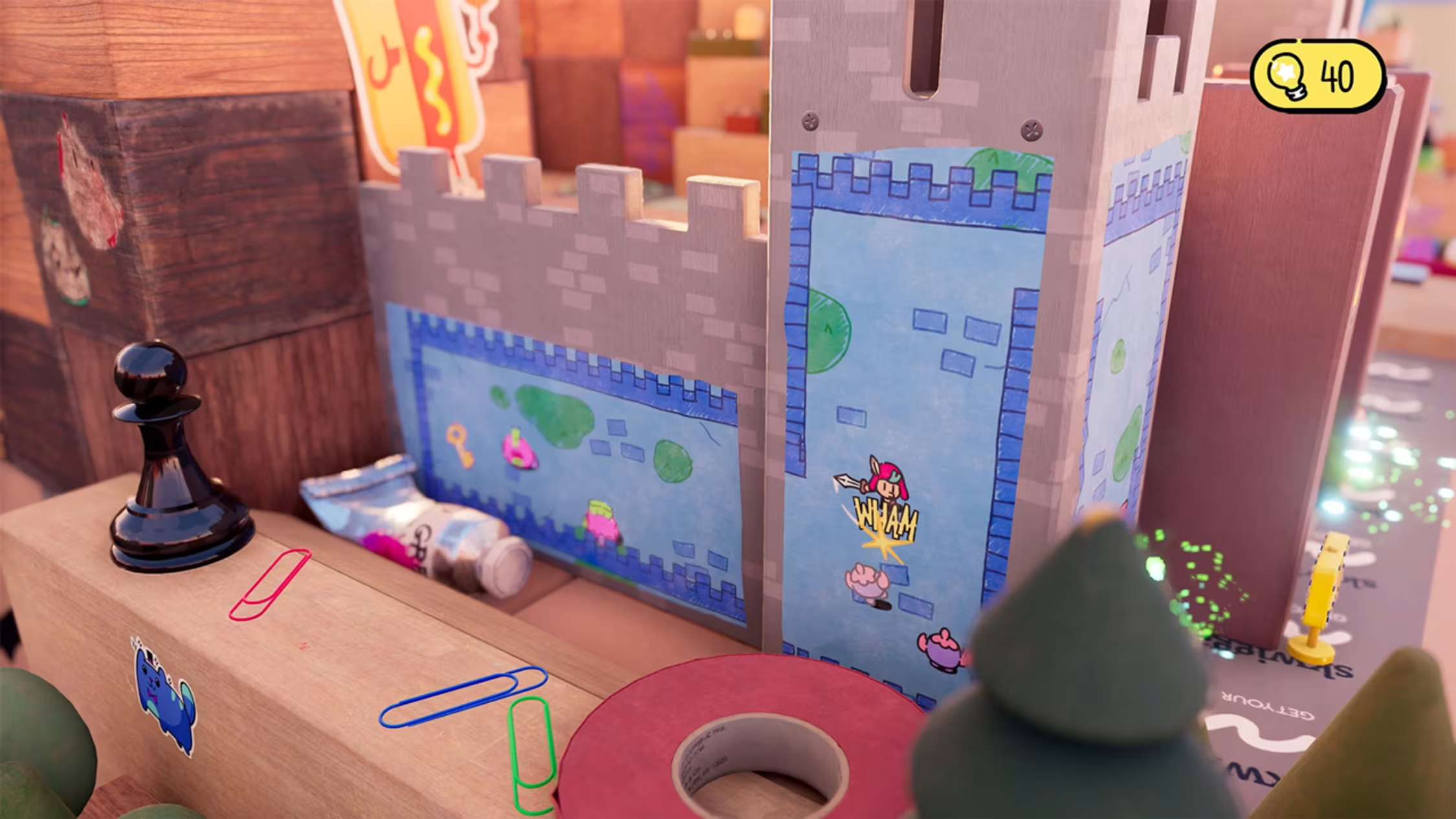
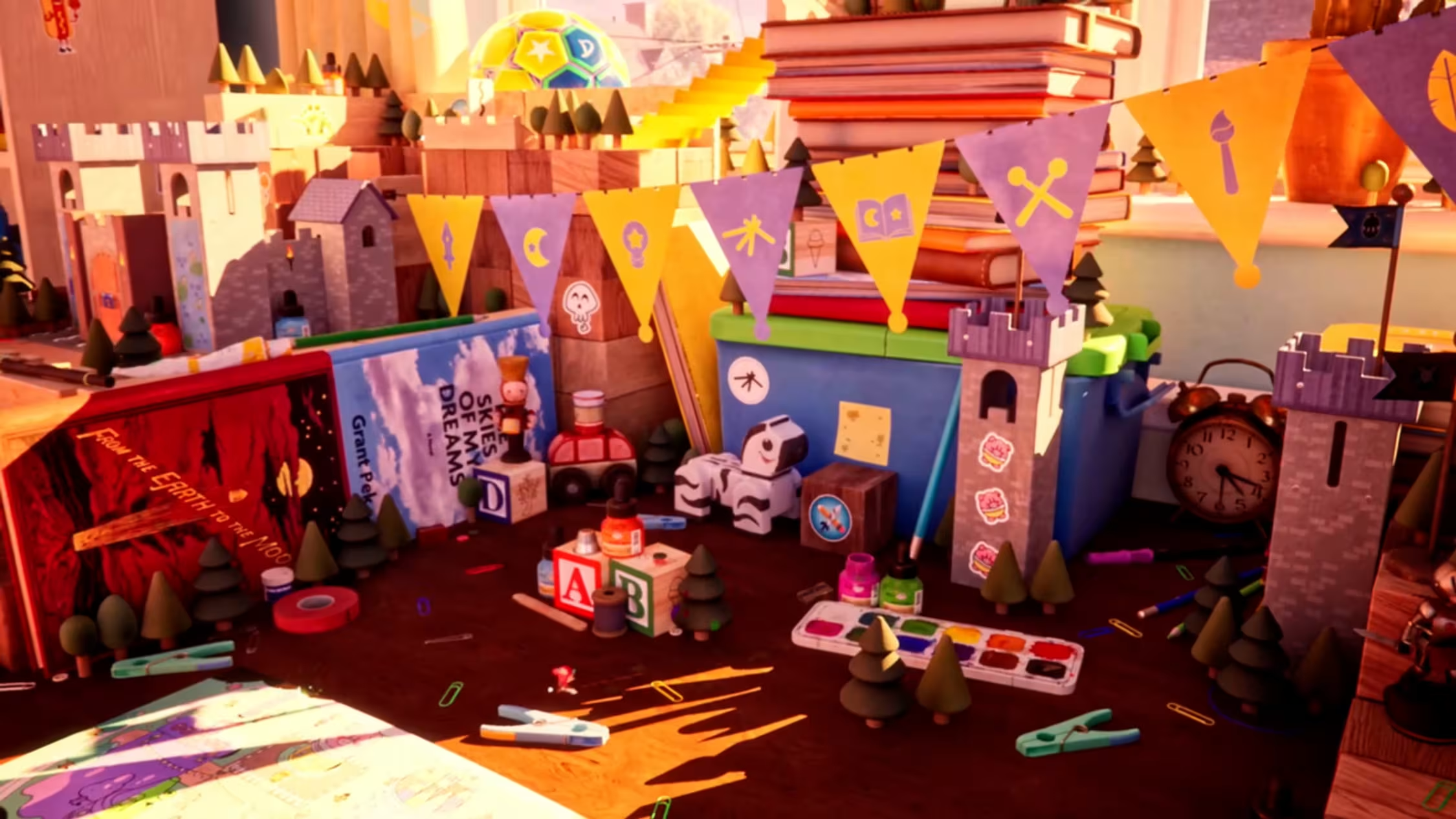
The defining idea is the movement between 2D and 3D gameplay. Inside the book, Jot explores flat illustrated spaces designed around adventure platforming, foes, and page-based challenges. Outside it, he enters a larger 3D environment where ordinary objects become imposing parts of the landscape.
The shift is more than a visual change. It alters how players read a problem. A detail that appears as a drawing in the storybook world may matter when viewed from outside the page, while a real-world object can create a new path or solution connected to Jot’s illustrated surroundings. A pencil, for example, can be used to draw a missing bridge, and a giant table can become part of the route forward.
This structure makes exploration feel tied to perspective. The storybook world supplies the familiar logic of an illustrated adventure, while the real world turns scale, placement, and objects into environmental challenges. The transitions keep asking the player to reconsider what a useful clue or obstacle can be.
Storybook Platforming Inside Jot’s Illustrated World
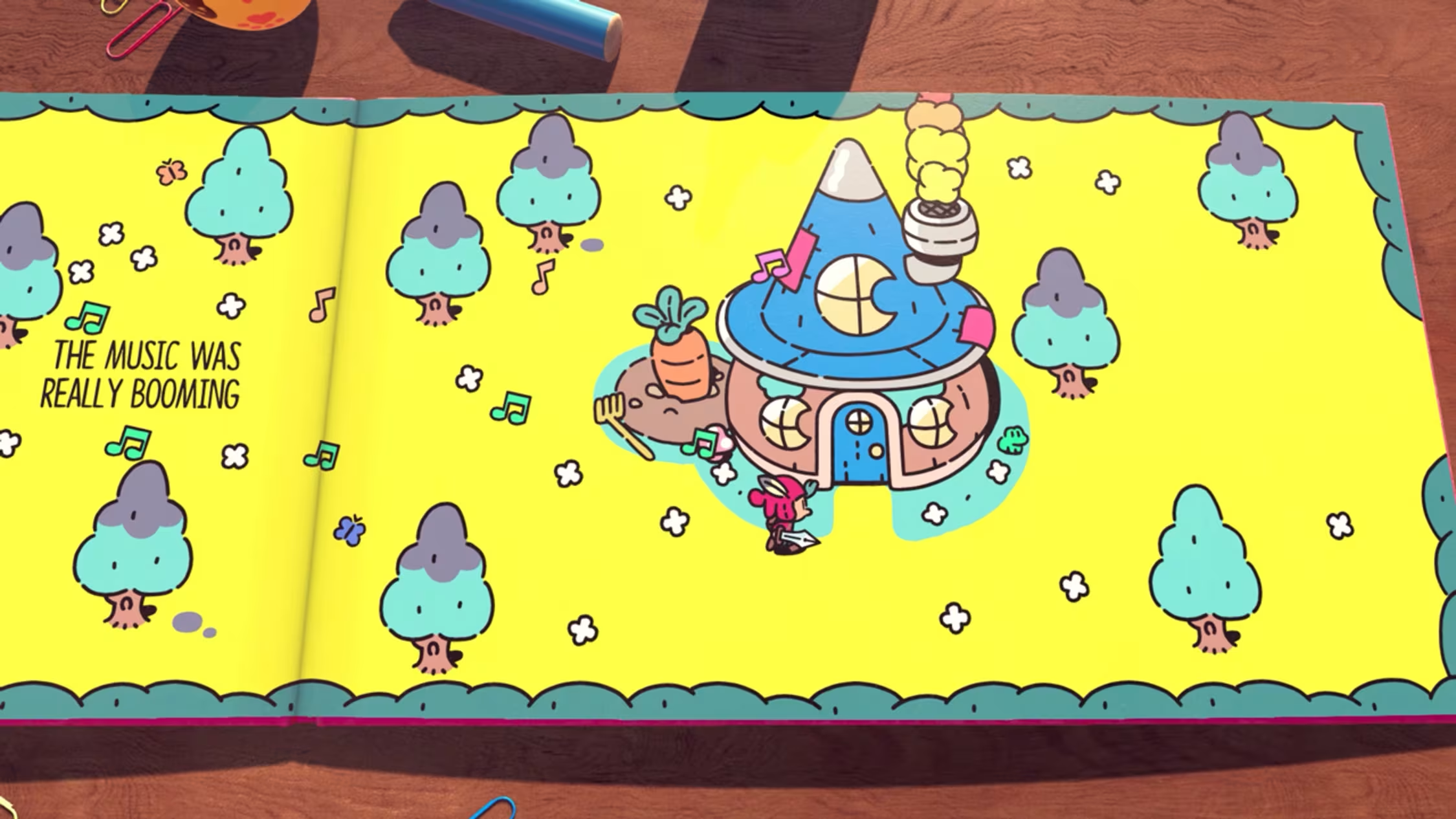
Within Jot’s book, the game draws on the language of classic children’s literature: colorful illustrations, page-like spaces, and characters and dangers that belong to a storybook setting. The visual presentation supports the premise rather than sitting apart from it. Jot is not merely travelling through levels; he is moving through a tale whose pages can be disrupted, explored, and restored.
The 2D portions focus on adventure platforming, with page-based puzzles woven into the illustrated world. Storybook foes provide the action element, while environmental details and the arrangement of the pages guide the problem-solving side. These sections give the game a clear platforming rhythm, but the larger structure means that an apparent dead end may call for a different viewpoint rather than only a precise jump.
Characters and side quests add further texture to the book’s world. Dialogue is not only part of the story’s charm; it can also point toward useful information. The presentation encourages close attention to what is written, drawn, or placed within a scene.
Five Ways to Approach The Plucky Squire’s Puzzles
The game’s puzzles benefit from patience and a willingness to treat both dimensions as connected parts of the same space. These approaches keep the focus on the clues available in Jot’s adventure.
- Check both dimensions. When a puzzle seems limited in the storybook world, consider what the same situation might reveal in the real world. A 2D drawing can serve as a clue for a 3D challenge.
- Experiment with objects. Everyday items become unusually important outside the book. Try interacting with objects that appear useful, especially when their size or position changes how Jot can move.
- Listen to dialogue. Character conversations can contain hints. Story details and side interactions may quietly direct attention toward a challenge or solution.
- Read the environment. Look closely at illustrations, page layouts, and real-world surroundings. Environmental clues may be visible before their purpose becomes obvious.
- Change perspective when stuck. A difficult obstacle may not require more force or speed. Dimension shifting can reveal another route, another object, or a different way to understand the same problem.
Combat, Boss Battles, and Problem-Solving Balance
The Plucky Squire combines puzzle-led exploration with action-adventure encounters. In the storybook world, Jot battles familiar storybook foes as part of his progress through the illustrated pages. These encounters give the adventure a direct, active counterpoint to the slower work of examining clues and arranging a route forward.
Boss battles raise that pressure further. They are described as challenges that test both dexterity and problem-solving, fitting a game where the answer is not always confined to a single perspective. The balance matters: combat is part of Jot’s heroic role, but it sits beside puzzles that ask players to observe the environment, experiment, and use the relationship between the book and the real world.
Collectibles and secrets are hidden across both dimensions, giving exploration an additional purpose. Their placement reinforces the game’s central idea that neither the 2D pages nor the 3D space should be treated as background. Each can contain routes, interactions, or discoveries that reward attention.
The Plucky Squire on Nintendo Switch: Key Release Details
The Plucky Squire Switch NSP is listed for the USA region with a release date of September 18, 2024. It is published by Devolver Digital and categorized in the Adventure and Action genres.
The supported language options are English, Japanese, Spanish, Portuguese, French, German, Russian, Korean, Chinese, and Traditional Chinese. The listed Nintendo Switch firmware requirement is 18.1.0. With its illustrated storybook world, shifts into a larger real-world setting, platforming, environmental puzzles, boss encounters, and character-driven adventure, the game is suited to players interested in an action adventure built around changing perspective.