Horse Racing Switch NSP
Report Link Error
Select the broken download file, then submit the report.


Screenshots
About Game
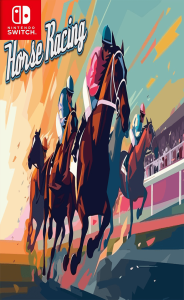
Horse Racing Switch NSP is Sabec’s Nintendo Switch racing game, released on February 1, 2024. Listed in the Racing and Sports genres, it is available in Europe and the USA with English language support. Its focus is straightforward: guide horses through competitive races, develop a stable, and turn a newcomer’s ambitions into a sustained push for racing recognition.
Horse Racing Switch NSP: Game Overview
Sabec frames this Nintendo Switch racing game around the appeal of the track: moving horses, close finishes, crowd noise, and the pressure of making the right decision at speed. The premise combines race-day action with management away from the course, so success is not limited to a single well-timed sprint. Players are also expected to acquire horses, train them, and decide which events best suit their stable.
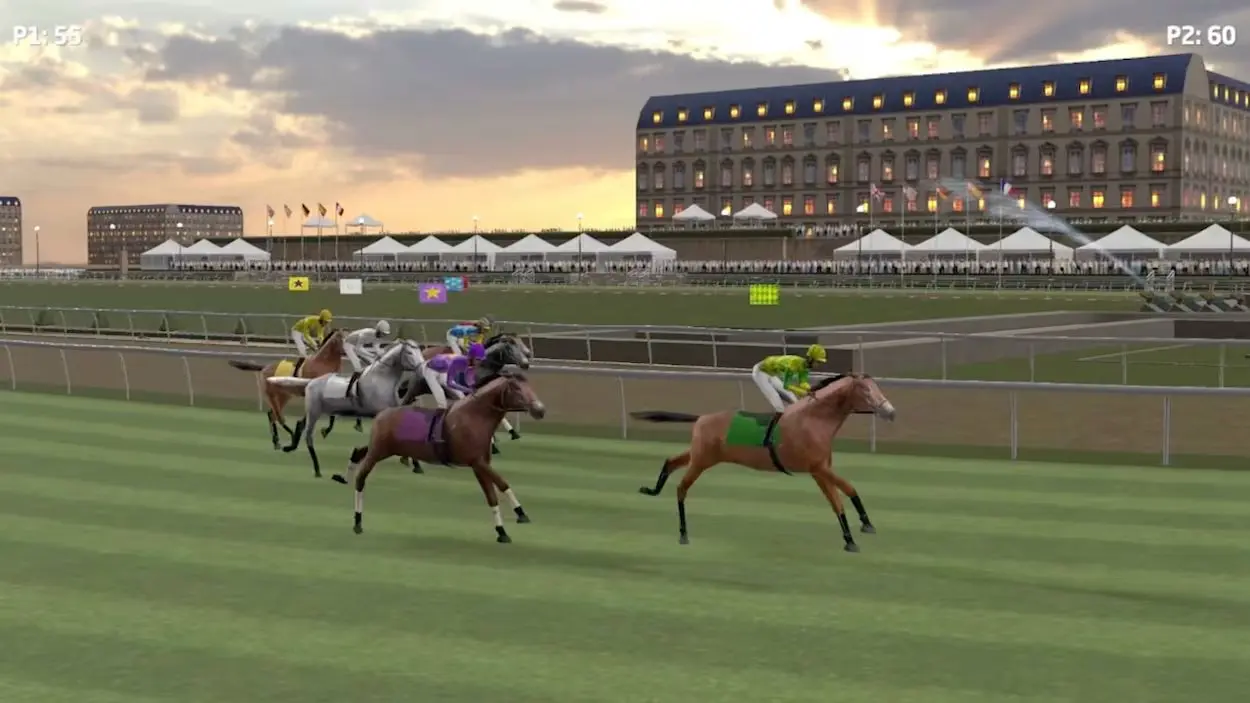
The presentation leans into familiar horse-racing atmosphere. The sound and spectacle of hooves and spectators support the sense of competition, while different tracks and changing weather conditions can give individual events a different feel. Rather than presenting a character-heavy traditional narrative, the game uses the racing calendar and the player’s growing reputation to create forward momentum.
That structure makes the game approachable in concept. A race can be understood immediately—find space, preserve enough energy, and challenge for the finish—but the larger objective is more gradual. Better results bring prestige and lead toward tougher races, tournaments, and major cups.
From Aspiring Jockey to Racing Icon
The career premise begins with an aspiring jockey trying to establish a place in competitive racing. Progress is tied to performance: victories raise prestige, tougher opportunities follow, and the long-term aim is to become a recognised racing icon. Rival jockeys and their horses provide the competitive backdrop, even if the game’s story is primarily built through seasons, races, and results rather than elaborate scripted drama.
The connection between jockey progression and horse development gives the career a useful sense of continuity. A horse is not merely a vehicle for one event. It can be trained over time, entered into suitable races, and developed from raw potential into a more seasoned competitor. That creates a clear reason to return after a single win or loss: the stable’s next decision may matter as much as the previous finish.
Horse Racing Switch NSP therefore treats fame as something earned through repeated racing decisions. The objective is not simply to collect isolated victories, but to build a record strong enough to compete for the major prizes.
Direct Horse Control During Races
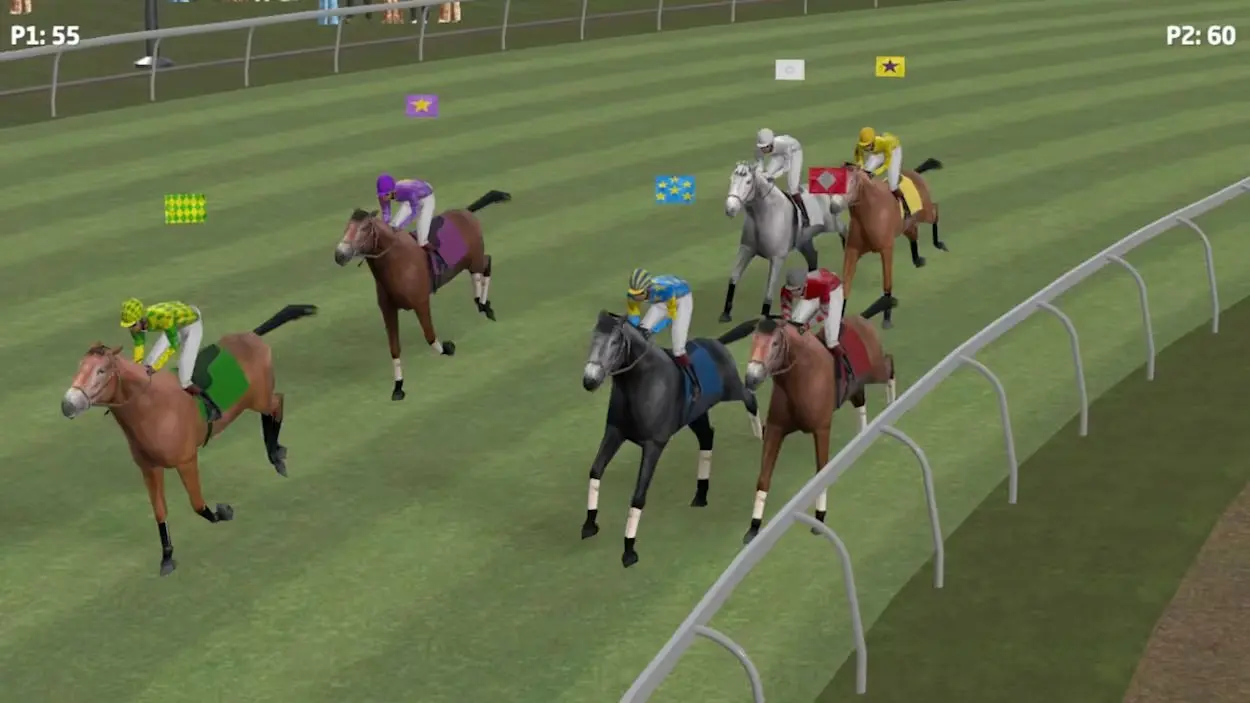
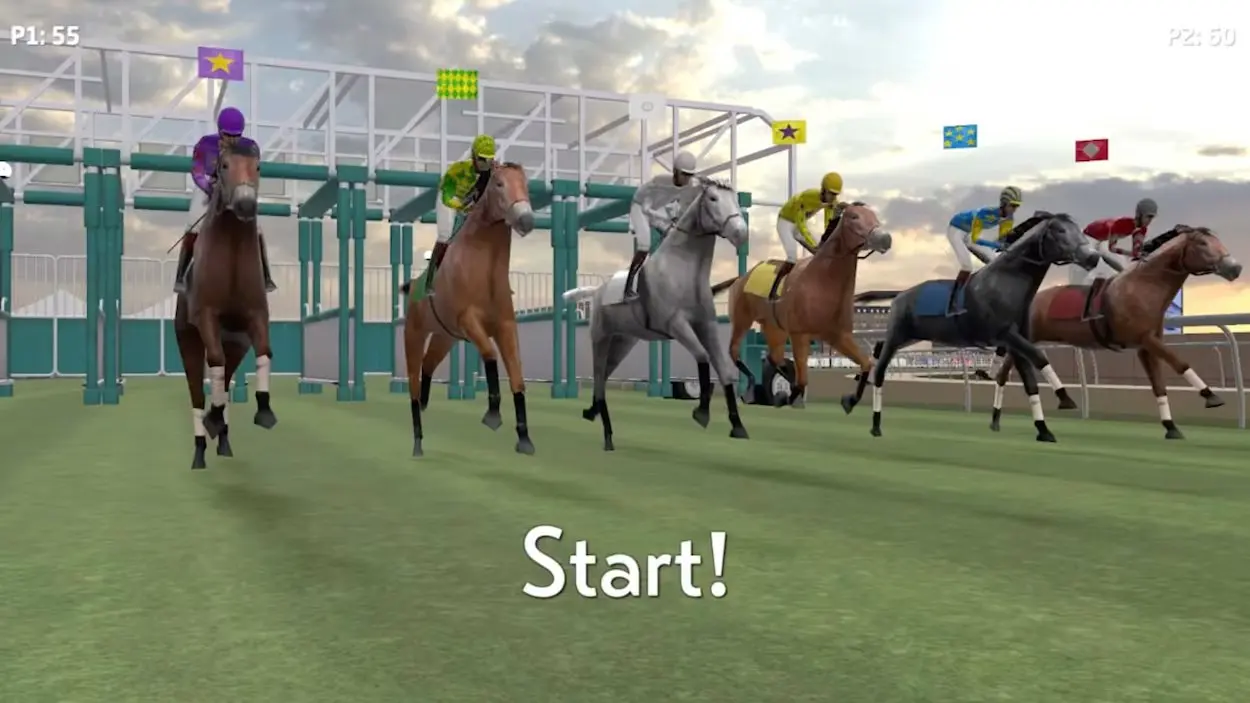
On the track, players take direct control of their horse. The essential tools are pace, movement, and positioning. Accelerating can help gain ground, slowing down can preserve energy, and maneuvering can improve the horse’s place within the field. These controls are described as intuitive, but the underlying choices still carry weight when competitors are tightly grouped.
Race positioning is particularly important because a horse cannot rely on speed alone. A player who spends too much energy forcing an early advantage may have little left for the final stretch. Holding back too long, meanwhile, can leave too much distance to recover. The result is a racing system where reading the moment matters: the best line is not always the fastest one, and the right move can change from one course or weather condition to another.
Different track layouts add another practical variable. A course can ask for different pacing and positioning decisions, encouraging players to pay attention to the race rather than treat every event as the same dash to the finish.
Stamina Management and Race-Day Strategy
Stamina is the central strategic pressure during a race. The game asks players to balance immediate speed against the energy needed to remain competitive late on. A boost can be decisive, but using it at the wrong time may leave the horse exhausted before the finish. Conserving too much energy has its own danger, as rivals may build a lead that cannot be closed.
A sensible race-day approach involves watching opponents, considering the track, and keeping an eye on the horse’s stamina. Dynamic weather effects can influence races as well, making conditions another factor to observe before committing to a plan.
- Settle early: Avoid treating the opening moments as the only chance to take position.
- Watch the field: Opponents’ movement can reveal when space is opening or when a challenge is developing.
- Protect energy: Keep stamina available instead of sprinting at every opportunity.
- Choose the moment: Save a stronger acceleration for a point where it can genuinely affect the result.
- Read conditions: Track layouts and weather effects can influence how aggressively a race should be run.
This balance between speed and restraint is where replay value can emerge. Even with the same basic objective, a different horse, race type, opponent group, or set of conditions can call for a different plan.
Building and Managing a Competitive Stable
Beyond the finish line, the stable-management side gives the racing action a broader purpose. Players can purchase horses, oversee their training regimens, and make strategic choices about which races to enter. The stable is therefore not just a menu between events; it is where preparation for future competition takes shape.
Choosing races carefully matters because not every opportunity will necessarily suit every horse. A considered approach can connect a horse’s current development with the demands of an event, while a rushed decision may place it in a less favourable situation. The game’s progression works best when track performance and stable planning are treated as linked parts of the same career.
Customisation for jockey and horse equipment is also included, adding another layer to the ownership and presentation of a racing operation. It complements the stable focus without changing the main priorities: develop horses, select events, and compete effectively when race day arrives.
Training Horses for Better Performance
Training is the route from potential to improved performance. Players can develop horses over time and experiment with schedules and stat priorities that fit each animal’s abilities. The source material does not define a fixed ideal build, which makes experimentation an appropriate part of the process rather than a distraction from it.
A horse with different natural strengths may benefit from a different emphasis, and the game encourages players to learn through training choices and race results. That loop—prepare, enter a race, assess the outcome, and adjust—gives the horse racing career its lasting structure.
This makes Sabec’s horse racing game most suitable for players who enjoy a blend of direct sporting control and measured management. It offers immediate races for players who want to guide a horse through the field, while giving more patient players a reason to consider stamina, training, horse selection, and the path toward major cups.