Crysis 3 Remastered Switch NSP
Report Link Error
Select the broken download file, then submit the report.
Screenshots
About Game
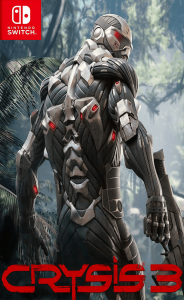
Crysis 3 Remastered Switch NSP brings Prophet’s final fight into a portable format, pairing a dense science-fiction setting with combat that can shift from patient infiltration to explosive confrontation in seconds. The Nintendo Switch release preserves the game’s central identity: a Nanosuit-powered soldier moving through a ruined New York, caught between a human military force and an alien threat.
Crysis 3 Remastered on Nintendo Switch: Release Profile
Crysis 3 Remastered Switch released on October 15, 2021. It is classified as an Action, First Person game, published by Crytek and developed by Crytek and Saber. Those credits matter because the remastered release remains rooted in the series’ mix of high-tech weaponry, open combat spaces, and a protagonist defined by the abilities of the Nanosuit.
The Switch version places its emphasis on a campaign built around movement and choice. Prophet is not limited to one fixed method of clearing an area. A hostile space can become a stealth problem, a sniping opportunity, or a direct assault depending on the player’s available equipment and willingness to adapt. That flexibility gives the action a deliberate rhythm: survey the terrain, identify threats, then decide how much attention to attract.
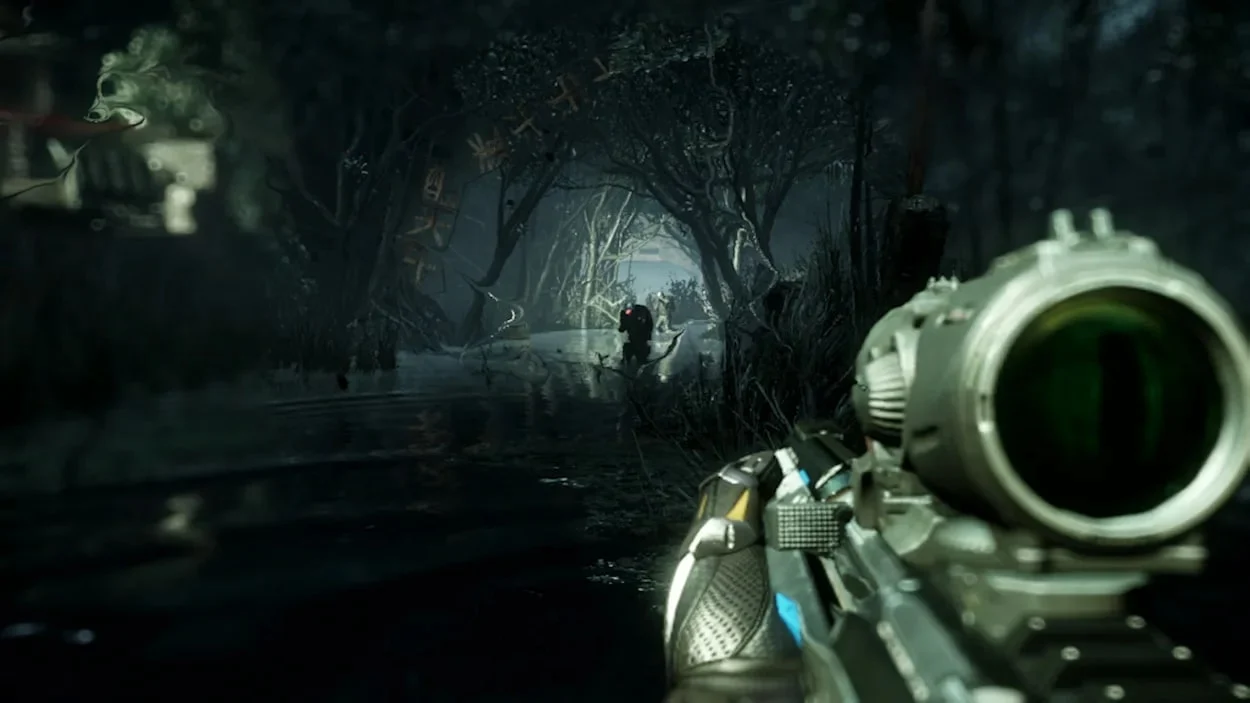
Its presentation supports that approach through a setting where natural growth and collapsed urban infrastructure occupy the same spaces. New York is no longer simply a familiar city backdrop. It has become an enclosed, hostile environment whose changed appearance feeds directly into the game’s atmosphere and combat design.
The Seven Wonders and a Divided City
The campaign returns Prophet to New York City after it has been sealed beneath a vast Nanodome built by the corrupt C.E.L.L. corporation. Inside, the city has become an urban jungle. Overgrowth has altered the landscape, and landmarks sit within a dangerous ecosystem rather than a recognizable civilian environment.
This enclosed city is divided into seven perilous areas known as the Seven Wonders. The name gives the setting a sense of scale and mystery, but these environments are also practical spaces for play. Their variation changes the hazards, sightlines, cover, and possible routes available to Prophet. A player may have room to remain concealed, locate elevated positions, circle around defenses, or confront an enemy group head-on.
The Nanodome city is therefore more than a story device. It frames the game’s progression through distinct environments while maintaining the feeling that all of them belong to a single damaged metropolis. The blend of vegetation, enclosed structures, advanced technology, and hostile forces creates a tense atmosphere in which every route can carry a different risk.
A Conflict Between C.E.L.L. and the Ceph
Prophet’s journey unfolds during an ongoing conflict between C.E.L.L. forces and the invading Ceph aliens. The human-versus-alien war supplies the immediate pressure around him, but his mission also has a personal dimension. He seeks redemption while investigating the truth behind C.E.L.L.’s motives for building and controlling the Nanodome.
His other central objective is the pursuit of the Alpha Ceph, a powerful alien entity. That goal gives the campaign a clear direction beyond surviving one encounter after another. Prophet is moving through a divided city with a purpose, following the larger questions around C.E.L.L. while closing in on a threat tied to the Ceph.
The story’s science-fiction conflict is shaped by revenge, survival, and the fate of humanity. These themes fit the setting’s oppressive design: a city placed under a dome, human forces operating with their own agenda, and alien enemies whose presence turns familiar ground into a battlefield. The result is a campaign atmosphere that remains focused on conflict rather than treating the ruined city as scenery alone.
Nanosuit Powers: Cloak and Armor
Prophet’s defining advantage is the Nanosuit. Its two key capabilities are cloak mode, which supports concealment, and enhanced armor, which helps him endure damage during more aggressive encounters. The value of these powers comes from how quickly a player can move between them.
Cloak encourages observation and careful positioning. It can support a quieter approach, allowing Prophet to move through dangerous ground while looking for a better angle or preparing a takedown. Armor serves the opposite need: when a plan becomes loud or an enemy group closes in, stronger protection helps sustain a direct response.
- Observe first: Use the environment to assess threats before committing to an approach.
- Disappear when needed: Cloak mode supports stealth movement and quieter attacks.
- Absorb the pressure: Enhanced armor is suited to exposed, high-intensity combat.
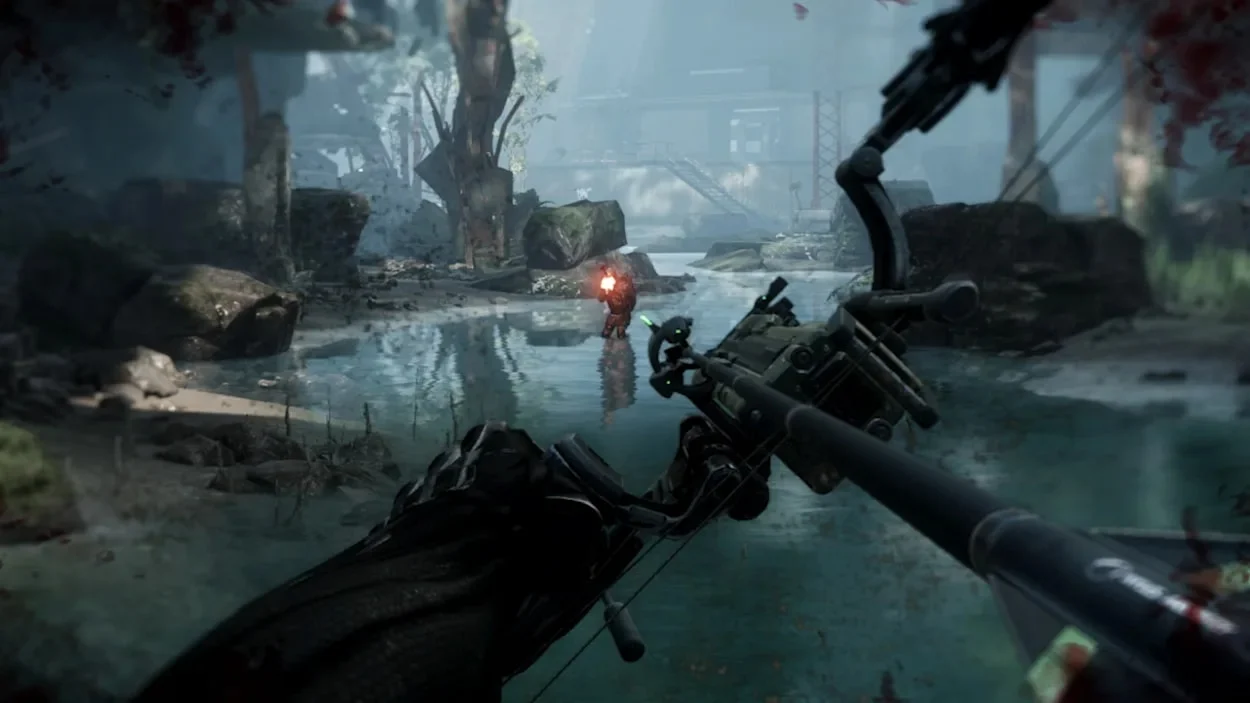
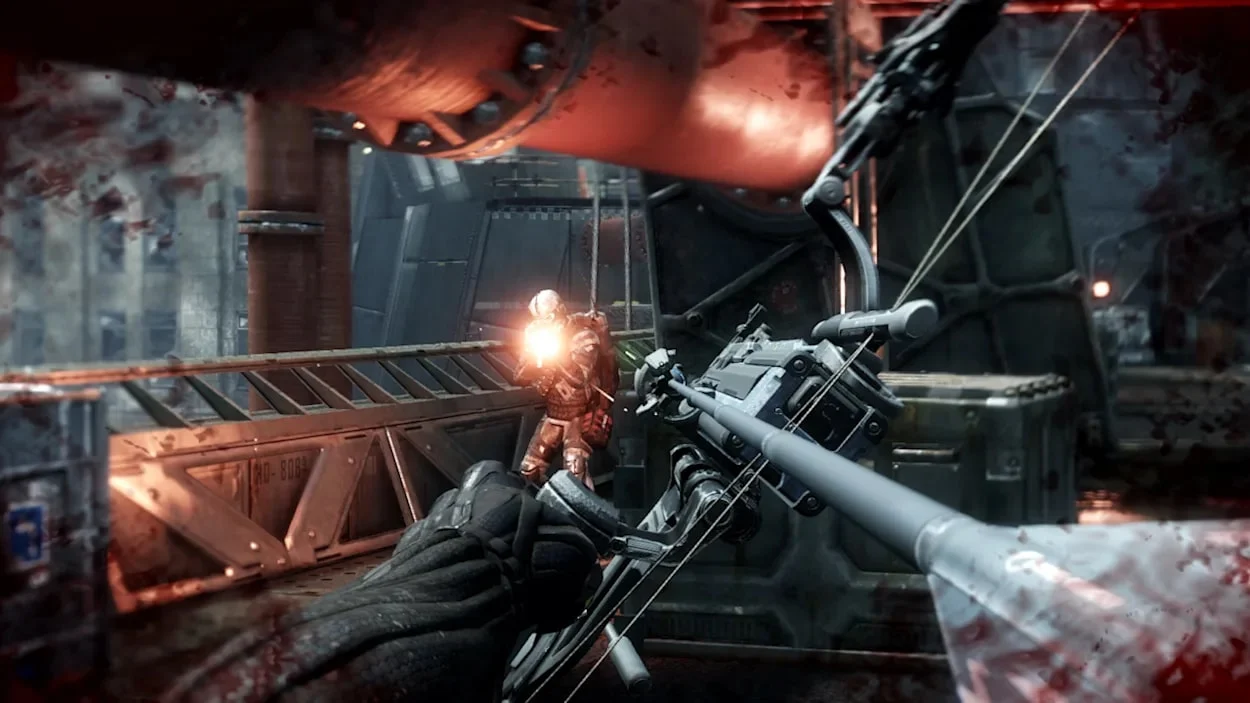
- Use the bow carefully: The Predator Bow provides a silent option for precision attacks.
- Turn defenses around: Enemy turrets and drones can be hacked and used against opposing forces.
The Predator Bow complements the Nanosuit particularly well. It offers silent, precise attacks from range or closer positions, giving stealth-focused players another tool before they need to rely on louder human or alien firearms. The available arsenal also supports a more forceful style when concealment is no longer useful.
Open-Ended Encounters and Tactical Freedom
Crysis 3 Remastered Switch NSP is built around tactical freedom rather than a single prescribed combat routine. Its open-ended levels provide multiple paths toward objectives, and the varied environments create room for different decisions. The same situation can invite stealth, speed, brute force, or a blend of all three.
This structure gives encounters replay value through experimentation. One attempt may focus on remaining unseen and using the Predator Bow. Another may involve hacking enemy technology, taking alternate routes, or entering with armor active and relying on a larger collection of weapons. The game does not remove pressure from these choices; it makes the player responsible for managing it.
That design is especially suited to players who enjoy first-person action with space to improvise. It can reward patience, but it also accommodates a faster and more direct approach. The important skill is not committing to stealth or aggression at all times. It is recognizing when the terrain, enemy placement, and current objective call for one Nanosuit power or weapon over another.
The result is combat that feels connected to the setting. In a city reshaped into a dangerous enclosed wilderness, mobility and awareness matter as much as firepower. Prophet’s equipment lets players react to those conditions rather than merely endure them.
Switch Version Details: Regions, Languages, and Firmware
The listed regions for the Nintendo Switch release are Europe and USA. Supported languages are English, Japanese, French, German, Italian, Spanish, Russian, and Chinese, providing a broad set of language options for the game’s interface and narrative experience.
The listed Nintendo Switch firmware requirements are version 12.1.0 for the base release and version 13.2.1 for the update. The release is dated October 15, 2021, and is identified by Title ID 0100582010AE0000. For players drawn to first-person action that combines a troubled science-fiction story with adaptable combat systems, Prophet’s return to the Nanodome offers a focused campaign of stealth, armor, weapons, and escalating conflict.
Recommended Similar Games
 YEAH! YOU WANT “THOSE GAMES,” RIGHT? SO HERE YOU GO! NOW, LET’S SEE YOU CLEAR THEM! Switch NSPView Game
 Resident Evil 5 Switch NSP XCIView Game
 Grand Theft Auto III – The Definitive Edition Switch NSPView Game
 LEGO City Undercover Switch NSP XCIView Game
 Raging Bytes Switch NSPView Game
 Touken Ranbu Warriors Digital Deluxe Edition Switch NSPView Game
