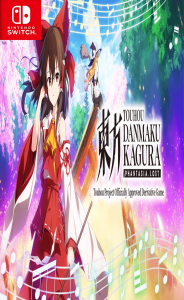
Touhou Danmaku Kagura Phantasia Lost Switch NSP XCI
Report Link Error
Select the broken download file, then submit the report.
Screenshots
About Game
Touhou Danmaku Kagura Phantasia Lost Switch NSP XCI arrived in the USA on September 5, 2024, bringing a music-focused action adventure to Nintendo Switch. Its premise joins Touhou characters, precise note timing, and the series’ recognizable danmaku imagery in a journey through Gensokyo, where the disappearance of music has become a serious threat.
What Touhou Danmaku Kagura Phantasia Lost Brings to Nintendo Switch
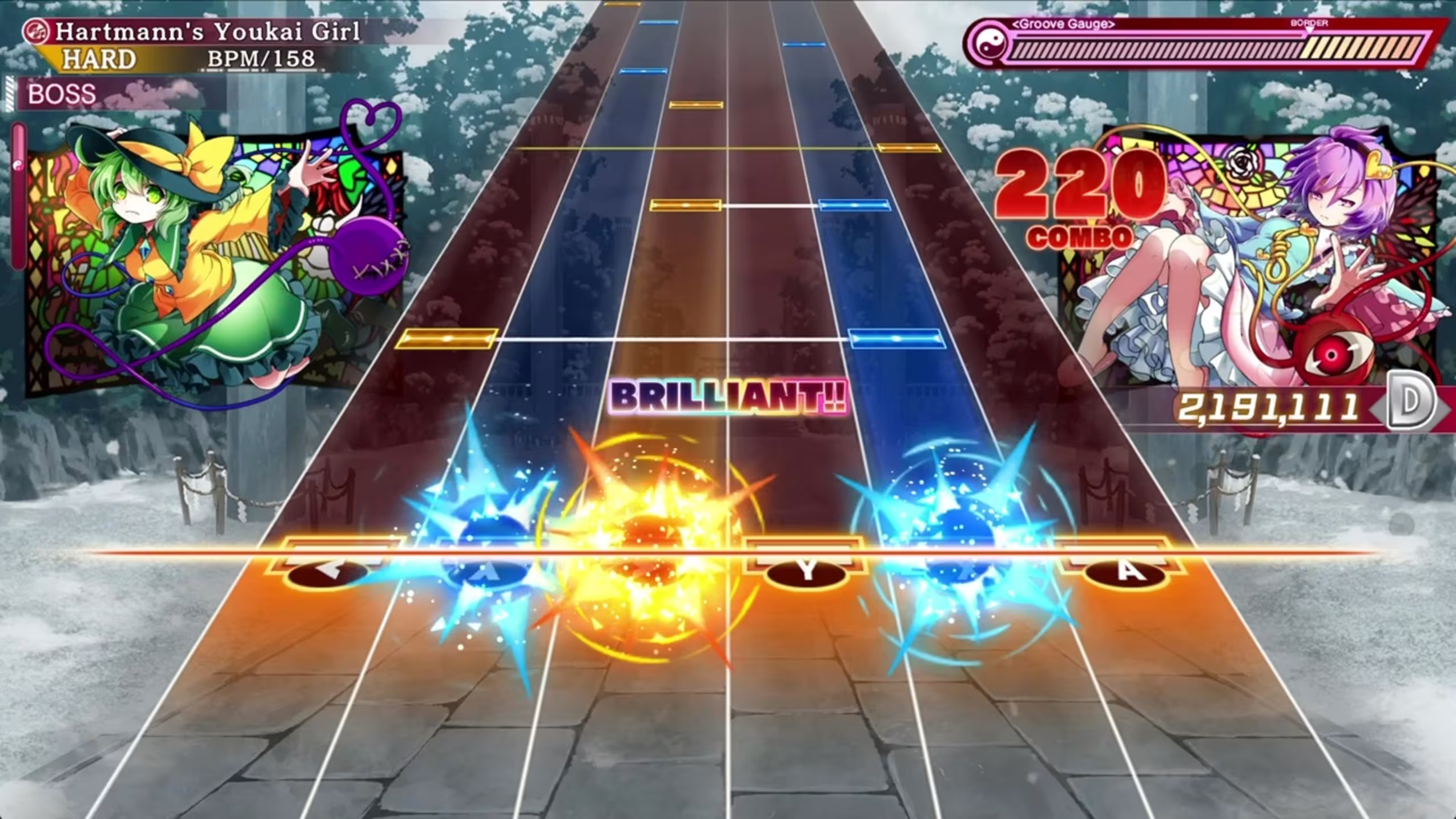
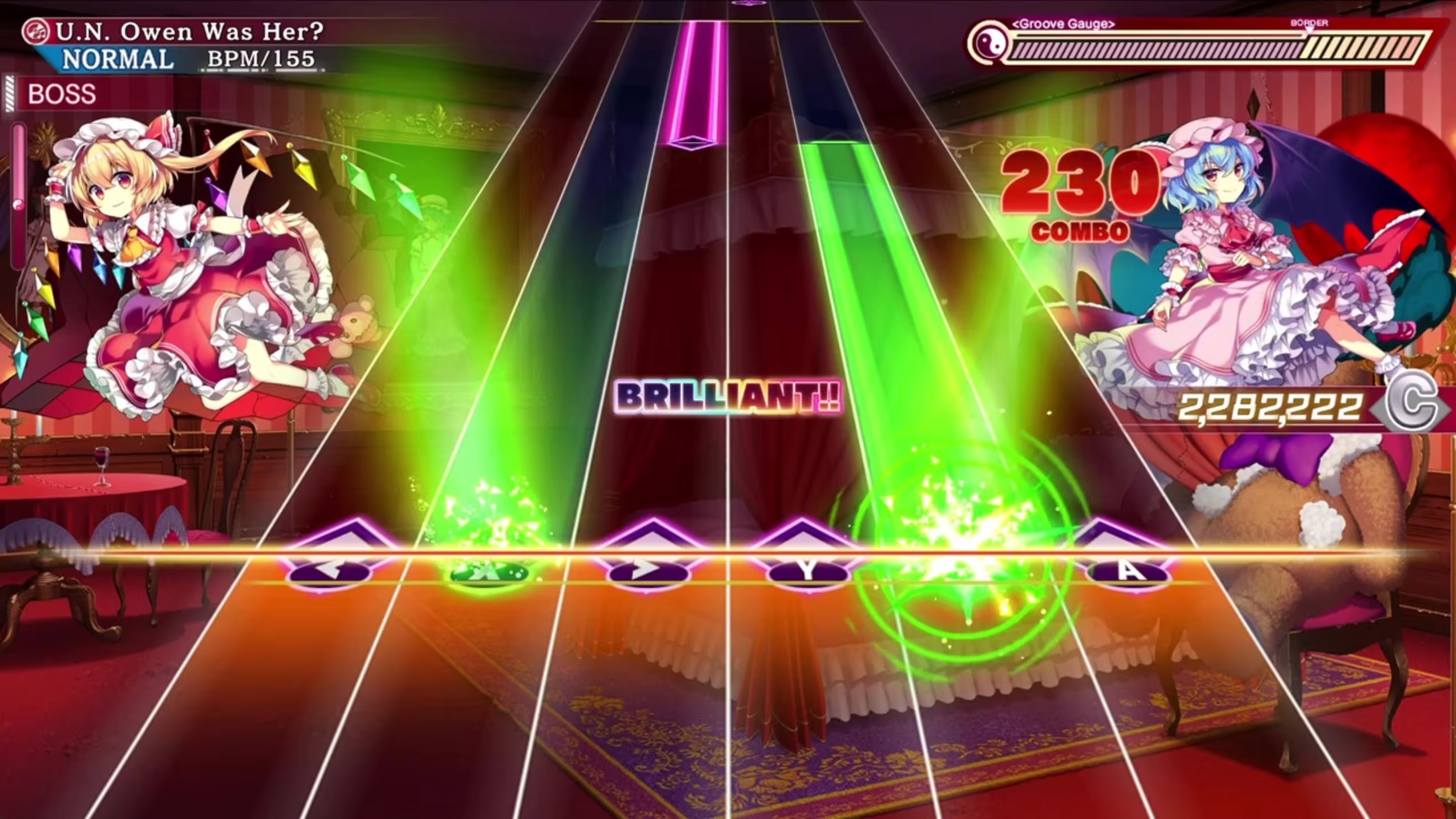
Touhou Danmaku Kagura Phantasia Lost is built around rhythm action: songs ask players to respond to notes with accurate timing, while Touhou-inspired bullet patterns animate the scene behind the play area. The result is a presentation that treats each musical challenge as both a performance and a visual encounter.
The September 5, 2024 USA release gives Switch players a version centered on this blend of musical play and Touhou atmosphere. Taps, holds, and slides form the basic interaction, with songs offering opportunities to pursue stronger scores and longer combos. The rhythm systems are direct enough to communicate their goals clearly, but individual tracks can still demand better timing and sharper reflexes as players seek improvement.
Its action and adventure framing also comes through in the story structure. Rather than presenting songs in isolation, the game connects its musical challenges to a crisis affecting Gensokyo itself. That gives progression a narrative purpose: advancing means moving closer to the missing Kagura and the cause behind its disappearance.
A Gensokyo Mystery Centered on the Lost Kagura
The story begins with an unsettling change in Gensokyo. Kagura, the world’s music, has vanished. This loss is not treated as a minor inconvenience; it threatens Gensokyo’s balance and creates the central mystery of the adventure.
Restoring the lost Kagura provides the direction for the journey. As the characters confront challenges and continue through different locations, the investigation gradually points toward the secrets surrounding the disappearance. Music is therefore more than a soundtrack to the game’s action. It is part of the world’s condition, the problem to be solved, and the force the heroes are trying to bring back.
That setup suits a rhythm game particularly well. Each song can feel connected to the wider effort to restore harmony, while the continuing mystery gives players a reason to keep moving through new stages and challenges.
Reimu Hakurei and Marisa Kirisame’s Journey
Reimu Hakurei and Marisa Kirisame lead the search for the missing Kagura. Their route takes them through familiar Touhou locations, where they encounter allies as well as opponents. These meetings frame the adventure as an investigation with a broad cast of recognizable faces rather than a solitary run through musical stages.
The pair’s journey is driven by questions: what caused Kagura to disappear, who is connected to the event, and how can Gensokyo’s harmony be restored? As they progress, each challenge brings them closer to answers. The story’s focus remains on the effort to uncover the source of the crisis and protect Gensokyo from its consequences.
This gives the game a useful sense of movement. Stages, music, and encounters are linked to the search, while the familiar setting supplies the atmosphere for players who enjoy Touhou’s characters and locations. Newcomers are also given a straightforward premise to follow: music is gone, Gensokyo is in danger, and Reimu and Marisa are working to set things right.
How Rhythm Notes and Danmaku Visuals Work Together
The playable focus is on streaming rhythm notes. Players time their inputs as notes arrive, working with several note types that include taps, holds, and slides. Accuracy matters, and the pursuit of clean timing supports higher scores and more complete combos.
Behind those notes, danmaku patterns provide the visual language associated with Touhou. The bullet-hell display functions as a spectacle during songs, adding movement and color around the rhythm lane without changing the central objective: keep pace with the music and respond correctly to each note.
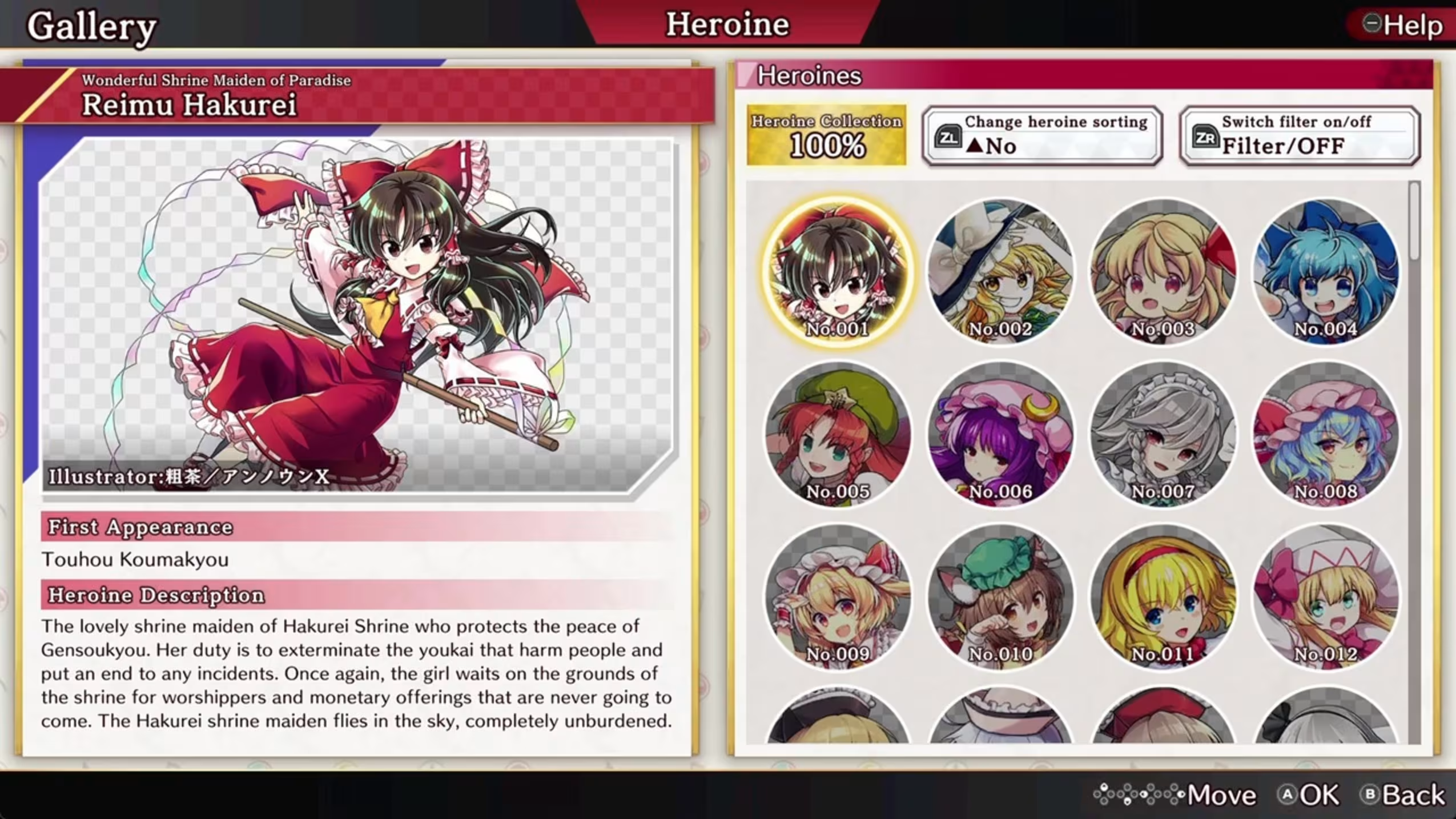
Character selection adds another layer. Touhou characters have their own skills and abilities, giving players room to test different approaches across songs. This can make repeated attempts feel less static, especially when a particular ability suits a player’s timing habits or helps with a demanding track.
Progression includes new music and challenges, while characters can be unlocked and customized with different outfits. Combined with score chasing and perfect-combo attempts, these systems support replay for players who enjoy returning to songs after their first clear. The appeal is strongest for rhythm-game players who like deliberate practice, and for Touhou followers interested in seeing its cast and danmaku presentation placed around musical challenges.
5 Practical Tips for Building Better Combos
- Start gently: Begin on easier difficulties to learn the note flow and become comfortable with the timing demands before moving into tougher challenges.
- Read the screen: Watch the visual cues closely so incoming taps, holds, and slides are easier to identify before they reach the timing point.
- Trust the beat: Let the music guide your inputs. Synchronizing actions with the beat is more reliable than reacting late to individual notes.
- Test abilities: Try different characters and their skills. A character that feels natural on one song may not be the best fit for another.
- Step away briefly: When a difficult section becomes frustrating, take a break and return with fresh focus rather than forcing repeated attempts.
These habits are useful for score improvement, but they also preserve the game’s musical side. Better combos come from repetition and concentration, yet the songs and danmaku visuals remain part of the experience rather than just obstacles to overcome.
Switch Release Details for the USA Version
The USA Switch release is listed under Title ID 010082301EC24000. It supports English, Japanese, Chinese, and Traditional Chinese language options. The listed firmware requirement is 18.1.0, and the file size is 5.05 GB.
Published by Idea Factory, Touhou Danmaku Kagura Phantasia Lost Switch NSP XCI is identified in the supplied release information as an Action, Adventure title. Its Nintendo Switch edition combines a Gensokyo restoration story with rhythm-note challenges, character abilities, unlockable content, and the constant visual presence of danmaku patterns during songs.