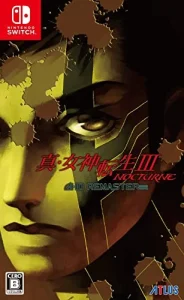
Shin Megami Tensei III NOCTURNE HD REMASTER Switch NSP XCI
Report Link Error
Select the broken download file, then submit the report.


Screenshots
About Game
Shin Megami Tensei III NOCTURNE HD REMASTER Switch NSP XCI brings Atlus’s bleak, demanding role-playing game to Nintendo Switch in a remastered form. Its journey begins with Tokyo’s destruction and quickly moves into a strange new reality where demons, competing ideologies, and difficult tactical battles shape every step forward.
A Return to the Vortex World
The story opens with the Conception, an apocalyptic event that transforms Tokyo into the Vortex World. What remains is a desolate, labyrinthine realm inhabited by demons, with familiar urban space replaced by a hostile landscape of ruins, isolation, and uncertainty. The setting does not present a simple struggle between heroes and villains. Instead, it places the player in a world where creation and destruction are intertwined, and where the future of humanity is open to competing visions.
This post-apocalyptic Tokyo gives the game much of its atmosphere. Exploration moves through dangerous areas filled with enemies, puzzles, and secrets, while the larger story keeps returning to questions of power, purpose, and individual will. Different factions emerge with their own Reasons for remaking the world, creating alliances and conflicts that make the Vortex World feel unstable even when the player is outside combat.
The HD Remaster preserves this dark philosophical direction while adding enhanced graphics and quality-of-life improvements. The result is a presentation built around an unsettling world rather than a conventional tale of restoring order.
The Demi-fiend and a World Waiting to Be Remade
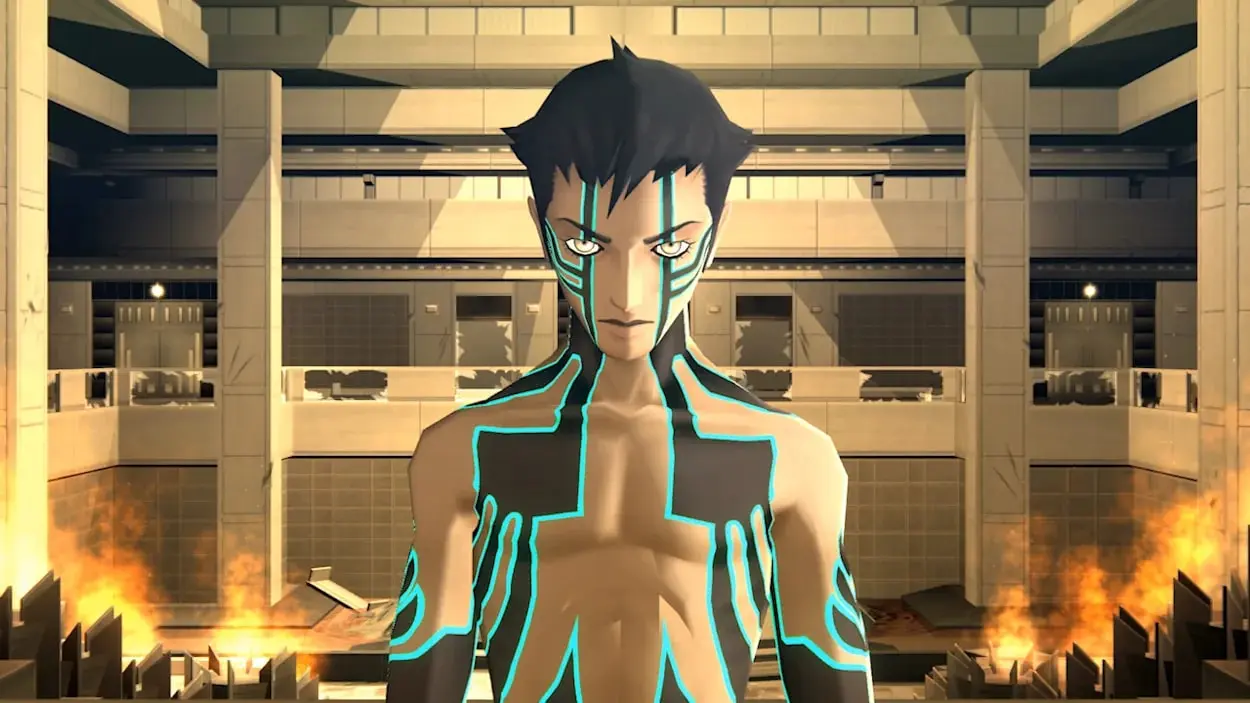
The protagonist begins as an ordinary high school student caught in the aftermath of the Conception. He is reborn as the Demi-fiend, gaining demonic powers and becoming central to the struggle over what the new world will become. His transformation is more than a visual change: it gives him a direct role in combat and in the shifting balance between factions.
As the Demi-fiend travels through the Vortex World, the story presents choices, betrayals, and competing paths. The game’s moral decisions influence its multiple endings, tying the outcome to the player’s philosophical alignment. Rather than treating one answer as automatic, the narrative asks the player to consider the consequences of supporting a particular Reason or pursuing another direction.
That structure gives progression weight beyond character strength. Advancing through the game means building a stronger party, but it also means deciding how the world should be remade. For players interested in a role-playing game with an oppressive mood and consequential narrative choices, the Demi-fiend’s journey offers a focused, challenging premise.
Demon Negotiation: Building a Party Through Conversation
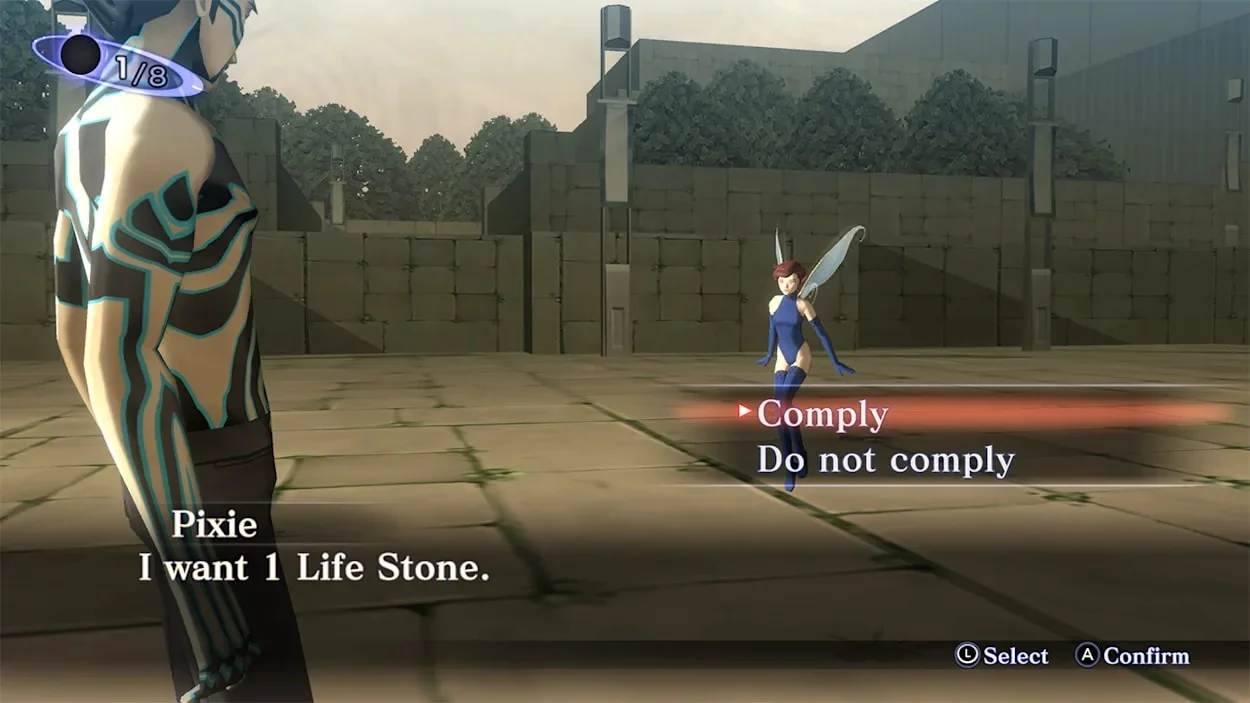
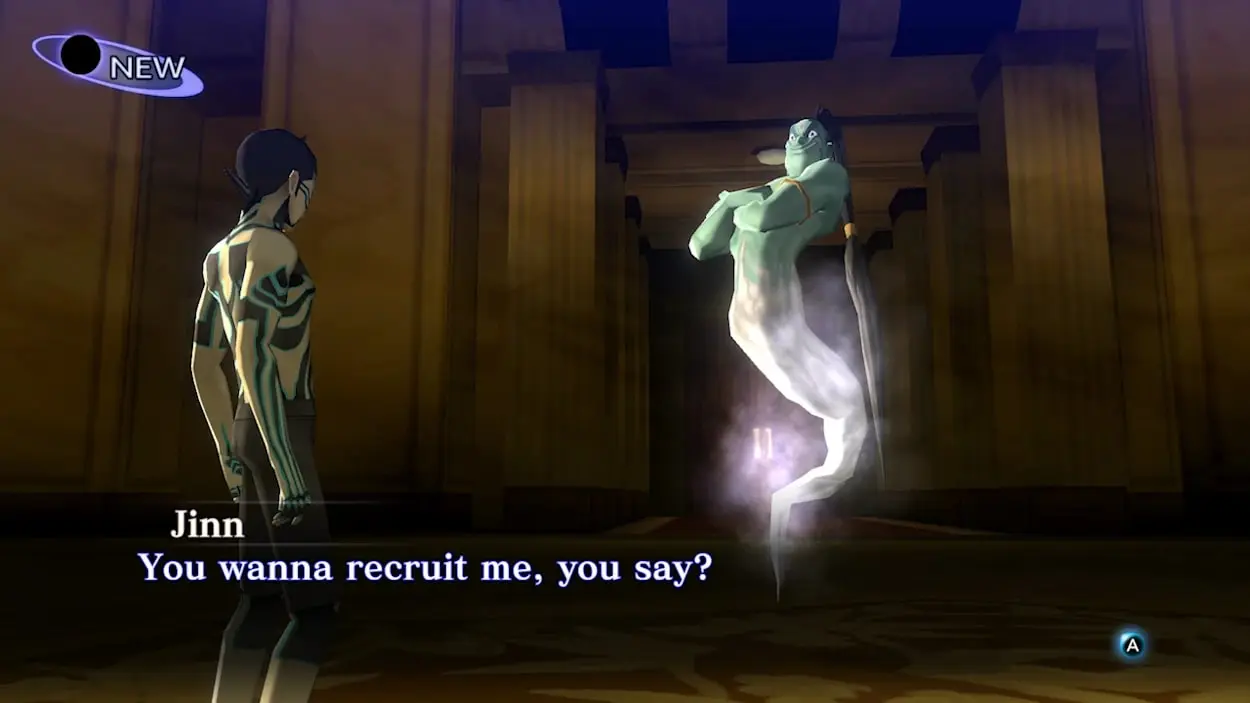
Combat is built around far more than simply defeating enemies. Through demon negotiation, the player can persuade demons to join the party. Recruitment turns encounters into opportunities: a demon met in battle may become an ally with useful skills, elemental attacks, or defensive traits that change how later fights are approached.
This makes party building a continuing process. Different demons offer different abilities, so a group that performs well in one area may need adjustment for the next. Recruiting a broad selection of allies helps create coverage for different situations, while fusion allows those demons to be combined into stronger forms with inherited abilities.
The system gives progression a practical rhythm. Negotiation expands the available roster, fusion refines it, and combat reveals where a party’s strengths or gaps lie. Since enemies can punish poor preparation, managing demons is closely connected to survival rather than being a separate optional activity.
Magatama and Demi-fiend Customization
The Demi-fiend has his own route to growth through Magatama. These grant different abilities and resistances, allowing players to prepare him for the dangers ahead. A Magatama choice can affect what the protagonist brings into a battle, making customization part of tactical planning instead of a purely cosmetic decision.
Resistances are particularly important in a game where attacks can dramatically change the flow of a turn. Choosing abilities and defenses that fit an upcoming encounter can make a difficult fight more manageable, while an unsuitable setup may leave the party exposed. Magatama therefore works alongside demon recruitment and fusion: the Demi-fiend develops as the party develops.
7 Practical Strategies for Surviving Nocturne’s Tough Battles
- Save often. Save before major boss battles and when entering unfamiliar areas. The game’s difficult encounters can make careful progress valuable.
- Read enemy defenses. Study weaknesses and resistances closely. Exploiting a weakness is important, while attacking into a resistance can disrupt a turn.
- Maintain elemental options. Build a party with varied skills so enemies with different vulnerabilities do not force the same response every time.
- Prepare for bosses. Boss battles test planning as much as raw strength. Review the party’s skills, resistances, and available demons before committing to a fight.
- Recruit useful demons. Demon recruitment is a direct way to add new skills and tactical possibilities to the party.
- Use fusion deliberately. Fuse demons to create stronger allies and inherit abilities suited to tougher encounters.
- Adjust your approach. The Press Turn system rewards effective attacks with extra turns, but mistakes can cost turns. Change tactics when an encounter reveals a weakness in the party’s setup.
What the HD Remaster Brings to Nintendo Switch
Shin Megami Tensei III NOCTURNE HD REMASTER Switch NSP XCI was released on October 29, 2020. Developed and published by Atlus, this Nintendo Switch version presents the role-playing game with enhanced graphics and quality-of-life improvements while retaining its demanding turn-based structure, demon management, and branching narrative.
The game supports English, Spanish, Italian, German, French, and Japanese, and is listed for Europe, the USA, and Japan. Its combat remains defined by the Press Turn system, where exploiting an enemy weakness can grant extra turns, while striking a resistance can cost valuable actions. That balance makes each battle a continuing test of information, party composition, and timing.
Multiple endings add replay value to a campaign already shaped by choices and alliances. Players who enjoy difficult turn-based combat, extensive demon recruitment and fusion, and a post-apocalyptic setting built around moral conflict will find a game that rewards patience and preparation. The remaster’s updated presentation helps carry the Vortex World’s severe atmosphere to Switch without changing the core of its challenging RPG design.