The Legend of Heroes: Sen no Kiseki II: Kai – The Erebonian Civil War Switch NSP XCI
Report Link Error
Select the broken download file, then submit the report.


Screenshots
About Game
The Legend of Heroes: Sen no Kiseki II: Kai – The Erebonian Civil War Switch NSP XCI places a character-driven role-playing adventure inside a country consumed by conflict. Released on August 05, 2021 by Clouded Leopard Entertainment, this JPN-region edition supports Japanese, Korean, and Chinese languages. Its appeal is rooted in a continuing story, a party of classmates pulled apart by war, and combat systems that reward careful planning rather than simple force.
Erebonian Civil War: Where the Story Begins
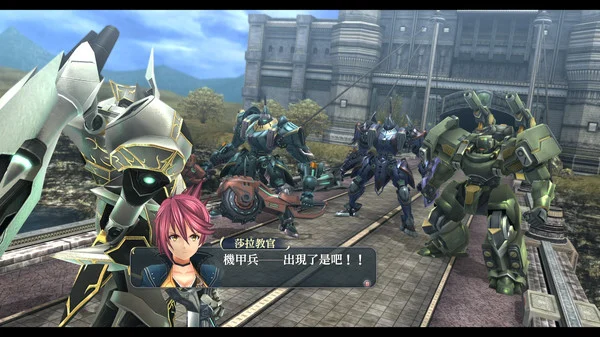
The game resumes in the midst of the Erebonian Civil War, following the events of its predecessor rather than beginning with a detached new scenario. Rean Schwarzer is separated from the other members of Class VII as the conflict spreads across Erebonia. Reuniting the group becomes an immediate personal goal, but it unfolds against a wider struggle shaped by dangerous battlefields, political intrigue, and growing uncertainty.
This setup gives the journey a divided emotional focus. Rean’s search for his friends is personal, while the civil war gives that search larger consequences. Class VII is not simply a collection of battle party members; the group’s separation frames the story around friendship, duty, and the difficult pressures created by war. The narrative also presents conspiracies and hard choices as the conflict intensifies, connecting individual struggles to the future of Erebonia.
Exploration supports that larger atmosphere. Cities, ruins, NPC conversations, and side quests offer additional contact with the people and places affected by the situation. The result is a role-playing structure in which the main conflict is not isolated from the world around it. For players who enjoy long-form JRPG stories with a strong cast and political stakes, the premise offers a clear reason to stay invested in the road ahead.
Tactical Turn-Based Combat and Link Attacks
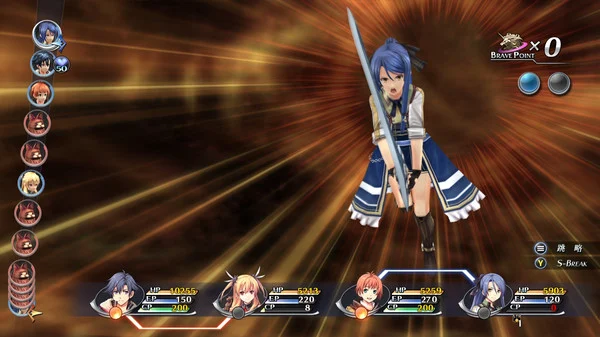
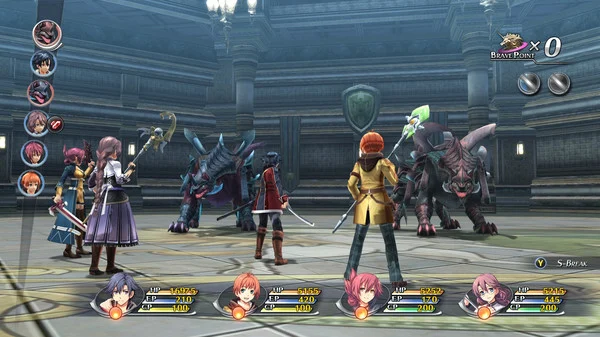
Combat is built around tactical turn-based combat. Battles ask players to consider party composition, available abilities, and the advantages created by coordinated actions. The turn-based foundation makes space for deliberate choices, especially when facing encounters that demand more than raw power.
A refined Link Attack system is central to that cooperation. Linked characters can work together during battle, adding another layer to the decision-making process. Rather than treating each party member as an entirely separate unit, the system encourages players to think about how allies support one another. This emphasis on coordination fits the game’s focus on Class VII: the same relationships that matter in the story also have a practical place in combat.
The strategic rhythm is reinforced by preparation. A party can be shaped before battle through equipment choices and character development, then adjusted through tactical actions once an encounter begins. That combination gives the game a methodical pace suited to players who like to test different approaches, refine a plan after a difficult fight, and make the most of a balanced team.
Building a Party With Orbments and Quartz
Orbment customization gives party building much of its flexibility. By equipping Quartz, players can unlock Arts and gain stat boosts, allowing individual characters to be tailored toward different roles. Arts provide magical options, while the associated bonuses help define how a character performs within the group.
This system makes experimentation meaningful. One setup may emphasize the tools needed for magical offense, while another may focus on statistical improvements that suit a different combat role. The useful question is not simply which character is strongest, but which combination of Quartz, Arts, and bonuses helps the full party function effectively.
That makes character builds part of the game’s ongoing progression rather than a one-time selection. Players can revisit their setups as battles become more demanding, compare different Orbment arrangements, and look for a party balance that matches their preferred approach. The system also gives Arts a wider purpose: they are not merely attacks selected from a menu, but a result of how a character has been configured.
Combat Advantages: Field Attacks, Overdrive, and Craft Burst
The battle system includes tools that create momentum before and during encounters. Field Attacks allow players to strike enemies on the map and begin combat with an advantage. That small moment before a battle starts can matter, rewarding alert exploration and a willingness to engage enemies on favorable terms.
Once the fighting is underway, the Overdrive System offers a more dramatic form of teamwork. Linked partners can use Overdrive to unleash powerful attacks while gaining temporary invincibility. It is a system designed for key moments, adding a forceful response when a battle calls for a coordinated push.
Craft Burst abilities add another option to the available combat toolkit. Together with Link Attacks, Arts, and Overdrive, they broaden the number of choices available in a turn-based encounter. The important point is variety: the game supports opening an encounter with an advantage, developing a plan through party links and customization, then using stronger options when the situation demands them.
Lost Arts and the Game’s Added Strategic Options
Lost Arts are powerful magic attacks that expand the game’s selection of battle options. Their presence reinforces the value of Arts-based planning and gives magical offense a prominent role beside physical attacks, linked actions, and Crafts.
These added systems make combat strategy less about relying on a single solution. An effective party can draw on Quartz-based customization, initiate fights with Field Attacks, build around linked partners, and reserve stronger tools for difficult situations. Lost Arts and Craft Burst abilities broaden that planning further, giving players more ways to respond to a changing battle.
For an RPG audience that enjoys tuning builds and considering timing, this is a meaningful part of the experience. The systems invite attention without leaving the story behind: the same group whose relationships drive the narrative is also the group being developed, linked, and directed through combat.
5 Ways Bonding Events Support Class VII
Bonding Events connect character progression to the relationships at the center of the story. In The Legend of Heroes: Sen no Kiseki II: Kai – The Erebonian Civil War Switch NSP XCI, these special interactions give Class VII additional importance beyond the battlefield.
- Shared time: Bonding Events create opportunities to spend time with classmates during the adventure.
- Closer relationships: These events deepen Class VII relationships, supporting the game’s focus on friendship amid the civil war.
- More dialogue: Strengthened bonds unlock unique character dialogue, giving players more direct interaction with classmates.
- Battle benefits: Bonding can enhance a classmate’s combat effectiveness, making relationship development mechanically relevant.
- A stronger party focus: Because bonds affect both story moments and combat abilities, the system ties personal connections to the team’s performance.
With a 10.5 GB XCI release and firmware listed as 13.1.0, this is a substantial role-playing experience aimed at players who value narrative continuity, party customization, and strategic turn-based battles. Its most fitting audience is one prepared to follow Rean and Class VII through a war-torn setting where relationships, preparation, and teamwork all carry weight.
Recommended Similar Games
 Hyperdimension Neptunia GameMaker R: Evolution Switch NSPView Game
 Touhou: New World Switch NSP XCIView Game
 Record of Agarest War Switch NSP XCIView Game
 Borderlands 2: Game of the Year Switch NSP XCIView Game
 Shin Megami Tensei V Switch NSP XCIView Game
 Pascal’s Wager: Definitive Edition Switch NSPView Game