Whisper of the House Switch NSP
Report Link Error
Select the broken download file, then submit the report.
Screenshots

About Game
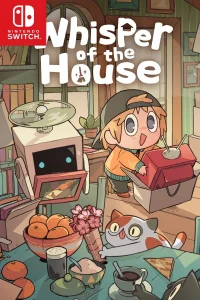
Whisper of the House Switch NSP is recorded as a Nintendo Switch release from GD Studio, dated August 27, 2025. Its available metadata presents a compact but intriguing profile: an indie title carrying puzzle, role-playing, and simulation labels, with a listed Title ID of 70010000117946 and version v1.2.0.9. The details do not define a full set of systems or objectives, but they give players a useful basis for setting expectations.
Whisper of the House on Nintendo Switch: A Metadata Snapshot
GD Studio is listed as the publisher of Whisper of the House, placing the game in a clearly identified Nintendo Switch context rather than leaving its platform record ambiguous. The release date, August 27, 2025, and Title ID, 70010000117946, provide the most direct reference points for distinguishing this entry from similarly named records or future revisions.
The available listing also identifies version v1.2.0.9, a 1.6 GB file size, and Atmosphere 1.11.2 under Required Firmware. That firmware value is best read as part of the supplied record, not as a universal compatibility promise. No region designation is provided, so there is no basis for attaching the game to a particular regional release.
For players looking at Whisper of the House Switch NSP as a game rather than simply a listing, the genre combination is the more revealing detail. It suggests a deliberately paced experience with room for thought, but it does not confirm particular missions, maps, control schemes, or narrative structure.
How Puzzle, RPG, Simulation, and Indie Labels Shape Expectations
The confirmed Whisper of the House genre lineup is unusually broad: indie, puzzle, role-playing, and simulator. Each label contributes a different expectation. Puzzle games commonly reward attention, patience, and the ability to identify relationships between clues or systems. Simulation can point players toward learning how interconnected elements behave. The RPG category broadens that picture beyond a purely self-contained sequence of puzzles.
Still, genre labels are not feature lists. The metadata does not confirm a story premise, a cast of characters, a house-management system, combat, quests, inventories, timed challenges, or branching outcomes. It would be premature to infer any of those details from the title or categories alone.
What can reasonably be said is that this looks positioned as an indie Switch game for players who appreciate a blend of problem-solving and gradual engagement. The genre mix leaves room for decisions and progression to matter, while the puzzle and simulation classifications imply that understanding information may be more valuable than reacting quickly.
A Thoughtful Play Style Built Around Observation and Decisions
Without confirmed mechanical specifics, the most sensible approach to Whisper of the House gameplay is a measured one. Puzzle-oriented games often ask players to pause, study what is available, test an idea, and reconsider it if the result does not fit. That rhythm can make observation feel active rather than passive.
The simulation label supports a similar reading. It may mean that players benefit from noticing how separate elements relate to one another, though the supplied material does not say exactly which systems are present. A careful player may therefore want to keep track of recurring details, patterns, and earlier choices instead of assuming every answer will be immediate.
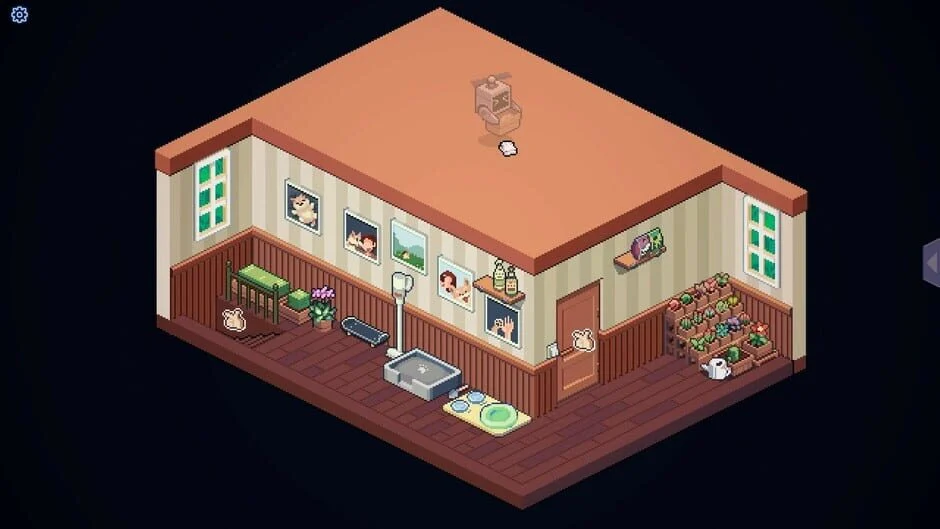
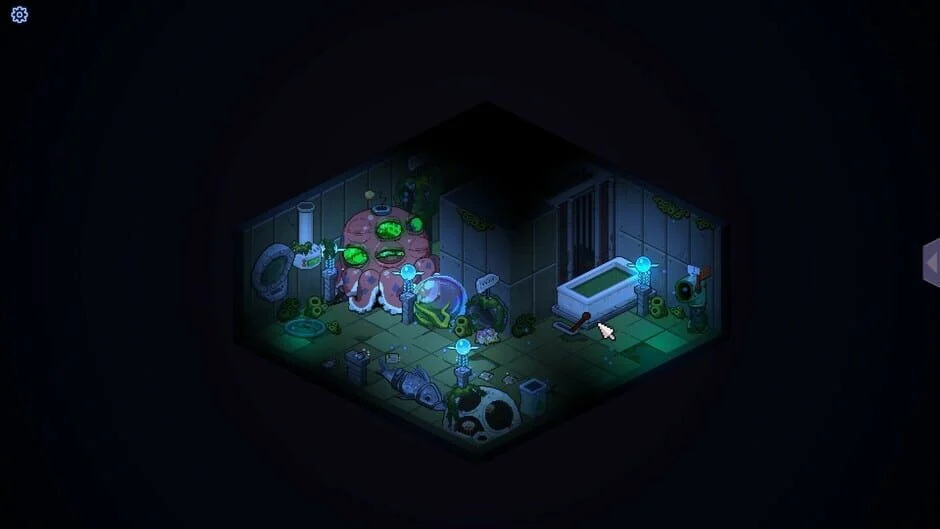
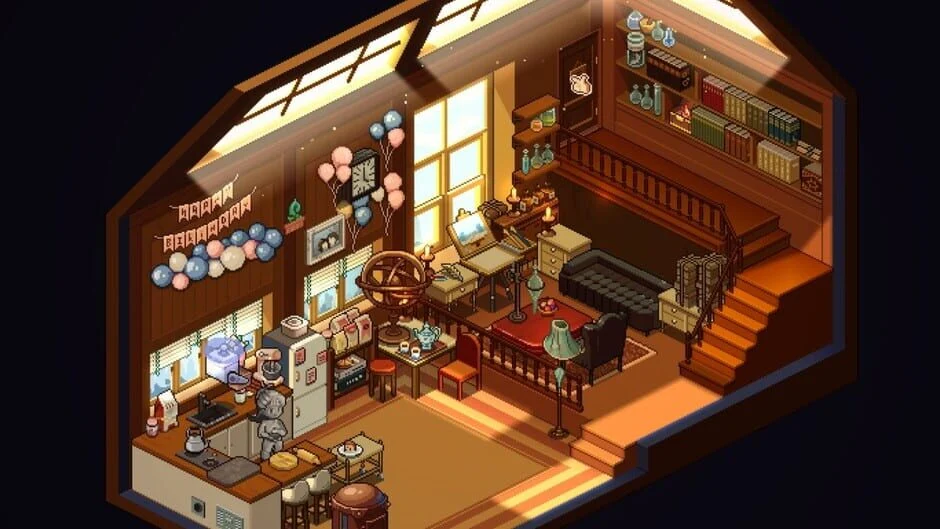
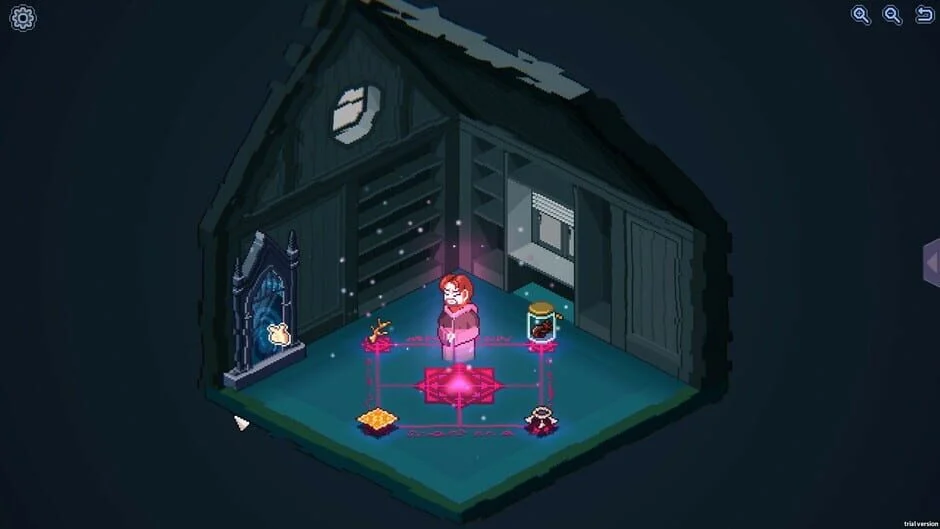
This is a useful distinction for people drawn to methodical Switch games. The available information points toward a potentially thoughtful pace rather than constant action, but it does not establish an atmosphere, a setting, or a specific challenge level. Five listed preview images offer visual references that may help communicate presentation and general mood before play, without confirming undocumented mechanics.
What the RPG Classification Can—and Cannot—Tell Players
The RPG label is meaningful, but modestly so. It suggests that Whisper of the House may include some form of player-driven progression or role-based interaction. That possibility separates it from a puzzle game defined only by isolated challenges and may indicate that decisions have some broader context.
Beyond that, the details remain open. There is no confirmation of character attributes, experience systems, equipment, dialogue choices, companions, narrative routes, or any other specific form of RPG progression. There is also no confirmed information about replay value. Players interested in a role-playing puzzle game should treat the classification as a signal of direction, not a guarantee of familiar RPG structures.
This restraint matters. A game can earn an RPG classification through systems that look very different from conventional leveling or party management. The most reliable way to assess those unlisted elements is through the game’s available previews and its own in-game information.
6 Practical Checks Before Starting Whisper of the House
- Confirm the release record. The listed release date is August 27, 2025, and the recorded Whisper of the House Title ID is 70010000117946.
- Note the publisher and genre mix. GD Studio is listed as publisher, while the game is categorized as indie, puzzle, role-playing, and simulator.
- Check the version details. The supplied record identifies version v1.2.0.9 and lists Atmosphere 1.11.2 under Required Firmware.
- Review the language options. Nine languages are listed, including American English, Japanese, French, German, Spanish, Korean, and Chinese language variants.
- Allow room for storage. The stated file size is 1.6 GB; keeping additional free space available remains sensible for normal storage management.
- Use the previews carefully. Five preview images are listed and can help clarify visual presentation and atmosphere; check in-game information for systems not documented in the metadata.
Language Support Listed for Whisper of the House
Whisper of the House language support is listed across nine options: Japanese, French, German, Spanish, Korean, Simplified Chinese, Brazilian Portuguese, Traditional Chinese, and American English. This is a notably broad selection for a multilingual Nintendo Switch game and gives many players a confirmed language reference before beginning.
The listing confirms the availability of these language options, but it does not specify how each language is used within the game. It does not distinguish between text, menus, spoken dialogue, or other presentation elements. American English is included in the record, alongside the other eight listed languages.
For a title with puzzle, simulation, and RPG classifications, clear access to available information may be especially valuable. Players who enjoy quiet observation, deliberate experimentation, and gradual discovery appear to be the most natural audience suggested by the verified metadata—while the game’s exact systems remain something to learn from the experience itself.